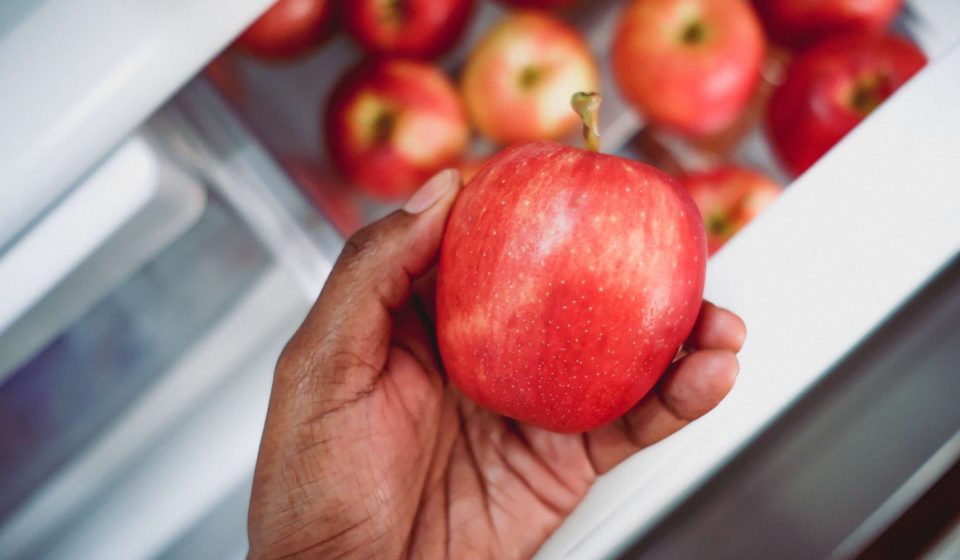

Apples are a good source of fiber and antioxidants and have a low glycemic index. But do their benefits on blood sugar and energy increase depending on when they are consumed? We asked registered dietitians for their opinions, and their answers might surprise you.
Starting your day with an apple gives you a low-calorie food that helps you feel full longer thanks to the fiber it contains, Jacqueline A. Vernarelli, PhD, nutritional epidemiologist, public health nutritionist and associate professor at Sacred Heart University, tells HEALTH.
Apples also have a low glycemic index and contain chlorogenic acid, both of which help regulate blood sugar levels and prevent blood sugar spikes after meals.
“Apples are a convenient, low-calorie (food) loaded with fiber, vitamins and antioxidants that support your heart, gut and immune system. Apples are also a great source of anti-inflammatory compounds like vitamin C and quercetin,” Vernarelli said.
However, eating an apple is unlikely to have a significant impact on your metabolism, according to Lauren Manaker, MS, RDN, LD, registered dietitian. But starting your day with an apple can give you a slight boost when it comes to having a bowel movement.
“Eating an apple with or before a balanced meal can help smooth post-meal blood sugar spikes because fiber slows the absorption of carbohydrates,” Morgan Walker, MS, RD, LDN, assistant professor at Lebanon Valley College, tells HEALTH.
Including an apple as part of a balanced meal or as a snack can keep energy levels stable. “When it comes to metabolism, timing of consumption does not directly change metabolism, apples will not increase or slow down your metabolism,” Walker added.
A medium apple provides about 4 to 5 grams of fiber, which promotes stable blood sugar levels and reduces the risk of chronic diseases like heart disease and type 2 diabetes. Additionally, soluble fiber (pectin) slows digestion and promotes stable energy, while insoluble fiber supports healthy bowel regularity.
Some research shows that apples might give you a boost before a workout. But it really depends on how your body responds to apples and your type of workout.
For some people, it might be best to eat an apple two to three hours before training to give their body time to break it down and sort out the impact of the fiber. But for others, eating apple slices before a workout gives them more energy, Ashley Koff, RD, founder of the Better Nutrition Program (BNP), tells HEALTH.
In addition to the energy provided by natural sugars, fiber will help keep your blood sugar stable so you don’t burn out in the middle of a workout. “Just avoid eating it right before an intense workout if you’re sensitive to fiber,” Manaker added.
Including apples in any meal is a great idea, according to Anne VanBeber, PhD, RD, LD, professor of food science and culinary medicine at Texas Christian University. “The apple provides sweetness and adds to overall satiety,” VanBeber said. “For breakfast, they can be added to oatmeal, pancakes or muffins.”
If you’re craving something sweet after dinner, an apple can be a nutrient-rich way to satisfy your sweet tooth, » added Walker. You can pair it with a little nut butter or a pinch of cinnamon. Fiber can promote satiety and help prevent nighttime overeating.
“I always say that the best time to eat an apple is when you are most likely to eat it,» Manaker said. “For some, eating an apple in the morning will be easier to do, and for others, they like to wait to enjoy their snack until mid-afternoon. As long as it’s part of a healthy, balanced diet, I don’t worry too much about the timing of consumption.”
“More than timing, I like to focus on what people eat their apple with,” she added. “Pairing the apple with nut butter is my favorite move to add healthy fats and protein to help smooth out a possible blood sugar spike. I also like to encourage people to eat the skin, as it is a source of fiber and can also help smooth out a spike.”
Gn Health