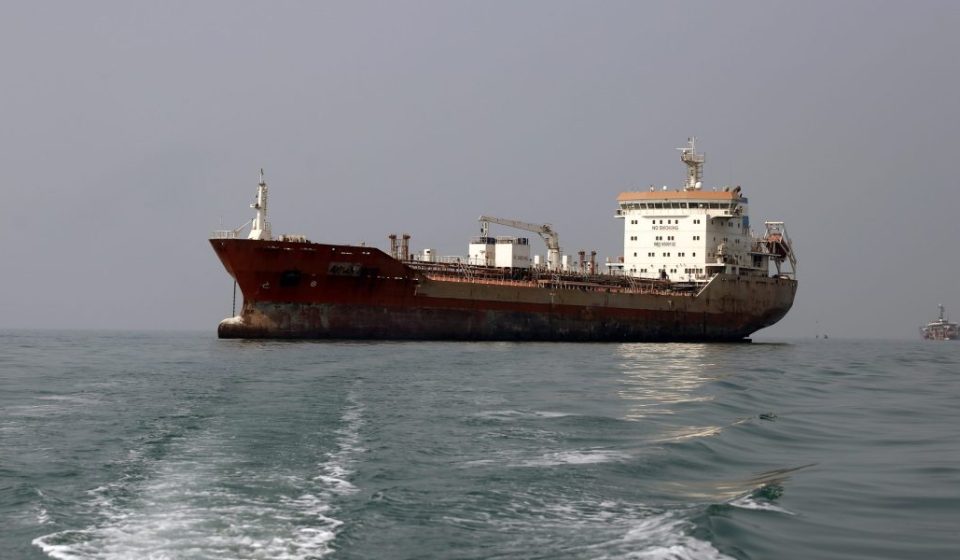
The captains and crews of ships passing through Hormuz earn so much that they are “almost considered mercenaries.”

The high-risk, high-reward business of transporting oil across the Strait of Hormuz has become riskier and more rewarding.
Despite constant attacks from Iran, oil tankers and other commercial vessels have continued to navigate this narrow waterway. With the protection of the US military and the help of pipelines bypassing the strait, oil flows from the Persian Gulf returned to pre-war levels.
But seeking to reassert its influence over the global oil bottleneck, Iran has recently stepped up drone and missile strikes against ships, including those in the immediate vicinity of Hormuz.
While traffic has plummeted in response, ships continue to pass through, many of them shuttling in and out of the Gulf to unload oil cargoes via ship-to-ship transfers. Then other ships deliver the barrels to customers.
For those on board ships willing to tolerate risk in the Gulf, a big payday awaits. Tanker captains can earn $100,000 a month for crossing the strait, plus a $50,000 bonus for each trip, sources told the newspaper. Financial Times.
This “risk money” represents an increase over regular pay of about $15,000 per month and is needed by shipowners to keep their fleets crewed.
Meanwhile, sailors typically earn just $1,500 a month. But travel through Hormuz can increase revenues by at least four to six times their normal rates, according to the report.
Other hotspots also offer risk enhancements, although lower than those available for travel to Hormuz. According to the FTcaptains and sailors receive double pay in the southern Red Sea, where the Houthis have attacked Saudi ships, and in the Gulf of Oman, where many ship-to-ship transfers take place after the passage of the Hormuz shuttle.
Because many ships and their crews are dedicated to shuttle runs, they are in constant peril, allowing them to accumulate all the bonuses and danger money for each trip.
A source told FT that those brave enough to endure the near-constant threat of attack are “almost considered mercenaries”, although some reluctant crew members are apparently pressured to remain on board.
Since the start of the war in Iran on February 28, at least 93 ships have been hit and 24 sailors have been killed, according to the International Maritime Organization.
In addition to the risk premium for crews, shipowners also pay insurance, and war risk can represent 6 to 10 percent of a ship’s value, which amounts to up to $20 million for a supertanker sailing in the Gulf.
All the extra costs also made shipping expensive. Freight rates for goods crossing the Strait of Hormuz hit a record high of $1.3 million per day, up from last year’s daily rate of $20,000 to $50,000.
All the ships needed to extract oil from the Gulf have also contributed to a global tanker shortage that has driven up freight rates around the world.
Shipping broker Gibson pointed out that leasing an oil tanker to travel from the United States to China costs about $80 million, more than the $74 million price tag for a standard SpaceX Falcon 9 launch. Brokerage firm SSY estimates rates are now the highest since the advent of supertankers in the 1960s, even after adjusting for inflation.
Transportation costs have become so extreme that oil producers and even commodity traders are seeking to own their own tankers to control their expenses.
But if transportation costs become too high, they could wipe out the margins that can be made from oil and refined fuels. For example, European refiner Repsol saw its margin drop from $36 a barrel in the third quarter to $15 in October, according to RBC analysts. Further reduction in margins could eventually force refiners to reduce the amount of crude they process.
The risk premium could worsen in the Persian Gulf. Analysts have warned that the Iranian regime, facing an existential threat to its power, could restart the war and regain its grip on the oil trade.
Esfandyar Batmanghelidj, founder and CEO of the think tank Bourse & Bazaar Foundation, pointed out recently that Iran can still destroy regional oil infrastructure, such as drilling and refining capacity, and that it can get worse if President Donald Trump rejects diplomatic exit routes.
“Iran has not conducted a scorched earth campaign, but it could do so if the current situation persists for too long. » he posted on X late last month. “This is what worries everyone who really follows this region and its dynamics.”
Gn bussni