

Skip to content
-
Subscribe to our newsletter & never miss our best posts. Subscribe Now!
Today's News. Tomorrow's Perspective. Today's News. Tomorrow's Perspective.

Deliver fast, factual, and easy-to-understand news covering global events, technology, business, science, AI, health, entertainment, and lifestyle.

Today's News. Tomorrow's Perspective. Today's News. Tomorrow's Perspective.

Deliver fast, factual, and easy-to-understand news covering global events, technology, business, science, AI, health, entertainment, and lifestyle.

  • Home
  • Breaking News
  • Business
  • Sports
  • Health
  • Politics
  • Technology & AI
  • World
  • Home
  • Breaking News
  • Business
  • Sports
  • Health
  • Politics
  • Technology & AI
  • World
Close

Search

Subscribe
The common nut that could protect against Alzheimer's disease if eaten daily
Health

The common nut that could protect against Alzheimer’s disease if eaten daily

Stephen Atcheler
By Stephen Atcheler
November 2, 2026 3 Min Read
Comments Off on The common nut that could protect against Alzheimer’s disease if eaten daily

Independent Membership

Want to bookmark your favorite articles and stories to read or view later? Start your independent membership today.

Join us today

Already a member? Log in

Eating peanuts regularly may change the way the region of the brain involved in memory formation responds to insulin, according to a small new study that could lead to new nutritional guidelines for people at risk of Alzheimer’s disease.

Insulin, best known for regulating blood sugar, also plays a vital role in the brain, helping nerve cells grow, survive and communicate with each other.

This brain process is known to be essential in supporting memory formation and other cognitive abilities.

Previous research has also shown that healthy insulin signaling in the brain may protect against processes associated with Alzheimer’s disease.

“The hormone insulin plays an important role in the brain, where it supports memory and other cognitive processes. As people age, the brain may become less responsive to insulin, which has been associated with age-related cognitive decline,” explained Peter Joris, author of the new study published in the journal Power and function.

Now, scientists have discovered that daily consumption of unsalted, roasted peanuts with the skin has a beneficial effect on insulin responsiveness in brain regions linked to memory in older adults.

In the research, 31 healthy adults aged 60 to 75 ate 60 grams (about two servings) of peanuts every day for 16 weeks.
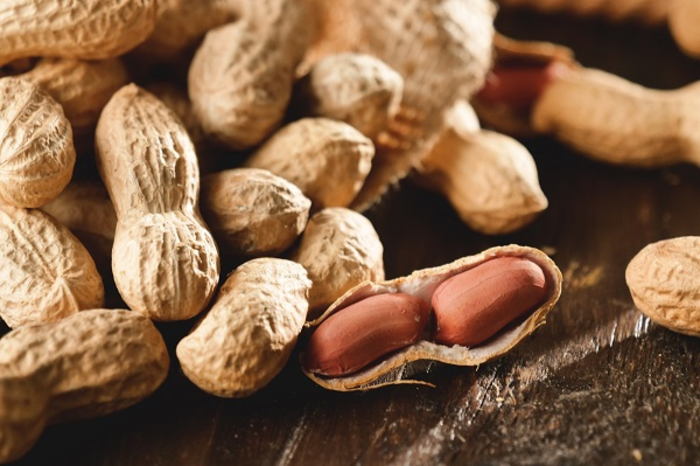
Peanuts have potential benefits for brain health
Peanuts have potential benefits for brain health ( University of Barcelona )

Peanuts were provided in pre-measured pouches in roasted form with the skin throughout the study period.

Participants could eat their peanuts in the morning or afternoon and choose how to incorporate them into their daily routine, either by eating the entire serving at once or dividing it into smaller amounts throughout the day.

Then, in a control phase, participants avoided peanuts completely.

The researchers measured the participants’ brain health using MRI scans and compared them across the two dietary approaches.

They found that eating peanuts for 16 weeks increased overall blood flow in the brain by about 4% as well as the insulin response in regions involved in memory, such as the hippocampus.

“These results suggest that enhanced regional insulin responsiveness of the brain may contribute to the cognitive benefits of consuming unsalted, roasted peanuts with the skin,” Dr. Joris said.

According to scientists, several components of peanuts may contribute to their observed effects rather than just one nutrient.

“The multiple nutrients found in peanuts, including unsaturated fats, dietary fiber, vitamins and minerals, and bioactive phytochemicals, could potentially contribute to the observed brain benefits,” said Dr. Joris.

“Peanuts are also a good source of plant protein and are particularly rich in L-arginine. L-arginine is a key precursor of nitric oxide (NO), which is thought to facilitate learning and memory performance,” he said.

Overall, the research suggests that consuming around 60 g of unsalted, roasted peanuts daily for 16 weeks could potentially benefit brain insulin responsiveness in older adults, scientists say.

Gn Health

Views: 6
Stephen Atcheler
Author

Stephen Atcheler

**Stephen** is a staff journalist at **DailyVoxa**, specializing in business, finance, technology, artificial intelligence, and global markets. He is committed to delivering timely, accurate, and insightful reporting that helps readers understand the forces shaping the global economy and the rapidly evolving digital landscape.Drawing on in-depth research and credible sources, Stephen covers breaking developments, industry trends, and emerging innovations with a focus on clarity, balance, and factual accuracy. His reporting is designed to provide readers with reliable information, practical context, and thoughtful analysis without sensationalism.As a member of the DailyVoxa editorial team, Stephen follows the publication's Editorial Policy, Fact-Checking Policy, Corrections Policy, and Ethics Policy. Every article is carefully reviewed to ensure it meets the highest standards of journalistic integrity, transparency, and editorial independence.

Follow Me
Other Articles
Overwatch director explains why the same few heroes keep getting skins
Previous

Overwatch director explains why the same few heroes keep getting skins

European supermarkets hit by new cyberattacks on refrigerators
Next

European supermarkets hit by new cyberattacks on refrigerators

Deliver fast, factual, and easy-to-understand news covering global events, technology, business, science, AI, health, entertainment, and lifestyle.
  • About Us
  • Accessibility Statement
  • Advertise With Us
  • AI Usage & Transparency Policy
  • Contact us
  • Cookie Policy
  • Corrections Policy
  • Meet Our Team
  • Privacy Policy
    • Disclaimer
    • DMCA & Copyright Policy
    • Editorial Policy
    • Ethics Policy
    • Fact-Checking Policy
  • Terms and Conditions
Copyright 2026 — Today's News. Tomorrow's Perspective.. All rights reserved.