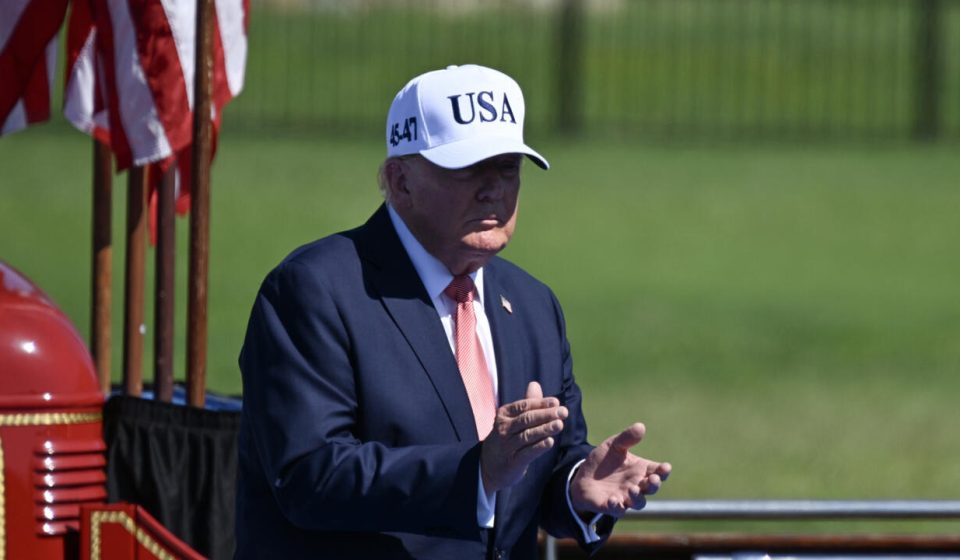

New escalation in the trade conflict between Washington and Ottawa. American President Donald Trump announced on the evening of Tuesday, September 8, that he would ban the importation of certain Canadian products into the United States and increase customs duties on other goods. This response comes as Canada has just imposed new customs duties on American products, in response to the surcharges put in place by Washington since August 22 against its own exports.
An American government official told reporters that Canadians had been warned that their reaction would make things worse.
The import ban targets all kinds of alcoholic beverages but also a dairy product such as whey or large motorcycles of more than 800 cubic centimeters. It will come into force on September 29, according to a presidential decree.
Also readCan Canada resist Trump?
A series of products, ranging from mattresses to motorboats to golf carts, will be hit by a 50% surcharge from September 15, according to other decrees published at the same time.
Conversely, some Canadian exports will find themselves relieved of this punitive surcharge. Their list is much shorter: toilet paper is one of them.
Response to the boycott of American alcohol
To justify the ban on the import of alcoholic beverages, President Donald Trump highlights the boycott, according to him “discriminatory”, targeting American alcohol in Canada.
Since last year, American wines and spirits have disappeared from shelves in most Canadian provinces, which have a monopoly on their sale. Canadians have thus rebelled against the new American customs duties but also the repeated calls from Donald Trump to make their country 51e American state.
More recently, the signing of a decree to change the name of Lake Ontario, whose waters are shared between the two neighbors, to “Lake America”, also went down very badly.
See alsoLake Ontario or Lake America: has Google adopted the name wanted by Trump?
Threats of boycott and exclusions
No way out of the crisis seems to be in sight for the moment.
Canadian Prime Minister Mark Carney warned Tuesday morning that his government’s strategy to reduce dependence on the United States would have a short-term economic “cost” for the country.
The “cost of inaction” would be much higher, he said in a video published on YouTube a few hours after the entry into force of the Canadian customs response.
Supported by Canadian public opinion, Mark Carney is making an economically risky bet. Nearly 60% of Canada’s imports come from the United States and about 70% of its exports go there.
The tenant of the White House also undertook on Tuesday to exclude Canadian companies from an American public procurement program, according to a message on its Truth Social platform. He claimed to have given “instruction (…) to take all necessary measures to REMOVE products of Canadian origin” from a system of multi-year contracts between private suppliers and public sector buyers.
This measure, if implemented, could penalize Canadian exports so far spared from surcharges, Ryan Majerus, a lawyer specializing in commercial law, told Agence France-Presse (AFP).
The day before, it was the Canadian group and manufacturer of private jets Bombardier which was threatened with a boycott by Donald Trump. Two Republican senators from Kansas (central United States), where the aircraft manufacturer employs more than a thousand people, were moved. One of them, Jerry Moran, indicated on his X account “that he contacted the Trump administration to (ensure) that the president is aware of Bombardier’s important contribution” in this state.
With AFP