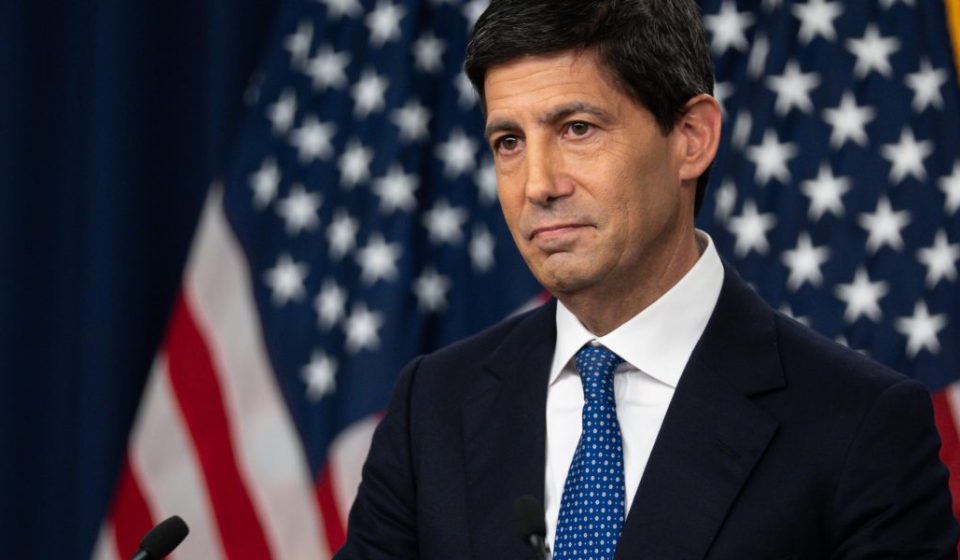

Kevin Warsh may be the most hawkish Federal Reserve chairman since Paul Volcker. That’s a compliment in some circles. It is also a warning. Volcker beat inflation, but he broke things along the way, and the bond market is now discovering what Warsh might break.
Yields on the 30-year Treasury rose to their highest level since 2002. In September alone, the 10-year yield jumped more than half a percentage point, to around 5.3%. This is the worst month for US government bonds in four years.
The usual explanations do not hold up to these movements. Technical market dynamics that impact demand may include, for example, a slight slowdown in so-called basis trading (hedge funds buying fewer Treasuries to support their leveraged bets). Some observers point to a supposed increase in the “term premium” – the extra yield meant to compensate for duration risk for holders of longer-term bonds.
Other theories are even more esoteric and/or difficult to measure. There might be an “absorption premium” – an academic suggestion – meant to boost performance for reasons too abstruse to easily summarize. But technical factors seem insufficient to explain a change of this magnitude in a $40 trillion market. They may play a small role, but they are not the drivers of this tectonic regime shift.
The strategic explanations would be inflation, deficits and geopolitics, as well as the “bond vigilantes” supposed to punish fiscal sin. These are fundamental risks, and nothing in August or September has reassessed them.
What has changed is the Fed.
How a speech became a rout
- August 28: At Jackson Hole, Warsh signals a hawkish turn. Torsten Sløk, Apollo’s chief economist, writes that the Fed “entered 2026 expecting several cuts, and now the FOMC is leaning toward a hike.” The selling begins as traders anticipate a rise in September.
- September 11: A hot August CPI report adds fuel. The selling is accelerating, although traders may have misinterpreted the number.
- September 16: The Fed raises rates by a quarter point, as expected. Warsh’s tone is not expected. He emphasizes “discipline” and “determination” and promises that “this Fed will ensure price stability.” The dot plot indicates further increases, with inflation above target through 2029.
Markets then anticipated a series of increases, with an 80% probability of getting at least 100 basis points higher than before Jackson Hole. “Higher for a longer time” had become “a lot higher for a lot longer.”
Why traders panicked
They remember the last time. In 2022-23, the Fed increased rates by 525 basis points in 17 months. The Bloomberg Aggregate Index fell 13%. Treasury bills lost 12.5%. The 10-year lost 16%, its worst return in a century. The iShares 20+ Year Treasury ETF lost 31.4%.
The damage spread. Mark-to-market losses on “safe” bonds helped kill Silicon Valley Bank and strain the entire banking industry. By mid-2023, banks were facing nearly $700 billion in unrealized losses, with $300 billion to $500 billion left. Mortgage rates have risen from 3% to nearly 8%, and the housing “affordability crisis” persists.
Traders now have a model for an aggressive Fed. They prefer to overreact rather than underreact.
The bill so far
- Obligations: The iShares Aggregate Bond ETF is down 4% since Jackson Hole. This implies market-wide losses of over $1 trillion.
- Banks: My model, built with help from Claude, estimates an additional $115 billion in unrealized losses in September and $180 billion for the third quarter. That would send underwater holdings soaring more than 50%, to around $500 billion, the highest since June 2024.
- Accommodation: Mortgage rates have increased nearly 100 basis points since Jackson Hole and home sales are down. The S&P mortgage-backed securities index is down 5%, implying about $400 billion in losses.
2026 is not a repeat of 2022-23, and market fears may be overblown. But exhausted traders have good reason to shed long-term risk.
Who pays for “credibility”
Warsh appears to see the rout as the price of the Fed’s credibility. His Jackson Hole speech hit bonds harder than Ben Bernanke’s Taper Tantrum in 2013, and the episode is now widely considered a mistake. The Fed shows no signs of contrition.
Consumers are paying, in the form of more expensive auto loans and credit cards. Homeowners pay, in the form of higher mortgage payments and a weaker housing market. Businesses pay in the form of more expensive credit. Banks pay in new losses on “safe” assets. Overseas, higher rates and a stronger dollar are weighing on economies and currencies, with the yen being one example.
That’s Volcker’s problem. The Fed can win the battle for credibility while losing those who bear the cost. Such a hawkish president should be asked to prove that the price is worth it.
The opinions expressed in comments on Fortune.com are solely the opinions of the authors and do not necessarily reflect the opinions and beliefs of Fortune.
Gn bussni