
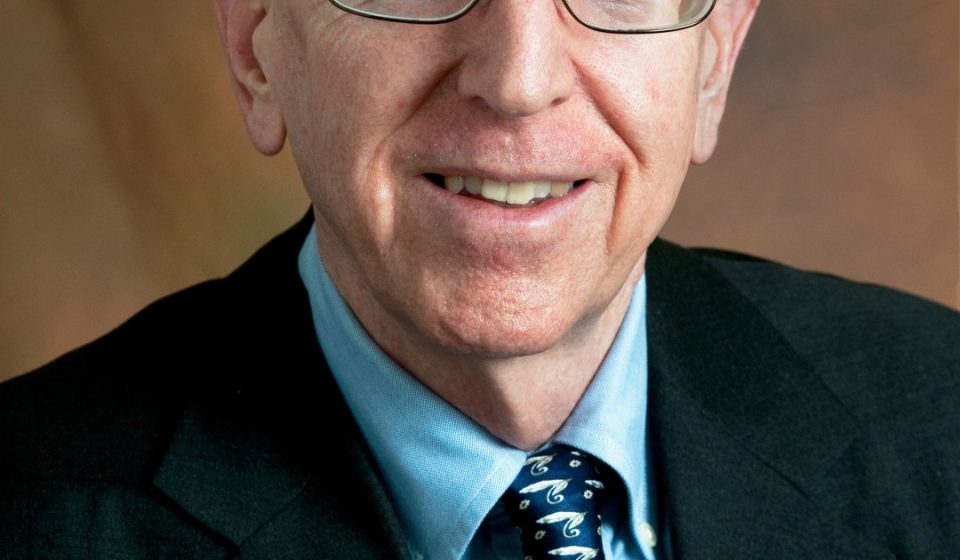
Richard Posner, a prodigious jurist and outspoken former federal appeals court judge who pioneered the use of economic theory to resolve legal questions, has died. He was 87 years old. Posner’s opinions have been widely cited in textbooks that have trained generations of lawyers. The University of Chicago Law School, where he was a lecturer and where one of his sons, Eric Posner, is a professor, said Posner died Tuesday. During a nearly 40-year career on the Chicago-based 7th U.S. Circuit Court of Appeals, Posner developed a reputation as an acerbic, witty writer and tough questioner, the AP reports.
- Posner “was the greatest and most competent judge in American history,” said Saul Levmore, former dean of the University of Chicago Law School. New York Times. “Part of his influence was his willingness to think out loud and in writing about what the law might try to accomplish and how it might go about it.”
He was appointed to the Court in 1981 by Republican President Ronald Reagan, but his legal views ranged from conservative to liberal, and Posner described his approach to judging as pragmatic. Posner was a leading figure in using economic theory to analyze legal rules and institutions. His 1973 manual, The economic analysis of lawwas founding and remains in print today. A 2000 study found that Posner was, by far, the most cited jurist of the second half of the 20th century, the Times reports.
- As a judge, he wrote thousands of legal opinions, including a seminal 2017 ruling that found the Civil Rights Act of 1964 also prohibited discrimination against lesbian, gay, bisexual and transgender workers. “I fail to see why firing a lesbian because she is part of the lesbian female subset should be considered a lesser form of sex discrimination than firing a woman because she is a woman,” Posner wrote.
- In 2014, he overturned bans on same-sex marriage in two states, rejecting arguments that marriage was not necessary for unions that do not produce children. Heterosexuals “get drunk and become pregnant, giving birth to unwanted children; their reward is to be able to marry,” he writes. “Same-sex couples don’t produce unwanted children; their reward is being denied the right to marry. Go figure.”
- Outside of court, he is the author of hundreds of academic articles and dozens of books, and has made no secret of his opinions on American institutions. In 2016, he called the Supreme Court “highly politicized,” saying that “probably only” a few justices were qualified, and even they were “not great.”
- In 2017, he told the Times that his approach was pragmatic. “I pay very little attention to legal rules, statutes, constitutional provisions,” he said. “A case is just a dispute. The first thing you do is ask yourself – forget the law – what is the reasonable solution to this dispute?”
- Posner was born to European immigrants in Manhattan in 1939. He entered Yale when he was just 16 and later attended Harvard Law School. After graduating first in his class in 1962, he clerked for Supreme Court Justice William J. Brennan. He is survived by Charlene, his wife of 64 years, their two sons and four grandchildren.
Gn usa


