V10 engines are the ultimate metaphors for what gearheads love about performance cars: relics of a bygone era when noise, power and absolute combustion were the go-to recipes for kings. The Lexus LFA and Porsche Carrera GT – arguably two of the greatest road-going supercars of all time – used them. So did the Sesto Elemento, which was Lamborghini’s answer to the very essence of dirt track racing madness. They even featured in the E60-generation BMW M5 – a perhaps ugly but stylish grand tourer that mocked the purpose-built seven-figure unobtanium thanks to an unrestricted top speed of over 200 mph.
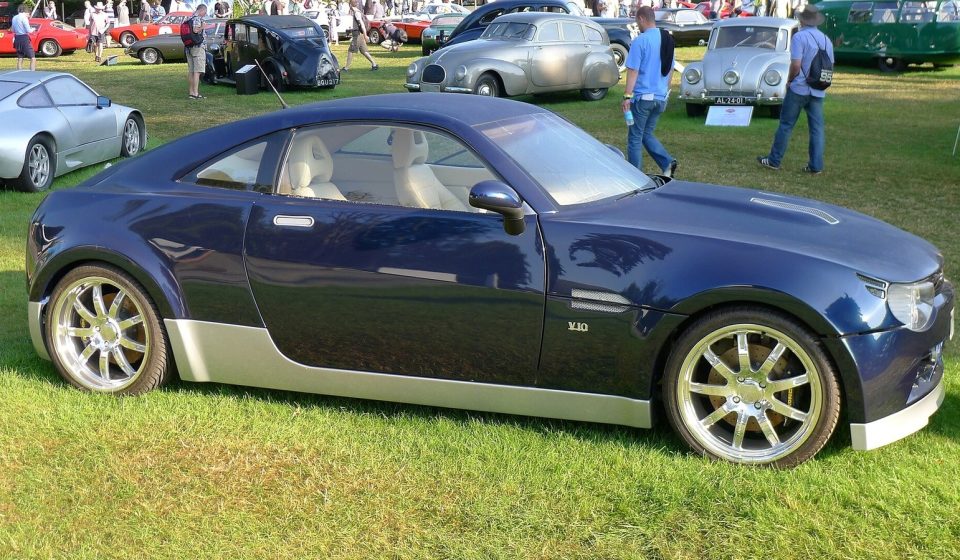
But beyond the actual number of cylinders, what these cars all have in common is large displacements. The LFA’s V10 is the smallest of the bunch, and even that measures 4.8 liters. You would then think that surely all V10s must be meaty by nature to work, but you would be wrong. Say hello to the Connaught Type D concept: a sports car designed in 2004 and powered by a pipsqueak 2.0-liter V10. Yes, two liters.
To give an idea, many passenger cars these days use 2.0-liter four-cylinder engines, including the Honda Civic hatchback, which is the platonic ideal of economy cars. Now imagine constraining yourself to such a small surface area, with the added complication of having to manage six additional cylinders. The result would be… astonishing, in fact.
The Type D was shockingly fast
The standard Connaught used a naturally aspirated V10 and a 162 hp Lynch electric motor. Yes, hybrid technology was tested as early as 2004 with this car, long before the creation and crowning of the Holy Trinity hypercar. However, in the top-of-the-range “Syracuse GT” version, the Type D’s V10 engine was combined with a supercharger for an output of 300 hp. The Connaught Type D Syracuse GT’s 0 to 60 mph time was expected to be in the low four-second range, and popular publications cited a top speed of around 171 mph. This thing also tipped the scales at just 1,874 pounds.
Those are serious numbers that would be enough to upset many four-cylinder sports cars that, dare we say it, could be called super. Even the current fleet of sleek metal four-bangers wouldn’t be safe. The Honda Civic Type R, which is a rowdy teenage dirtbag, takes about a second longer to reach 60 mph, while the 2026 Ford Mustang RTR (with its 2.3-liter engine) only edges it out by two-tenths of a second (via Car and Driver). Unfortunately, the D-Type never made it past the concept stage and never entered production due to funding issues.
Connaught also has plans for a 20-cylinder supercar
The brand was bought in 2016 by a British car design company called Bevan Davidson International (BDI), and in 2021 it came up with the crazy idea of reviving Connaught with a 20-cylinder supercar called the X20. We’ll give you a moment to rub your eyes and reread the last part of that sentence.
This 20-cylinder engine would consist of two horizontally opposed, mid-mounted 2.0-liter V10s. It would also expel its waste gases through as many as 20 exhaust pipes, rev up to 10,000 rpm and, according to the company’s calculations, produce more than 500 hp. It looks less like a car and more like a miniature 17th century steam train, but it is not yet known whether steam trains were still produced.
Whether BDI will also choose to revive the original D-Type remains to be seen, but think about it for a moment: a small-displacement sports car, powered by a supercharged V10, built to comply with the ever-increasing regulations imposed on the industry by lawmakers. Wouldn’t that be just wonderful?
Gn tech