The story of the first CIA officers in Afghanistan after 9/11 and the Russian helicopter that transported them

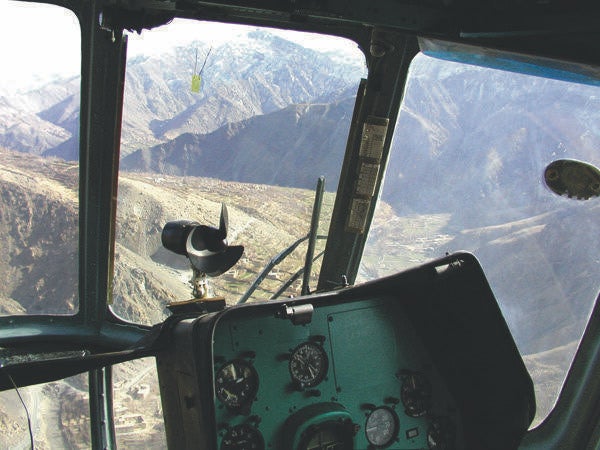
Twenty-five years ago, a Soviet-designed helicopter crossed the mountains of Afghanistan carrying the first CIA officers sent to the country after the attacks on September 11, 2001, marking the first step in the American response that would soon become America’s longest war.
The seven-man CIA team, codenamed JAWBREAKER, landed in the Panjshir Valley on September 26, 2001, just 15 days after the attacks, carrying millions of dollars in cash intended to help enlist and equip Afghan allies. Their mission was to gather intelligence and prepare the ground for the impending US campaign against al-Qaeda and the Taliban – including strengthening ties with the Northern Alliance, whose military leader, Ahmad Shah Massoud, had been assassinated by al-Qaeda members just two days before 9/11.
The Mi-17 that carried them there is now on display at CIA headquarters in Langley, Virginia, where it underwent an extensive restoration ahead of the anniversary.
Former CIA officer David Tyson followed JAWBREAKER to Afghanistan weeks later as a member of Alpha Team and remembers flying on the same plane before the war.
“It was shaking a lot, fuel was leaking, it was very noisy and I didn’t know if it was airworthy,” Tyson told CBS News in an interview, “but the pilots assured me it was a good bird.”
A helicopter built to blend in
The CIA acquired the Mi-17 in the 1990s, believing its Soviet origins would provide an advantage in the region.
“Both the Northern Alliance and the Taliban used Mi-17s,” CIA historian Rob Byer told CBS News. “It’s Russian helicopters and some sort of helicopter van in this area.”
“The main reason we purchased a Mi-17 rather than flying a Blackhawk is that it fits perfectly,” Byer said. “And when you go behind enemy lines, you would like to blend in as much as possible.”
It could also handle the punishing altitude. To reach the Panjshir Valley, JAWBREAKER had to cross the Anjuman Pass, which rises about 14,500 feet above sea level.
“The Mi-17 is one of the few helicopters capable of crossing this pass,” Byer said.
Central Intelligence Agency 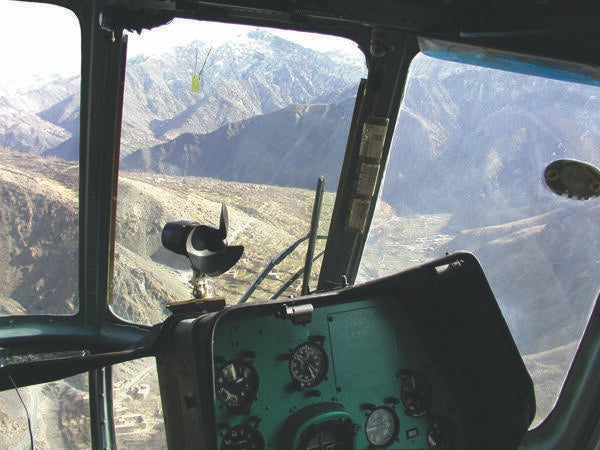
The plane did not have a transponder to identify it to American warplanes, leaving its crew to improvise. They painted “USA” and an American flag on the top of its stabilizers, visible to friendly pilots above but hidden from enemy eyes on the ground. With no blue paint available, the crew left the flag unfinished. And to recall the attacks that had brought them there, they gave the helicopter the call sign “9-11-01.”
The Mi-17 will fly more than 300 missions in Afghanistan and will remain in service until 2012.
Alpha Team Goes to War
Tyson was a CIA case officer based in Central Asia who was fluent in local languages, including Uzbek, Turkmen and Russian. On September 11, 2001, he took a flight to the United Kingdom for a meeting relating to the CIA’s efforts to recover Stinger missiles left in Afghanistan, many of which had been sent there as part of a U.S.-backed initiative during the Soviet war.
Central Intelligence Agency 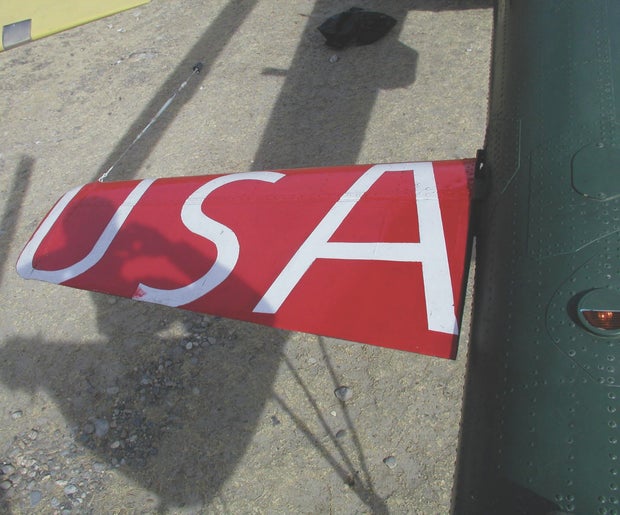
Shortly after landing, he began planning his return, realizing his expertise would likely take him to Afghanistan.
“I knew I would be involved given my languages, experience, etc. and where I was based in Central Asia,” Tyson recalls.
On October 17, less than three weeks after JAWBREAKER arrived in the Panjshir Valley, Tyson and the rest of Alpha Team were inserted into another part of northern Afghanistan, becoming the first Americans sent behind Taliban lines. Their mission was to work with forces commanded by Uzbek leader Abdul Rashid Dostum in the campaign against the Taliban and al-Qaeda.
“It was something we had never done before,” Tyson said, describing a mission that involved working with local forces to “basically fight a war.”
David Tyson 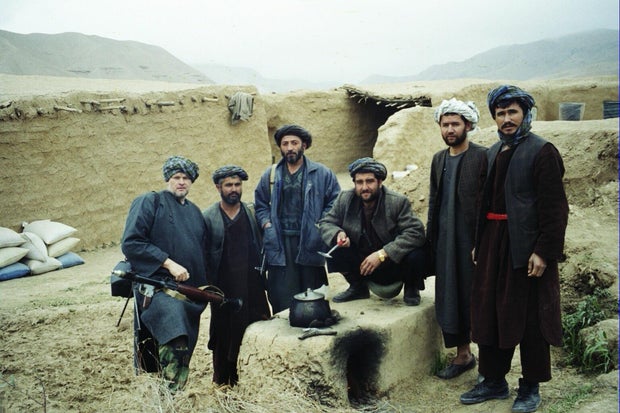
Its main role was intelligence and liaison work. He worked closely with Dostum’s Uzbek forces, helping his team understand the people and environment around them. The Americans traveled on horseback with Afghan fighters through the mountains, sometimes riding for up to 14 hours a day.
“The horses weren’t friendly,” Tyson recalled. “They were stallions, they were fighting among themselves, they were biting us, they were kicking us, they were trying to knock us down. And the equipment, the gear, the saddles were basically wooden frames with mats thrown over them.”
By the end of November, Taliban forces had collapsed across much of northern Afghanistan. Hundreds of foreign fighters had surrendered and were taken to Qala-i-Jangi, a vast 19th-century fortress near Mazar-e-Sharif.
On November 25, Tyson and his CIA colleague Johnny Micheal “Mike” Spann entered Qala-i-Jangi, where their initial task was to determine who the prisoners were and where they came from.
“For the most part, they were responding and identifying themselves as members of al-Qaeda, people who had sworn allegiance to bin Laden,” Tyson said. Among the prisoners was John Walker Lindh, a California native who moved to the area in 2000 and joined the Taliban.
Central Intelligence Agency 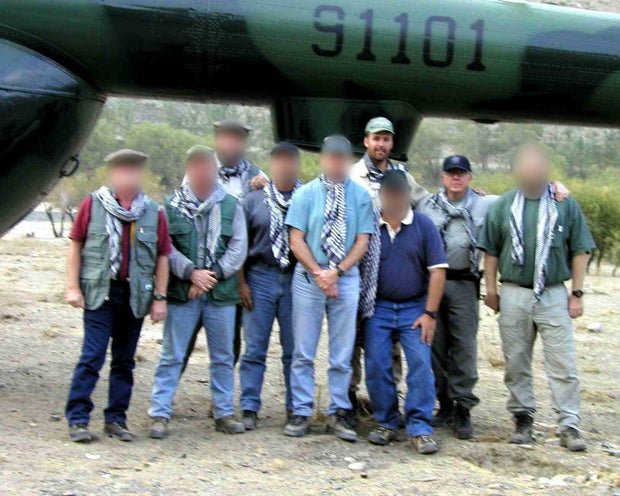
A few hours after the start of their mission, the prisoners stood up.
“There were explosions, gunshots and a lot of screaming,” Tyson recalled. “I started seeing things in what I would call slow motion,” he said. “Things were moving slowly, but almost automatically.”
At one point, he heard Spann call his name and began moving toward his partner through the fight.
“I remember seeing his… silhouette or his body on the ground,” Tyson said. “I think Mike was already dead when I got to him and I was able to shoot the men above him and take Mike’s rifle from him.”
Spann, 32, became the first American killed in combat in Afghanistan. It was the 79th star engraved on the CIA Memorial Wall.
Tyson fought his way to safety with Spann’s rifle, which he continued to use for the remainder of his deployment. It is now on display at the CIA museum, alongside the pair of boots Tyson wore throughout his deployment. Tyson’s son, then 8, later nicknamed them “Daddy’s lucky boots.”
“That rifle saved my life, I think, among other things,” Tyson said. “I think it’s very fitting that this rifle is on display at the museum. Again, it reminds us of Mike and who he was.”
David Tyson 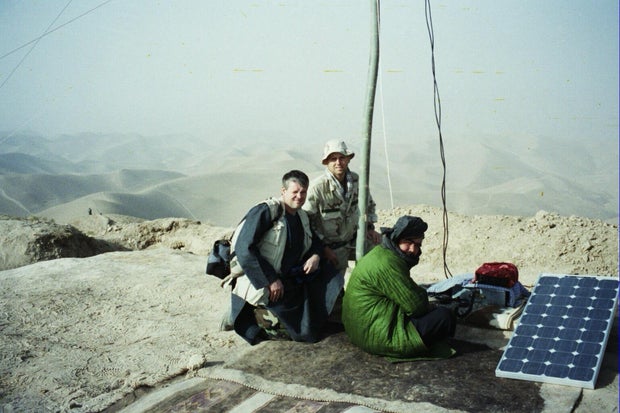
Restore a piece of CIA history
After its last operational mission in 2012, the Mi-17 was brought to CIA headquarters in 2018. Its fuel lines and other components were removed and installed outside, among rocks meant to resemble the Afghan landscape.
Years of exposure to the elements have taken their toll. “The paint had faded significantly from the sun and a few critters were coming inside as well,” Byer said.
Over the past year, the CIA has sealed the plane’s openings and repainted it to more closely resemble its 2001 appearance. The green was deliberately made slightly brighter, Byer said, so exposure to sunlight will eventually fade it to the desired hue.
The restoration also brought back “607,” the call sign of the Afghan pilot who flew the first mission. Painted on both sides of the Mi-17 in 2001, this number allowed it to pass for a Northern Alliance aircraft while signaling to Allied pilots that it was friendly.
Central Intelligence Agency 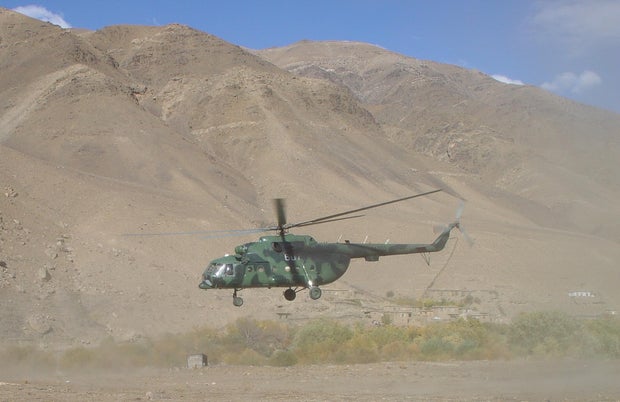
For Tyson, the artifacts preserve a much more personal story.
“As Mike would say, he wanted to be at the tip of the spear,” Tyson said. “He was, and he is today. He will be forever. And for me to be a part of that was something that I obviously won’t forget.”
Tyson said he still thinks about Spann and his sacrifice “daily.”
“I’d like to think he helps me get through things,” he added.
Tyson and Spann’s widow, Shannon Spann DeBruyn, are now among those involved with Badger Six, a nonprofit organization established in 2022 and named after Spann’s call sign to help Afghan fighters who worked alongside Alpha Team, as well as their families. The organization says it currently supports around 35 families with assistance ranging from food and medicine to resettlement and resettlement assistance.
For Tyson, this work is part of a mission that did not end when the United States withdrew from Afghanistan in 2021 as the Taliban regained power, leaving behind some of the Afghan partners who had fought alongside the Americans and vulnerable to Taliban retaliation. Asked if he felt obligated to help where governments haven’t, Tyson simply replied: “Of course, yes. That’s what people do. That’s what we do.”
Gn usa