When the Premier League announced September 29 that Manchester City had been found guilty of all the most serious charges in the ‘115’ financial cheating case, the PL also published a 40-page “background report”, produced by the three-person Independent Commission (IC), outlining the main reasons why the IC had found City guilty.
The full IC report is more than 1,000 pages long than 40 and has not yet been published, but it should see the light of day soon, with as few redactions as possible.
The main 40-page report is here:
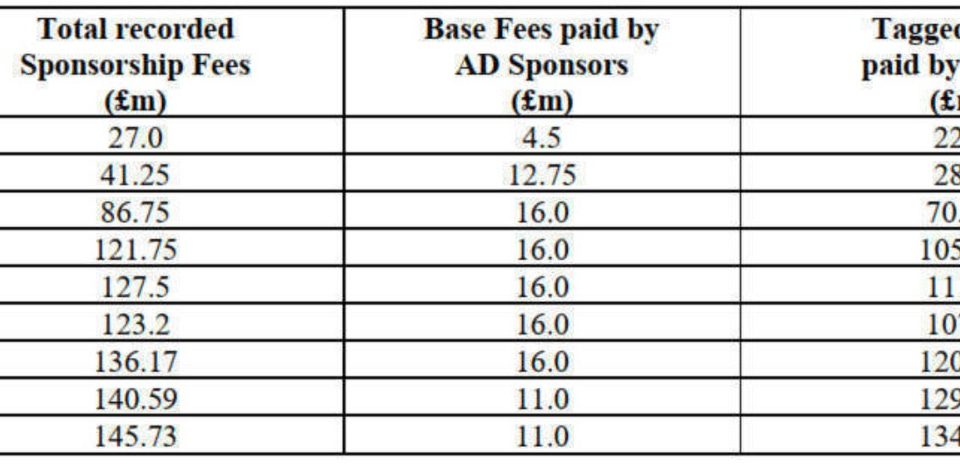
On page 20 of this report is a table of the total sponsorship fees received by City each season between 2009-10 and 2017-18 from Emirati entities (including Etihad), breaking down the amounts actually paid by these entities (middle column in the chart below), and the amounts that the IC said were actually paid by ADUGa private equity company owned by Cheikh Mansour (right column, in reality “fake” sponsorship sums).

The bottom line is that these “fake” sums, or “disguised equity financing”, totaled £830.7 million. To simplify matters considerably, the IC concluded that “fictitious” contracts with various sponsors benefited City, contrary to the rules, to the tune of £830.7 million.
But as I will demonstrate in detail below, City almost certainly benefited from their financial cheating to the tune of several billion pounds.
Today’s article will explore how ‘grassroots’ cheating via disguised equity led to the club artificially inflating their revenues, allowing them to buy and pay far better players than would otherwise have been the case.
These players then produced performances that propelled City higher up the table and into the Champions League, earning huge sums of money that City would not have otherwise had.
The remainder of this article is available in its entirety to all paid subscribers who make all the work on this site viable. Thank you for your continued support.
Gn sports