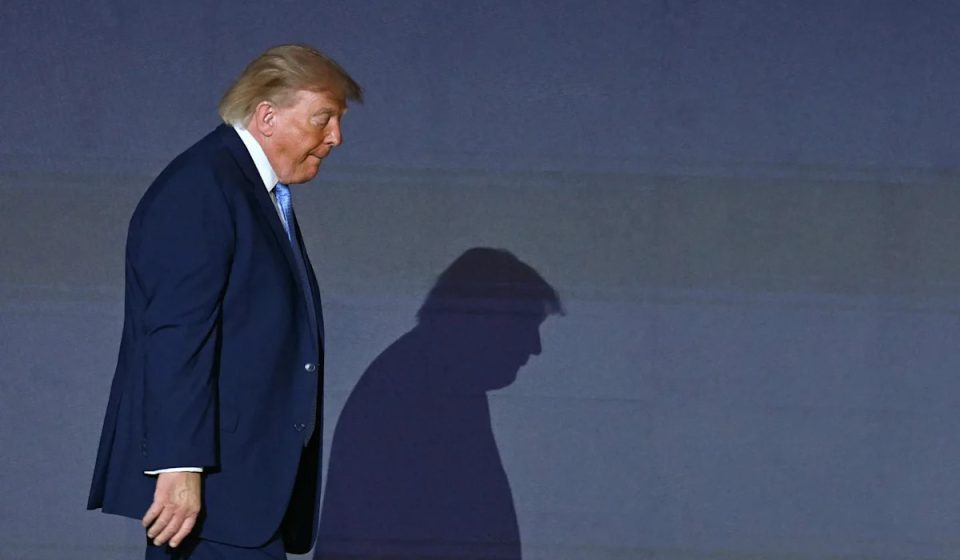
The weak jobs report poses another obstacle for Trump and the Republicans as the midterm elections approach.

September’s weak jobs report was the last labor market figure before the midterm elections, and these weak numbers will make it even more difficult for President Trump and Republicans to sell voters on their economic record.
The president and his party are already grappling with an economic message that is failing to gain traction, as polls show voters are deeply unhappy with the economic trajectory a month before Election Day.
In the United States, payrolls increased by only 29,000 jobs in September, while 90,000 were expected. Wage growth also slowed, another significant figure highlighting Americans’ concerns about their purchasing power amid persistent inflation.
The average hourly wage rose just 0.1% in September and is up 3% for the year as a whole. This is below the inflation rate of 3.4% over the same period.
Friday’s statement also showed that the unemployment rate increased to 4.2% and that July and August employment figures were revised downward, further darkening the economic situation.
Learn more: Credit card or savings: what to use when you’re unemployed

Allianz chief economic adviser Mohamed El-Erian told Yahoo Finance on Friday that economic pressures were having a pronounced effect on low-income households.
“It’s not just an economic concern. It’s also a social and political concern,” El-Erian said.
Democrats were quick to present the figure as an indictment of Trump’s economic record, while the White House and Republicans highlighted specific facets of the report to paint a more positive picture.
National Economic Council Director Kevin Hassett said in a television interview that he was “not even a little bit” disappointed by the figure and that the U.S. economy was being realigned. He acknowledged the latest numbers were “a little tepid” but said monthly employment figures were “bouncing up and down.”
Hassett and other White House officials, like deputy press secretary Taylor Rogers, have also focused on increasing labor force participation and pointed out that the government cut 17,000 jobs last month while private sector payrolls rose by 46,000, although the latter figure remains lower than expected.
Rogers noted that more than 1 million private sector jobs were created during Trump’s second term.
Meanwhile, Trump continued to tout his economic message Friday, publication on investments in South Korea (even in the middle questions about whether South Korea actually agreed with the plan).
The president is expected to travel the country in the coming weeks to sell his economic record.
His message, as the election enters its home stretch on November 3, is that the economy is in a “golden age” and that the main problem is that he and his Republican colleagues have “done a very poor job of explaining it.”
Gn usa