The worrying ‘new normal’ in the Strait of Hormuz: attacks on ships reach record level and oil costs $100 per barrel

When Donald Trump and Benjamin Netanyahu announced their war on Iran on February 28, their plan was to launch a limited incursion, overthrow the Iranian regime within a fortnight, and declare a quick victory.
But as the conflict approaches its eighth month, a worrying blur has set in. Negotiations remain deadlocked and the price of oil remains stubbornly above $100 a barrel – a development that once sparked panic in the markets no longer raises many eyebrows.
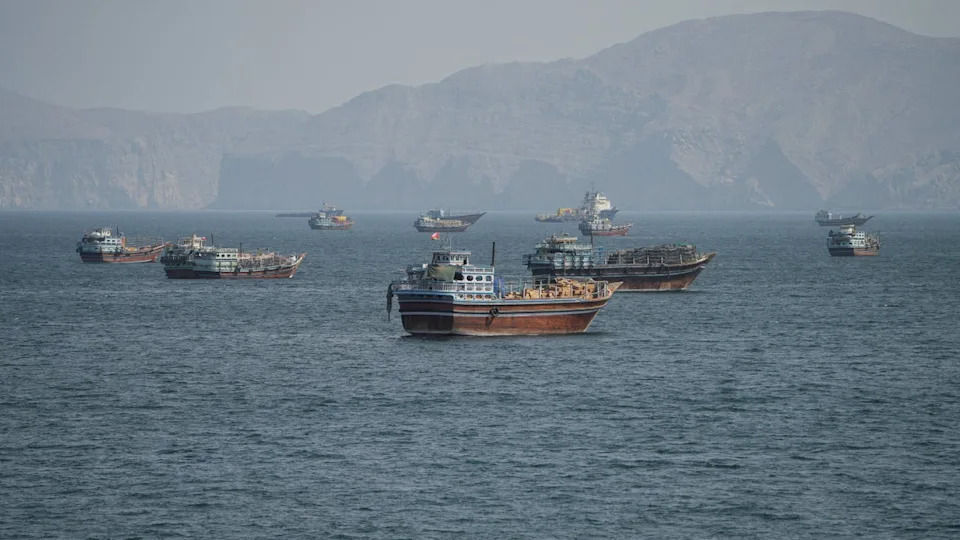
The Strait of Hormuz, which was effectively blocked by Tehran at the start of the war, is experiencing its most violent period of conflict so far. Oil tankers have been the target of an unprecedented number of drone and missile attacks over the past ten days.
In a bid to lower oil prices ahead of the US mid-term elections, Donald Trump was forced to lift sanctions on Russia to allow the export of diesel to the global market amid soaring fuel prices.
Experts said The Independent that the continuing chaos in Hormuz, where a fifth of the world’s maritime oil and gas supplies transit, will have a devastating impact on the global economy – and that the lack of international concern reflects a worrying “new normal”.

Oil stands at $100 a barrel
When the price of oil first hit $100 a barrel, it made headlines around the world. Experts have warned of a global energy crisis that would impact economies, the cost of living and everything from food to medicines.
On Feb. 27, the price of Brent averaged between $65 and $70, according to the U.S. Energy Information Administration. Once the fighting broke out, this amount climbed to over $100, and even briefly reached $120. Despite a brief respite in July following an interim peace deal that subsequently collapsed, the price of oil remained above $100 for much of the past quarter.
“The fact that oil has stabilized around $100 a barrel should not be confused with stability,” says Dr Neil Quilliam, an expert on energy policy, geopolitics and foreign affairs at Chatham House.
“Markets have absorbed a certain degree of unpredictability, but the underlying risks remain significant.
“Saudi energy infrastructure remains exposed and there is ample precedent for attacks causing serious and immediate damage to major facilities with global repercussions.”

Containers float in the water after a ship sank near the Strait of Hormuz off the coast of Oman, in this still image obtained from a social media video, posted October 14, 2026. (Social Media)
According to Kpler, oil flows out of the region averaged 15.5 million barrels per day last month, their highest level since the start of the war. But they fell again amid new strikes, with just 2.9 million barrels sold on October 11, their lowest figure this month.
“The return of oil flows should be seen as a temporary relief rather than a lasting solution, given the considerable military resources required to secure transport, the large number of vessels involved and the high insurance and operating costs,” says Dr Quilliam.
“The real concern now is less about market sentiment and more about physical supply. As long as the risks to Hormuz and Bab al-Mandab persist, a credible threat to Gulf exports will remain.
“This is important not only for the region but also for the global economy, which remains highly sensitive to disruptions in one of the world’s most important energy corridors.”
Attacks in Hormuz reach record level
According to the analysis carried out by the Financial Times24 ships were hit in the two weeks leading up to October 11, the most intense period of attacks of the entire war. This is almost double the second worst period, when in the first two weeks of the war in March, 13 ships were hit.
“Iran could develop its anti-ship missile capabilities to improve its ability to target ships,” the Institute for the Study of War said.
Dr Quilliam says the nature of attacks around the waterway has “evolved over time”.
“They have become more frequent, more geographically dispersed, and more diverse in their tactics. Along with missile and drone strikes, there are growing concerns about the use of mines, small boats for reconnaissance and targeting, and other methods designed to compensate for damaged surveillance and radar capabilities.

“One constant has always been Iran’s willingness to follow through on its threats, meaning markets cannot easily ignore the risk of escalation.”
The route became so perilous that ship captains were reportedly paid $100,000 a month to transit. At least 25 sailors have been killed near the strait, and their families are struggling to obtain compensation, according to the New York Times.
Food, fuel and economy hit
A food security crisis in parts of Asia and Africa could be caused by the failure of the United States and Iran to agree on a U.N.-backed plan to transport fertilizer through Hormuz, an official overseeing the project told Reuters on Wednesday.
“The effects of the initial lockdown of the Strait of Hormuz… are now starting to be felt,” International Fund for Agricultural Development President Alvaro Lario told Reuters.
Disruptions in fertilizer shipments and increased fuel transportation costs linked to disruptions in Hormuz are compounded by El Niño and disruptions to wheat supplies from the Black Sea, which increase costs throughout the food supply chain, he said.
The International Monetary Fund added to the warnings by saying that prolonged war in the Middle East and further disruptions to energy production, shipping routes or critical infrastructure pose the greatest risk to the economies of the Middle East and Central Asia.
Gn bussni