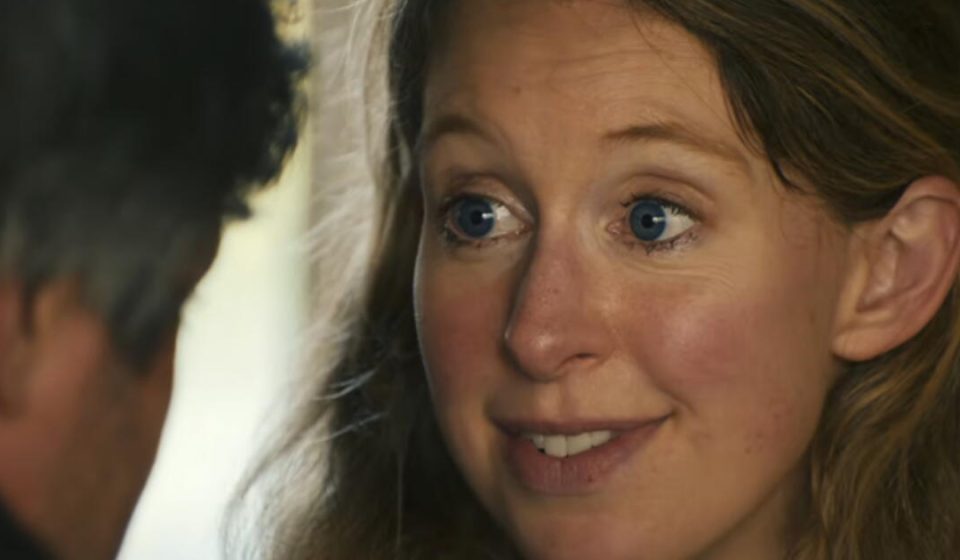

A former research engineer who worked closely with Elizabeth Holmes at Theranos says “You can see everything” doesn’t show everything.
You may remember Tyler Shultz from HBO’s “The Inventor: Out for Blood in Silicon Valley” or even the fictionalized series “The Dropout” starring Amanda Seyfried as the disgraced CEO of Theranos. He was one of the whistleblowers who sounded the alarm when Holmes’ blood testing technology was not the revolutionary medical device it claimed to be. Shultz met Holmes through his grandfather, former Secretary of State George Shultz, who served on the board of Theranos and offered Shultz an internship at the medical diagnostics startup, which quickly evolved into a full-time position as a research engineer. During his eight months on the job, he realized something was seriously wrong.
The directors of “You Can See Everything,” Nathan Fielder and Lance Oppenheim, may have fallen into Holmes’ carefully planned trap, Shultz warns in a new essay.
“I had the displeasure of watching disgraced Theranos founder Elizabeth Holmes at work, not just during a three-hour movie, but throughout my entire adult life. I was an employee turned whistleblower at Theranos, my grandfather was on its board of directors, she came to my family vacations and birthdays. I met her when I was 20, she went to prison when I was 32 years,” he wrote in a Stat News op-ed published Monday.
“I wish I could have told director Nathan Fielder what I told (New York Times reporter) John Carreyrou when he started investigating her: Don’t underestimate Elizabeth Holmes.”
Los Angeles Times columnist Glenn Whipp wrote that the film leaves viewers with many questions: “about Holmes, about the slippery nature of truth, and about the objectivity of documentary cinema itself.” The film, billed as a documentary, grossed $15 million this weekend, making it the second highest-grossing film of the genre.
But Shultz says that while “You Can See Everything” is an entertaining work of art, it’s certainly not a documentary, and “it’s dangerous to pretend that it is.”
Shultz calls out what he says are misleading elements of the film, including the blood testing device that Holmes shows Fielder.
“Back to the Theranos device itself. During this scene, my wife had to squeeze my arm to keep me from jumping out of my seat in the theater and screaming, ‘THIS IS NOT THE DEVICE,'” Shultz writes. “It was not the device I worked with 12 hours a day, nor the device we hid from regulators, nor the device that constantly failed quality checks, nor the device we used to knowingly give patients inaccurate medical results. The device she showed Fielder on the kitchen table was not the reason she went to prison. Elizabeth showed him a future version of the Theranos product that was never completed and was never used in order to lead Fielder down this semantic rabbit hole and trick him into filing a lawsuit over something completely false.”
The research engineer-turned-whistleblower also denounced the quaint two-bedroom apartment in which the film was filmed, pointing out that Holmes had just lived with his partner Billy Evans, whose family owns a luxury resort in San Diego, in an estate listed for $125 million.
It also raises questions about the abuse Holmes suffered at the hands of her ex-boyfriend, convicted fraudster and COO of Theranos, Ramesh “Sunny” Balwani. Shultz claims Holmes spotted Balwani’s abusive tendencies and saw him as the perfect fall man if things went wrong.
Gn entert