These babies grew up with strict sugar limits. Decades later, the health results are spectacular. : Science Alert

It was January 1940 and Britain was facing a serious problem.
German attacks on importing ships threatened to trigger extreme food shortages, thereby starving the nation into submission.
Overnight, strict food rationing went into effect, limiting the amount of certain foods people could buy, including common staples like sugar.
Decades and lifetimes later, the long-term effect of this forced sugar reduction, which continued into the 1950s, appears to have significantly improved the health of an entire generation of postwar babies, research suggests.
In an article published in PNASThe researchers analyzed the health data of 64,761 people born in the United Kingdom between 1951 and 1956, drawing their information from the UK Biobank study.
Sugar rationing, already relaxed earlier that year, ended in September 1953, after which average consumption levels quickly doubled.
By focusing on the period 1951-1956, straddling the boundary, the researchers were able to compare the adult health of babies who spent their first 1,000 days (from conception to age two) on sugar rationing with babies born immediately afterward who did not experience these limits.
They also compared the relative exposure of babies who experienced a longer period of sugar rationing to those born a little later, but still before restrictions were lifted.
This is not the first time researchers have turned to this historic event and the unique scientific data it provides.
Previous studies have shown that sugar-rationed babies have a lower risk of chronic disease, a lower chance of developing Alzheimer’s disease, and appear to have better cardiovascular health.
But what about the risk of cancer?
“Excess sugar consumption is implicated in several cancers through insulin resistance, chronic inflammation and metabolic reprogramming,” write health economists Chen Zhu of China Agricultural University and Weilong Zhang of the University of Cambridge.
“Yet the question of whether early-life sugar exposure causally determines long-term cancer risk remains open.”
Their research answers this question, showing significant reductions in cancer incidence among babies whose sugar intake was limited early in life.
Although these babies and their parents didn’t have to deal with modern advertising and stacked supermarket shelves luring them with increasingly sugary foods, the findings are a window into the impact of sugar (or lack thereof) on health.
Related: Study reveals effect of lifetime exposure to fluoride in drinking water on cognition
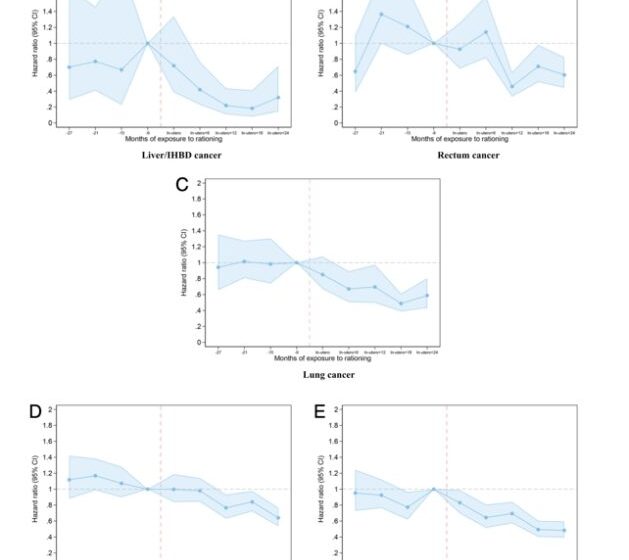
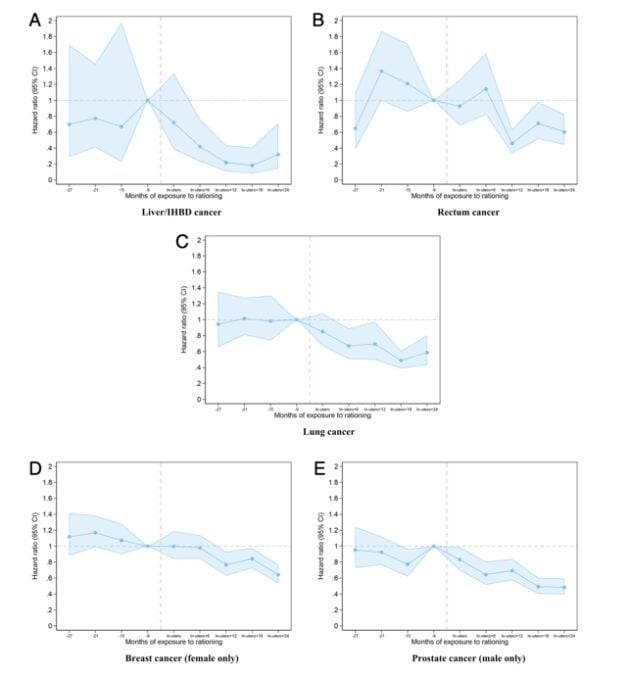
Compared to babies who were not rationed sugar, babies who were rationed sugar during their first 1,000 days were 69% less likely to develop liver cancer as adults.
They also found a reduction in the incidence of prostate cancer (52 percent less), lung cancer (41 percent less), rectal cancer (40 percent less) and breast cancer (36 percent less).
Sugar-rationed babies also tended to have longer telomeres – the caps on the ends of chromosomes that protect our genetic material, linked to longevity.
According to the researchers, the sugar-rationed babies’ telomere length equated to about 2.2 fewer years of biological aging, suggesting that they aged more slowly throughout their lives, enjoying better overall health than non-sugar-rationed participants.
Another interesting finding was that sugar-rationed babies appeared to exhibit persistent eating habits into adulthood, compared to their non-rationed peers.
“Rationed cohorts consumed less sugar, ate smaller amounts of food, and maintained healthier, more diverse diets five decades after the policy ended,” the researchers write in their paper.
Although we can’t be entirely sure, researchers have some ideas.
“The level of sweetness that people are exposed to very early in life can shape their taste preferences for a long time,” Zhang explained in The Conversation.
“There appear to be two mechanisms at work. One is biological – early nutrition can shape the development of metabolism, organs and the immune system. The other is behavioral – a taste for less sweetness, formed early, appears to persist.”
The results are fascinating: In the years after World War II, a generation of children was forced to limit their sugar intake to levels comparable to those the World Health Organization recommends for everyone today.
And what do you know? They were healthier.
 ))>
Although only an observational study, the researchers say that the sugar rationing threshold experimental conditions (which split participants into two distinct groups) produce a kind of “causal evidence” linking sugar consumption to adult cancer risk.
Related: People Exposed to Sugar Rationing Early in Life Look Biologically Younger in Their 50s
Not everyone agrees with the “causal” interpretation. In a letter published in PNASmedical scientist Nicola Cirillo of the University of Foggia in Italy says historical records contradict the idea that rationed infants received little or no sugar.
“THE Social food servicepublished during the study period…confirms the provision of national dried milk specifically for children under two years of age, which required 1½ teaspoons of sugar per meal,” notes Cirillo.
It is therefore difficult to link the results to a specific sugar dose during development.
Zhu and Zhang responded that their results reflect exposure to the rationing regime as a whole, not a measured amount of sugar. They agreed that their description of infants’ sugar intake was “too strong.”
Overall, the results should be interpreted with caution.
“This does not mean that children should not eat sugar at all,” Zhang wrote, “and it certainly does not mean that postwar sugar rationing is a desirable policy.”
The results are reported in PNAS.
This article was fact-checked by Rebecca Dyer and edited by Rebecca Dyer. Although we are proud of our process, we are only human. If you spot an error, please let us know.
Gn Health