This heart treatment from the 1970s could also improve the memory of Alzheimer’s patients: ScienceAlert

A little-known treatment for heart failure, developed more than half a century ago and perfected in the 1970s, could provide a potential therapy for patients with Alzheimer’s disease.
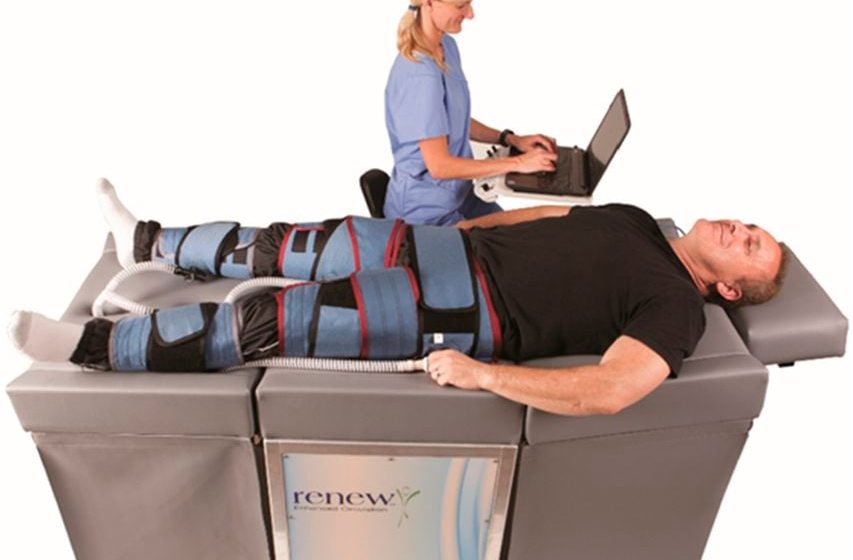
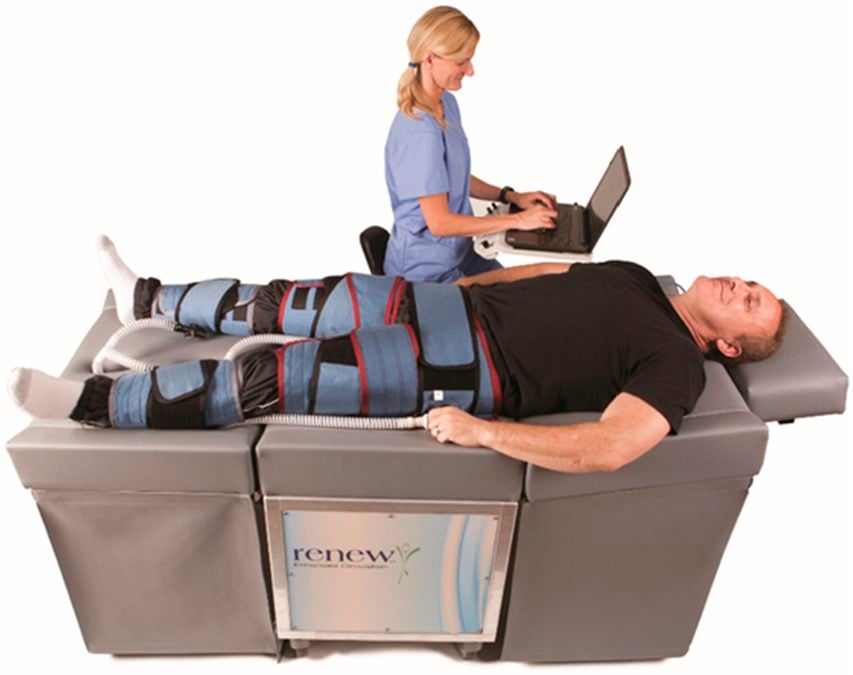
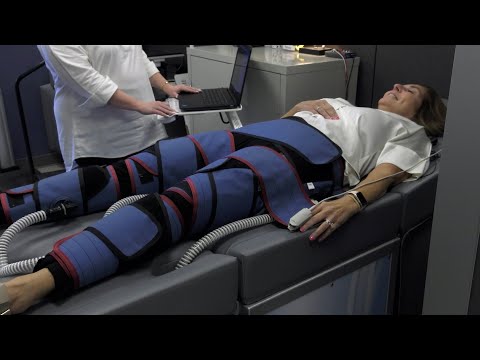
The treatment is called external counterpulsation (ECP) and compresses the lower body using compressible cuffs around the calves, lower thighs and buttocks.
The non-invasive circulatory support device helps propel blood toward the heart, possibly improving arterial function.
Today, ECP is approved by the U.S. Food and Drug Administration (FDA) for chest pain, acute myocardial infarction, and congestive heart failure, yet it is rarely recommended or used for such purposes.
Other treatments are simply better established.
ECP may not be so old-fashioned, though.
In recent years, preliminary evidence suggests that ECP may have uses beyond the heart; it could also improve blood flow to the brain.
A randomized clinical trial has now shown that full-pressure ECP several times a week may benefit people with early signs of dementia.
“Seventy-eight percent of patients with mild cognitive impairment or early Alzheimer’s disease improved from their personal baseline after six months of this non-invasive treatment,” says lead author Jack Juni of Renew Research, the company that owns the ECP medical device and funded the trial.
“On average, participants gained five points on standard cognitive scales – an improvement roughly equivalent to recovering one to two years of lost function.”
The trial included 190 patients with mild cognitive impairment or early-stage Alzheimer’s disease.
Compared to placebo, ECP treatments had notable and long-lasting effects on cognition and daily activities.
These improvements were measured using tests of memory, attention, language and reasoning, as well as assessments of everyday abilities such as dressing, eating and completing household chores.
“The success of this treatment highlights the important role of the vascular system in clinical Alzheimer’s disease,” the trial authors conclude.
“PEC is a promising treatment for this otherwise devastating disease.”
The involvement of private industry interests in scientific research is always a reason for skepticism, especially since there is not yet solid evidence of the effectiveness of ECP in the treatment of cerebrovascular diseases.
That said, there is good reason to suspect that ECP might improve blood flow to the brain, and possibly brain function.
In cases of dementia, blood flow to the brain is known to be reduced, with some areas receiving up to 50% less blood flow.
Additionally, features of Alzheimer’s disease in the brain are often closely linked to vascular health.
“Increasing evidence indicates that vascular disease plays a significant role in the pathophysiology of AD and related dementias and represents a target for therapeutic intervention,” write the authors of the recent trial, including neurologist Patrick Moriarty of the University of Kansas.
For years now, Moriarty has been studying whether ECP can improve blood flow to the brain – and reveals in the article that he has received support from Renew Research in the past.
 ))>
To find out if the devices work for patients with early cognitive decline, Moriarty, Juni and their colleagues conducted a single-blind, randomized controlled trial in the United States.
As you can imagine, it’s a little difficult to pretend that someone’s legs aren’t tight, which is why the “placebo” was difficult to hide.
As a compromise, half the group was randomized to receive full-pressure ECP synchronized with their heartbeats, while the other half received sham treatment, involving unsynchronized low-pressure pulses.
Ultimately, sham treatment still appears to provide some benefit, but to a lesser extent.
In the full-pressure group, researchers report that 84 percent of patients showed improvements in cognitive function over the six-month treatment period.
“Compared to each individual’s baseline level, external counterpulsation significantly improved several measures of cognition and overall clinical assessment with minimal adverse events,” the trial authors conclude.
“For the majority of patients, the changes observed represented improvements from baseline rather than simply a slowing of the rate of decline.”
This does not mean that this device can slow the progression of Alzheimer’s disease or mild cognitive impairment. But Renew Research hopes the technology can improve some symptoms.
The first 35 ECP sessions were provided to patients 3 to 5 times per week for one hour. Then, ECP sessions were delivered twice a week.
After six months, the sessions were stopped, yet patients continued to show cognitive benefits.
Six months after the last ECP treatment, 75 percent of those who received the real treatment still showed cognitive improvements since the start of the trial.
“To our knowledge,” the authors write, “this is the first demonstration of a therapy resulting in real improvement from baseline in cognitive and functional abilities in this population.”
More evidence is now needed in larger cohorts and over longer periods of time to understand how ECP might improve brain function in early cognitive decline and how best to deliver treatment.
Participants in this trial were all clinically diagnosed with Alzheimer’s disease, not through blood biomarkers of the disease.
This leaves open the possibility that some suffer from cognitive decline due to other causes, such as vascular dementia.
This may have skewed the results somewhat.
Recently, the Renew Cerezen™ ECP device was certified in the European Union for the treatment of mild cognitive impairment due to Alzheimer’s disease or mild Alzheimer’s disease.
But that doesn’t mean it has strong evidence as a treatment. The device has not received the same authorization from the US FDA.
“The benefit/risk profile is very favorable, particularly compared to that of currently approved Alzheimer’s disease therapies,” say the authors of the trial.
Last year, the company sent a letter to the FDA “concerning the continued delay” in approving its device “despite statistically significant and clinically meaningful results from a rigorously controlled, randomized U.S. trial.”
It’s now in the hands of the FDA.
The research was published in American Journal of Alzheimer’s Disease and Other Dementias.
This article was fact-checked by Fiona MacDonald and edited by Fiona MacDonald. Although we are proud of our process, we are only human. If you spot an error, please let us know.
Gn Health