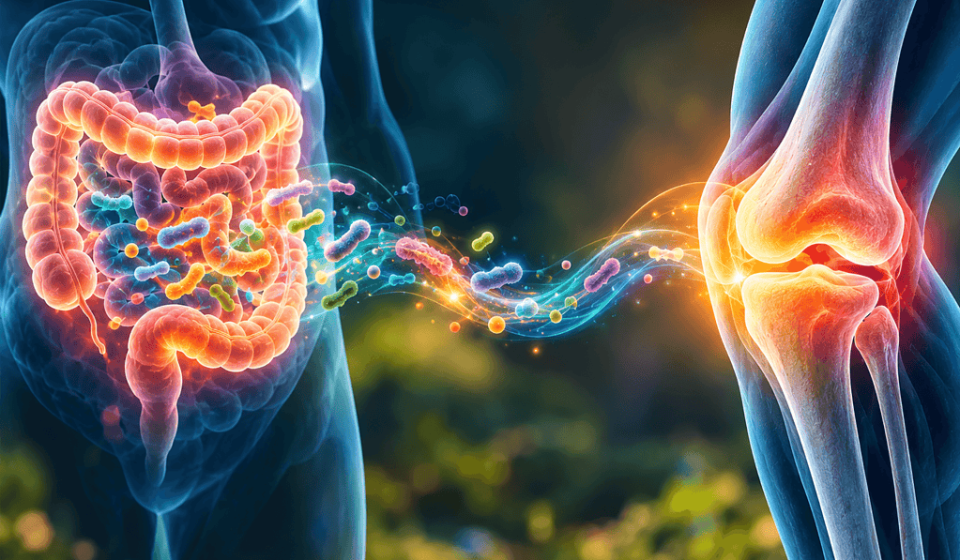

A daily dose of dietary fiber did something that six weeks of physical therapy couldn’t do. It improved grip strength in people with knee arthritis. It also relieved knee pain and changed the way participants responded to painful sensations, hinting at a strange connection between our guts and our joints.
In a six-week clinical trial, researchers at the University of Nottingham tested whether a prebiotic fiber called inulin could help people with knee osteoarthritis. The supplement reduced pain, but its effects differed from those of physical therapy in ways that caught the researchers’ attention.
Managing knee arthritis involves more than just strengthening the muscles around the joint. Sometimes a simple supplement consumed through the digestive system can affect muscle strength and sensitivity to pain.
“This exciting preliminary research highlights how diet and physiotherapy can work in different ways to provide benefits for people with arthritis,” said Lucy Donaldson, director of research at Arthritis UK, who was not involved in the study.
Why scientists looked beyond the knee for arthritis relief
Osteoarthritis of the knee develops when the cartilage and other tissues in the joint gradually break down. Cartilage normally cushions the ends of bones, allowing them to move easily against each other.
As these tissues deteriorate, people may experience persistent pain, stiffness, swelling, and difficulty walking or climbing stairs.
Exercise and physical therapy help strengthen the muscles that support the knee and maintain mobility. However, following an exercise routine can be difficult when the movement itself is painful. Painkillers, despite providing relief, come with their own problems.
Additionally, the severity of arthritis pain does not always correspond to the amount of visible damage in the joint, because the nervous system also influences pain intensity.
This has encouraged researchers to study the gut microbiome, the vast community of microorganisms living in our digestive system. These microbes help regulate inflammation and produce chemicals that can influence pain.
The Nottingham researchers were particularly interested in whether changing the activity of gut bacteria could offer another way to manage osteoarthritis symptoms.
Putting 20 grams of fiber to the test
The team conducted a randomized controlled trial called INSPIRE. Of the 136 adults with knee osteoarthritis who were randomized, 117 completed the six-week trial. Participants had an average age of around 68 years and 58 percent were women.
The researchers divided them into four groups. One received 20 grams of inulin daily, another followed a digitally-assisted physiotherapy exercise program, a third received both treatments, and the fourth took maltodextrin, a starch used as a placebo.
Inulin is a natural dietary fiber found in foods such as chicory root, Jerusalem artichokes, onions and garlic. Unlike regular digestible carbohydrates, inulin passes through the small intestine largely intact. When it reaches the large intestine, beneficial bacteria ferment it, producing compounds called short-chain fatty acids.

One of these compounds, butyrate, helps maintain the intestinal lining and may influence inflammation and biological pathways involved in pain. This makes inulin a prebiotic. Rather than introducing new bacteria into the digestive system, it provides food for the bacteria already living there.
Over six weeks, researchers assessed participants’ knee pain, sensitivity to painful pressure, grip strength, and physical performance, including their ability to get up from a chair and move around.
They also looked at biological markers, including short-chain fatty acids and a gut hormone called glucagon-like peptide-1 (GLP-1).
Fiber and physical therapy helped in different ways
Inulin and physiotherapy reduced knee pain. For example, compared to placebo, inulin was associated with a reduction in pain of 1.11 points on a 10-point scale, while physiotherapy produced a reduction of 1.55 points. Both differences were statistically significant, although the study did not establish that one treatment was superior.
However, inulin also improved grip strength by an average of 4.62 kilograms compared to placebo and reduced sensitivity to pressure and repeated painful stimulation, benefits not seen with physical therapy alone.
“This study raises the exciting possibility that a simple dietary change – adding a fiber supplement to your breakfast or yogurt – could significantly reduce pain and improve physical function,” said Afroditi Kouraki, lead researcher and researcher.
Physical therapy, meanwhile, improved performance on tests measuring how quickly participants could stand, walk and sit, and how many times they could get up from a chair in 30 seconds. Inulin did not produce these improvements.
The combination also reduced pain, but the researchers could not determine whether using the two treatments together provided additional benefit.
Another difference appeared in treatment compliance. Only 3.6 percent of participants in groups without physical therapy dropped out, compared to 21 percent of those assigned to groups involving physical therapy.
Taking a daily supplement may be easier to maintain for some patients than following a structured exercise program.
“Our results suggest that targeting gut health with a prebiotic supplement is a safe, well-tolerated and effective way to reduce pain in people with knee osteoarthritis. The very low dropout rate compared to the exercise group is also encouraging from a public health perspective – people were able to easily integrate this supplement into their daily lives,” Kouraki added.
A gut hormone gives an unexpected clue
Participants receiving inulin showed increased levels of butyrate and GLP-1, a hormone produced in the gut that helps regulate blood sugar and appetite.
GLP-1 is widely known because diabetes and weight loss drugs such as Ozempic and Wegovy act on its biological pathway. However, inulin is not a GLP-1 drug. Instead, it may influence the body’s natural production of hormones by altering gut microbial activity.
Researchers found an association between higher GLP-1 levels and better grip strength, suggesting a possible link between gut bacteria, hormone signaling and muscle performance.
“The link we observed between GLP-1 and grip strength is particularly intriguing and points to a broader gut-muscle pain axis that merits further research. This could have implications not only for osteoarthritis, but also for understanding how gut health influences aging and physical resilience more broadly,” said Ana Valdes, one of the study’s authors and a professor of molecular and genetic epidemiology.
Overall, fiber could be a relatively inexpensive and accessible addition to existing arthritis treatments.
However, the trial was relatively small and lasted only six weeks. It remains unclear whether improvements persist over time, which patients benefit most, or precisely how gut bacteria influence pain and muscle strength.
Although inulin was generally well tolerated, 23 of 50 participants who took inulin-containing treatment reported minor digestive problems, including gas and bloating. These symptoms did not prompt anyone to withdraw.
As more participants dropped out of physical therapy groups, researchers changed how new participants were assigned, introducing some uncertainty into the results.
Larger, longer trials will be needed to confirm the benefits and determine whether changes in butyrate and GLP-1 actually result in improvements.
The study is published in the journal Nutrients.


Gn Health