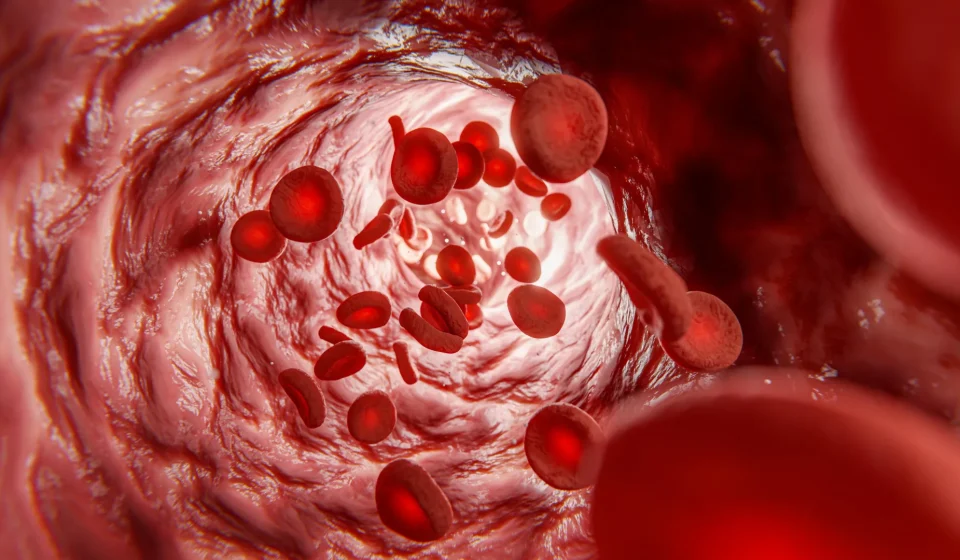

Blood vessels naturally become less flexible as we age, and certain illnesses can accelerate this process. As blood vessels stiffen, the risk of cardiovascular disease and premature death increases.
One factor that can contribute to this damage is excess phosphate in the blood. Although high blood phosphate (hyperphosphatemia) is relatively rare in the general population, it occurs much more commonly in people with chronic kidney disease (CKD), whose kidneys gradually lose their ability to filter waste products from the blood.
Scientists at the University of Colorado Anschutz School of Medicine have identified a kidney protein that plays a critical role in regulating blood phosphate levels. This finding could have particularly important implications for people living with chronic kidney disease.
In a new study published in October 2026, researchers found that a deficiency of this protein led to faster stiffening of blood vessels and shortened lifespan in animal models. These effects were particularly pronounced when the animals consumed a diet rich in phosphate. Reducing phosphate intake helped to mitigate some damage.
The results indicate a potential new target for drugs and other therapies designed to maintain healthy phosphate levels. Such treatments could potentially help people with CKD improve their overall health and potentially live longer.
“Phosphate is really underestimated in terms of longevity in all mammals. The higher the concentration of phosphate in the blood, the shorter the lifespan,” says Makoto Miyazaki, PhD, research professor in the Division of Kidney Diseases and Hypertension and senior author of the new study.
How excess phosphate accelerates the aging of blood vessels
Phosphorus is an essential nutrient that helps build and maintain strong bones. It occurs naturally in a wide variety of whole foods, including meat, poultry, fish, whole grains, nuts, legumes, and dairy products, usually in the form of organic phosphate compounds. Food manufacturers also add phosphates to processed foods and beverages to improve flavor and extend shelf life.
Although phosphorus is necessary for good health, excessive levels in the blood (hyperphosphatemia) can trigger a series of damaging biological changes. Phosphate additives may be of particular concern because the body absorbs them more quickly and efficiently than organic phosphates naturally found in whole foods.
Consistently high phosphate levels can cause smooth muscle cells in the walls of blood vessels to behave more like cells responsible for building bone. As a result, these cells begin to deposit calcium phosphate crystals resembling those found in bones, causing blood vessels to harden (or calcify).
Healthy blood vessels are flexible, allowing them to expand and contract in response to changing demands of blood flow. Calcification compromises this flexibility, effectively accelerating vascular aging and potentially contributing to many age-related health problems throughout the body.
Hidden protein helps maintain phosphate balance
Under normal circumstances, the kidneys remove excess phosphate from the blood before it reaches harmful levels. However, as CKD progresses, the decline in kidney function makes it increasingly difficult for the body to eliminate phosphate and other substances.
Maintaining the right amount of phosphate requires continuous adjustments. After the kidneys filter phosphate from the blood, some is eliminated through urine, while the rest is returned to the circulation. A protein known as NPT2A is responsible for reabsorbing about 75% of filtered phosphate, preventing the body from losing too much phosphorus.
However, when phosphate levels are already high, this recycling mechanism can become problematic. Miyazaki and his colleagues discovered that another protein, called TMEM174, acts as a natural brake on this process. By binding to NPT2A, it limits the amount of phosphate reabsorbed into the blood.
Protein deficiency shortens lifespan in animal models
The latest findings highlight the importance of TMEM174 in maintaining healthy phosphate levels. Protein-deficient animals had trouble regulating phosphate in their blood, had increased vascular calcification, and had significantly shorter lifespans.
“We don’t yet completely understand how, but somehow TMEM174 destabilizes NPT2A,” says Miyazaki. “And without enough TMEM174, homeostasis is disrupted.”
TMEM174 deficiency appears to result primarily from genetic factors rather than chronic kidney disease itself. However, research suggests that people with CKD who also have insufficient levels of this protein may be particularly vulnerable to the harmful effects of excess phosphate.
A potential new target for blood vessel protection
Miyazaki hopes this discovery will lead to treatments that reduce the excess amount of phosphate that the kidneys release into the bloodstream.
Dietary changes may provide some benefits, including reducing consumption of fast food, processed meats, sodas, and other processed products that contain high amounts of phosphate. However, Miyazaki explains that managing phosphate levels through diet alone can be difficult, especially for people with CKD. Since phosphate is present in a very wide range of foods, it is virtually impossible to avoid.
In future research, Miyazaki plans to study these kidney proteins in more detail, as well as the hormones involved in maintaining the body’s chemical balance. He also wants to better understand why calcium buildup in blood vessels is so common in people with CKD.
For now, identifying the role of TMEM174 represents an important advance in understanding how the body regulates phosphate. It could also help lay the foundation for new approaches to improve the health of people with disrupted phosphate balance.
“Scientists have been studying phosphate homeostasis for over 100 years, so finding a new protein that regulates phosphate is somewhat unique,” says Miyazaki.
Gn Health