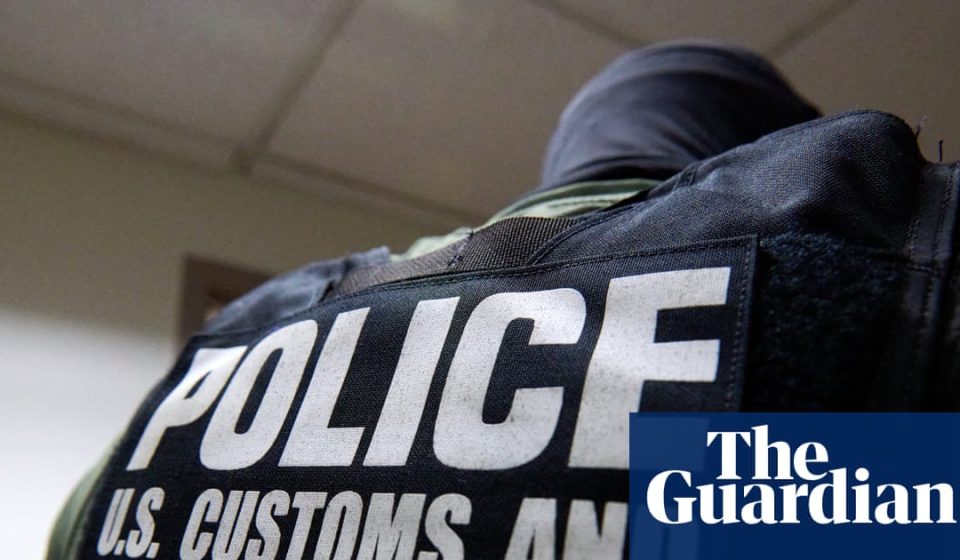
Trump administration deported US citizen to Mexico, DoJ admits in court | American immigration

The Trump administration recently admitted in federal court to deporting a U.S. citizen to Mexico after U.S. authorities incorrectly concluded he was an undocumented immigrant.
Lawyers for the U.S. Department of Justice made the admission Friday in seeking dismissal of the damages lawsuit that the deported man — Brian José Morales García, of Austin, Texas — is filing against the federal government.
Morales García’s case took this turn as the White House faced bipartisan criticism for Donald Trump’s aggressive campaign of mass deportations throughout his second presidency — widely seen as a factor in the electoral blows suffered by his Republican Party in the Nov. 3 midterm elections, costing him control of Congress.
Morales García, born in Denver and raised in Mexico, was traveling with his boss to his job as an air conditioning installation technician on April 3 when they were stopped by state and local agents near Fredericksburg, Texas.
Morales García was his boss’s passenger and did not have his identification papers with him. The 25-year-old also told police that he had his birth certificate and social security card at home, but they did not believe him and so called immigration officers, who arrested Morales García.
Court records recount how Robert Gil Jr., a U.S. Customs and Border Protection agent, accessed records from Mexico showing Morales García’s Mexican birthplace. Gil Jr. also accused Morales García of saying he was born in Mexico and observing that he spoke only in Spanish, according to court records.
Morales García was deported on April 7, with the Trump administration later accusing him in a media statement of being in the country illegally.
Morales García’s lawyers filed a lawsuit on May 1, claiming he falsely stated he entered the United States illegally and signed papers for rapid deportation in response to threats of imprisonment made by agents. His lawsuit, which seeks an unspecified amount of money, also claimed that his family and friends attempted to provide documents proving his U.S. citizenship before his deportation.
But those efforts were improperly rebuffed, according to Morales García’s lawsuit.
The Trump administration has denied Morales García’s claims, saying Friday that he traveled to Mexico voluntarily and therefore had no basis to sue the federal government for damages. Nonetheless, in a court filing filed Friday, the administration acknowledged that Morales García “was authorized to re-enter” the United States on August 30 after reviewing “information regarding the plaintiff’s place of birth.”
“The plaintiff is a dual citizen of the United States and Mexico,” Justin Simmons, U.S. attorney for the Western District of Texas, wrote in a court filing first reported by the Texas Tribune.
Americans are not required to carry proof of citizenship with them when going about their daily lives. Lawyers across the United States have seen cases like Morales García’s, which begin after a meeting with local authorities, demonstrating how those officials are generally unaware of the nuances of immigration policy.
The Texas Department of Public Safety is one of several U.S. state and local agencies that work with federal immigration authorities through their 287(g) program.
The judge presiding over Morales García’s trial, Robert Lee Pitman, did not immediately rule Friday on the Trump administration’s request to dismiss the case. The lawsuit also named unspecified Texas state and local law enforcement officers as defendants.
An October 2025 report from ProPublica found that immigration agents arrested more than 170 U.S. citizens during the first nine months of Trump’s second presidency.
Meanwhile, the media statement falsely claiming that Morales García was in the United States illegally is among several statements related to immigration enforcement under the Trump administration that have come to light under intense scrutiny.
A Guardian analysis published in July examined Trump administration press releases on 26 cases of cars allegedly being used to assault immigration enforcement officers — and almost all of them were refuted or dropped.
Gn headline