
NEWYou can now listen to Fox News articles!
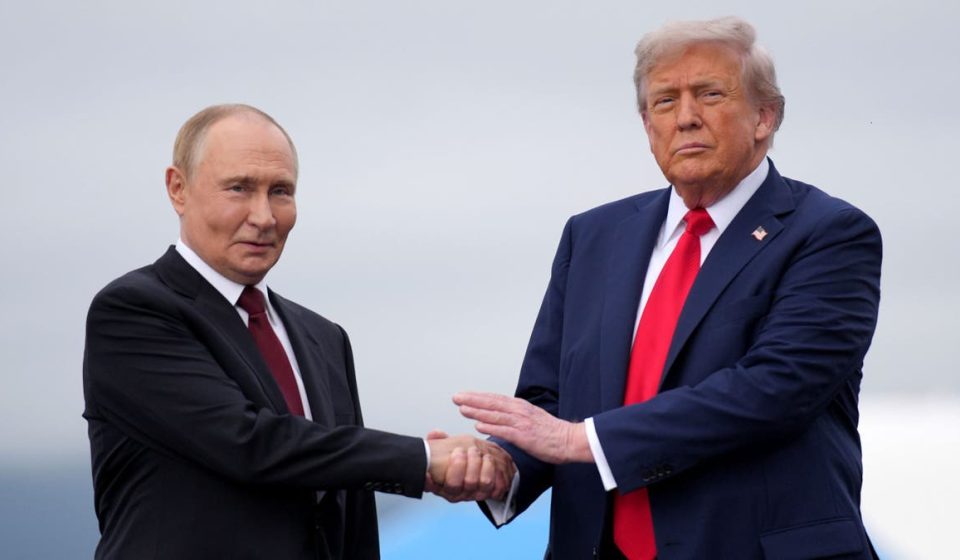
President Donald Trump is easing some of the economic pressure on Russia in hopes of moving Vladimir Putin closer to a peace deal — a gamble that will test whether economic incentives can move Moscow where years of sanctions have not.
The administration’s decision to temporarily ease restrictions on Russian diesel has sparked opposition from Republicans on Capitol Hill and skepticism that the move will significantly lower prices for Americans.
Meanwhile, Russia has offered few public signs of concessions in return.
Six Republican senators joined Democrats this week in urging Trump to reverse his decision, while five House Republicans signed a separate bipartisan letter Thursday seeking to revoke Treasury’s authorization.
This resistance comes as Washington approaches an October 18, 2026 deadline to begin implementing a sweeping new sanctions law that Congress overwhelmingly approved to increase economic pressure on Russia.

BIPARTISAN SENATORS DEMAND RUSSIAN DIESEL DEAL WITH TRUMP, CALL IT “betrayal” of US ALLIES
The administration says allowing Russian diesel to return to global markets could help lower prices for U.S. consumers while demonstrating the economic benefits Russia could gain from improving its relationship with the United States.
Trump defended the deal as a way to increase supply in a global diesel market strained by high prices, emphasizing that Russian fuel does not necessarily need to be state-supplied to benefit U.S. consumers.
“It’s a diesel deal that’s going to be released to the world market because the world market is suffering from high prices,” Trump told reporters Tuesday.
But energy sector analysts question whether the affected volumes would have a significant impact on prices. Meanwhile, Russia continued to strike Ukraine’s energy infrastructure after Trump declared an immediate energy ceasefire on Sunday.
John Hardie, deputy director of the Russia program at the Foundation for Defense of Democracies, said the diesel deal would make more sense as part of a reciprocal agreement under which Moscow and kyiv stop attacking energy infrastructure.
“The Ukrainians could stand it if it was part of a mutual energy truce where Russia and Ukraine don’t clash with each other’s infrastructure,” Hardie told Fox News Digital.

Plumes of smoke rise from fires at an oil refinery following what authorities said was a Ukrainian drone strike during the Russian-Ukrainian conflict in Moscow, Russia, September 20, 2026. (Reuters/Stringer)
Instead, Hardie said, Trump pressed Ukraine to end its refinery strikes without getting the same restraint from Putin.
“The best solution is to go back to the Kremlin and try to get this two-way solution,” he said.
Trump announced the diesel deal on Oct. 9 after a phone call with Putin, saying Russia would immediately supply more than 300,000 tons of diesel to the “U.S. and global market,” followed by another 500,000 tons in November, a million tons shortly after and ultimately another 3 million tons depending on the condition of its refineries.
TRUMP’S DEAL WITH RUSSIA COULD FEED PUTIN’S WAR, EX-NATO COMMANDER WARNS AS ZELENSKYY TELLS ‘NYET’
Treasury issued General License 135 on the same day, temporarily authorizing transactions involving diesel of Russian origin until April 7, 2027.
The diesel dispute is now part of a broader tension between Trump and Ukrainian President Volodymyr Zelenskyy.
Trump has repeatedly pressed kyiv to end attacks on refineries, while Zelenskyy has criticized the diesel deal and accused Russia of ignoring Trump’s energy ceasefire. Ukraine resumed attacks on Russian oil infrastructure this week after saying Moscow had failed to respect the pause.
Meanwhile, Russia has stepped up its attacks on Ukraine’s energy system as winter approaches. A major missile and drone attack damaged dozens of energy facilities on Wednesday and left hundreds of thousands of Ukrainians without power, according to Ukrainian officials.
The White House says the deal has two goals: increasing supply in global fuel markets and showing Moscow some of the economic benefits that could come from improved relations.
Trump envoys Steve Witkoff and Jared Kushner discussed the deal with Ukrainian officials as part of an effort to restart peace negotiations, Reuters reported. A person briefed on the negotiations said the deal could help “soften” Moscow’s position by signaling that Trump remains willing to do business with Russia.
But analysts question how much truly new diesel Russia can supply.
“The amount of diesel that Russia can supply would be a drop in the ocean compared to global demand,” Masha Kotkin, a researcher at the Center for Strategic and International Studies, told S&P Global.
“If you ask about diesel prices in the United States, I don’t think it will make a difference,” she said.

A tractor-trailer refuels with diesel fuel at a Kwik Star gas station in Mitchellville, Iowa, U.S., Thursday, April 30, 2026. (Bryon Houlgrave/Bloomberg via Getty Images)
Sergey Vakulenko, a senior fellow at the Carnegie Russia Eurasia Center and a former Russian oil official, also cautioned against viewing the roughly $7 billion worth of diesel envisioned in the deal as new revenue for Moscow, noting that Russia was already exporting substantial amounts despite Western sanctions.
He estimated that sanctions relief could instead benefit Russian exporters by about $30 to $40 per ton through better trade terms and lower shipping costs — tens of millions of dollars per month, only a portion of which would reach the Russian state through taxes.
At the same time, Ukrainian strikes have severely limited Russia’s ability to increase its supplies. Vakulenko said Russian diesel available for export fell from around 3 million tonnes per month in April to around 325,000 tonnes in September, leaving both the additional financial benefits for Russia and the deal’s potential impact on global prices more limited than the headline figures suggest.
Hardie said signs of division between Washington and kyiv could encourage Putin to increase military pressure rather than compromise.
“This message of irresolution and division between Washington and kyiv only encourages Putin to step up military pressure, sort of seeing this opportunity,” Hardie said.

Smoke and flames rise over Moscow on June 18, 2026, following a Ukrainian drone attack that hit the Kapotnya oil refinery and other targets in the Russian capital. (East2West)
He said the administration had already touted sanctions relief and renewed economic ties as benefits Russia could unlock through a negotiated settlement. Offering some of these benefits in advance, he warned, could undermine that incentive.
“This will cause Putin to stick to maximalist demands,” Hardie said.
The debate comes as Congress moves in the opposite direction.
Trump signed the Lindsey O. Graham Act Sanctioning Russia and Iran on September 18, giving the administration new authorities to target Russian officials, financial institutions and entities helping to support the war. Its first 30-day implementation deadline arrives on October 18.
Six Republican senators – Thom Tillis, Susan Collins, Alan Armstrong, Lisa Murkowski, Mitch McConnell and John Cornyn – joined six Democrats on Tuesday in calling on Trump to cancel the diesel deal and implement the new sanctions law.
The senators acknowledged the need to reduce energy costs, but said Russian diesel would have a “negligible impact” on prices while generating additional revenue for Moscow.
A separate bipartisan group of 22 House lawmakers on Thursday called on Trump to revoke diesel authorization and fully implement the Graham Act.
The White House has stuck to the agreement, arguing that Trump’s priority is to reduce costs for Americans while continuing to seek to end the war.
Hardie questioned whether economic incentives would carry enough weight to change Putin’s calculations.
“Putin cares much more at this point about Ukraine and its legacy, and these broader kinds of grievances that led him to this war, than he does about GDP or the well-being of Russia, otherwise he never would have done this in the first place,” Hardie said.
CLICK HERE TO DOWNLOAD THE FOX NEWS APP
The diesel deal now puts Trump’s theory of leverage to the test: whether giving Putin a glimpse of the economic benefits available through better relations can spur him toward a settlement, or whether Moscow will view an easing of pressure ahead of a ceasefire as reason to wait longer.
Gn usa