Trump faces Carney’s harsh ultimatum as Canada resists U.S. trade demands and Africa’s largest economy turns to China.

Canada resists US trade demands to protect its auto industry
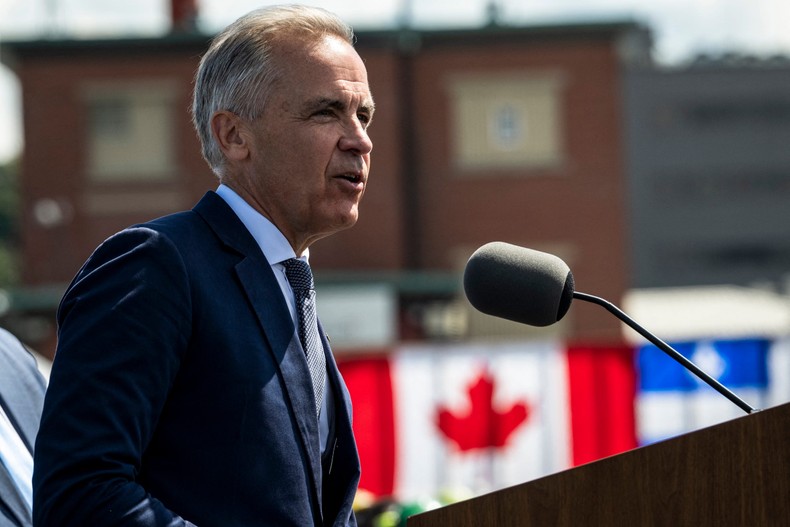
Canadian Prime Minister Mark Carney said Ottawa would not sign any new trade deals with Washington that did not guarantee a sustainable domestic auto sector.
Canada withdrew from bilateral negotiations three months ago after last-minute demands from Washington threatened Canadian auto manufacturing.
After a lengthy discussion with President Trump, Carney emphasized in Manila: “This government will not accept an agreement with the United States that is not compatible with a viable Canadian automobile sector.“, as reported by CBC News.
Carney added that quickly reaching a stable trade deal on the auto sector is “absolutely in the interest of course of Canadian workers, the Canadian automobile sector, but also that of the United States“.

In order to reduce its economic dependence on the American market, the Canadian government presented a national budget of 142.1 billion Canadian dollars entitled “Masters of our Destiny.
Funded in part by domestic oil revenues, the plan funds essential mining, energy production, housing and direct financial support for auto and steel workers affected by U.S. tariffs.
As reported by Business Insider Africa, Canadian Finance Minister François-Philippe Champagne said: “At its core, our plan aims to change Canada’s growth model“.
Champagne emphasized that “no matter what happens south of the border, no matter what happens around the world, we will be more resilient, we will be stronger, we will be more independent“.
South Africa turns to China as US trade policy shifts
While Ottawa strengthens national autonomy, South Africa is expanding its business partnerships in Asian markets following the loss of duty-free access to the US market under the African Growth and Opportunity Act.
Supported by a zero-tariff policy implemented by Beijing for eligible African exports, South African shipments to China jumped by almost 25% between May and August 2026, while imports from China increased by 23%.
Announcing the figures in Pretoria, Chinese Ambassador Wu Peng said he was convinced that “more South African high value-added products would enter the Chinese market in the future“.
Together, the steps taken by Ottawa and Pretoria reflect a broader shift as nations act to protect their economies from Washington’s trade policy shifts.
Gn headline