Trump heads to Nebraska to save GOP headquarters as beef import plan angers rural voters

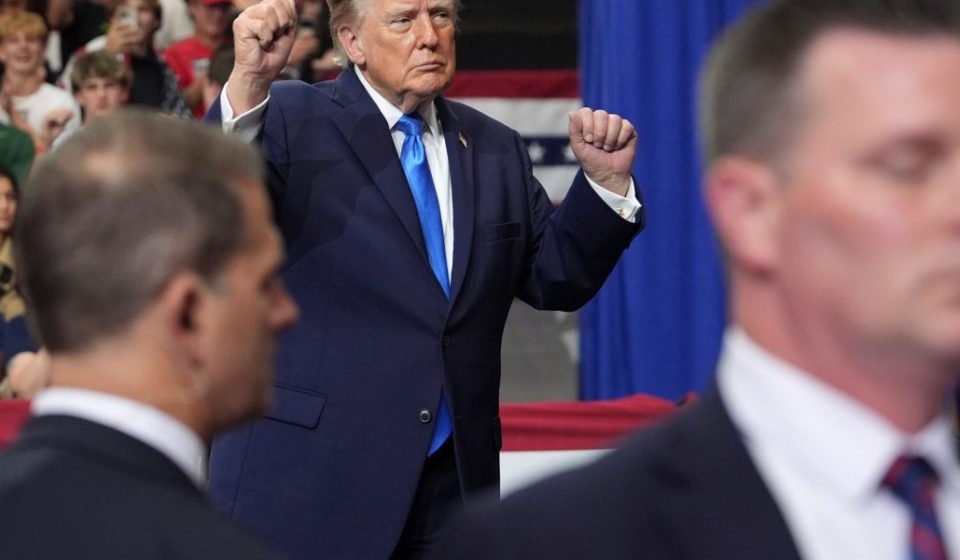
Trump is traveling to Grand Island, Nebraska, located in the solidly conservative south-central part of the state. It’s part of what the Republican president says will be a 32-day blitz of rallies ahead of Nov. 3 that has so far taken him to ruby-red territories like Oklahoma and Alabama. On Wednesday, he will make his second stop in two weeks in Texas with a rally in San Antonio.
“The president is coming to Nebraska to help me campaign, so I can get re-elected,” Ricketts told The Associated Press last week on Capitol Hill.
Ricketts, the state’s former governor, was nominated and then elected to fill Sen. Ben Sasse’s seat when he left the University of Florida in 2023. He is now running for his first full six-year term against independent Dan Osborn — a race that was initially not expected to be competitive but is now being watched by national parties.
Voters across the country are frustrated with Trump’s handling of the economy, including persistently high costs for fuel and groceries. This is a major issue for rural voters who supported the president and his party in recent elections.
The administration’s plan to allow more imports of foreign beef has particularly rattled the agriculturally rich state of Nebraska. Trump wants to lower beef prices for consumers, but ranchers have rebelled against the import proposal, arguing it would undercut them.
“The plan to import low-quality foreign beef does not help Nebraska ranchers,” Ricketts told the AP. “I would advise the White House to change this policy and look for longer-term measures that will help us increase herd size and ultimately lower the price of beef for consumers.”
There are a few Senate races where independents are the challengers
In the House of Representatives, the Grand Island area is represented by Republican Adrian Smith, whose race is not expected to be close. But Nebraska has a competitive House race farther east in Omaha, considered the state’s “blue dot” because the region’s electoral vote in presidential elections often goes to Democrats.
Osborn, a former union leader, ran against Republican Sen. Deb Fischer in 2024 and lost by 7 percentage points. Although national Democrats support him, he declined to say which party he would side with if elected in November.
Other Senate independents, including Angus King of Maine (moderate) and Bernie Sanders of Vermont (left), are meeting with Democrats for organizing and committee assignments.
While the Democratic brand remains deeply unpopular in conservative states, Osborn is not the only declared independent Senate candidate against Republicans this year. In South Dakota, Navy and Air Force veteran Brian Bengs is campaigning as an independent against Republican Sen. Mike Rounds. Bengs ran as a Democrat for the Senate four years ago and was handily defeated by current Senate Majority Leader John Thune.
It’s a similar dynamic in Idaho, where independent Todd Achilles is challenging Republican Sen. Jim Risch.
Democratic voters in Nebraska chose Cindy Burbank as their party’s nominee earlier this year, but Burbank specifically campaigned to ensure that no votes would be siphoned from Osborn in the November general election, and she has since officially dropped out of the race.
Osborn traveled across Nebraska holding meetings in all 93 counties and repeatedly criticized Ricketts for failing to hold town hall meetings to meet with voters.
Ricketts, whose family founded TD Ameritrade and owns Major League Baseball’s Chicago Cubs, served as governor from 2015 to 2023.
Gn usa