Trump rejects Iranian proposal to reopen the Strait of Hormuz and other Middle East news

US President Donald Trump on Saturday rejected The Iranian proposal reopen the Strait of Hormuz within a week if the United States meets certain conditions.
At the same time, Iranian media reported that the country’s president left New York after the United Nations meeting of world leaders, which was attended by the Iranian president. indirect talks with the United States. And Saudi Arabia says he intercepted another missile which he accuses Iran -supported Houthis in neighboring Yemen.
Here’s a look at the latest news from the Middle East on Saturday. More UN General Assembly coverage is available here.
Trump rejects Iranian proposal to reopen the strait
Iran offered this week to reopen the strait and resume negotiations on its nuclear program in seven days if the United States lifts its naval blockade of Iranian ports, lifts sanctions on Iranian oil sales and observes a ceasefire that would include Lebanon.
But on Saturday, Trump rejected the proposal, saying Iran wanted to make a deal because it was “losing so much.”
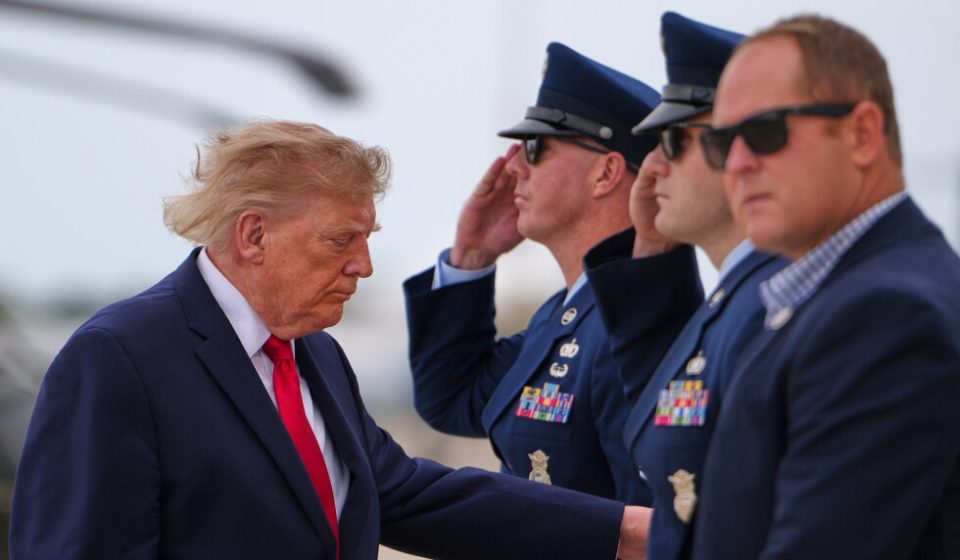
“They want to make a deal and I think that’s great,” Trump told reporters outside the White House before leaving for a college football game. “I would also like to make a deal. But this deal would not be acceptable.”
Iran effectively closed the strait after the Islamic Republic was attacked by the United States and Israel in late February, and the number of ships passing through it has declined significantly due to Iranian threats and attacks on ships in the waterway.
Iranian media say the country’s president has left New York
Iranian semi-official media reported that President Massoud Pezeshkian left New York for Tehran after the annual UN gathering of world leaders.
In his speech, Pezeshkian pushed back on Trump’s latest threat to “wipe out” the Islamic Republic, but he ended by saying Tehran remained open to diplomacy.
Iranian Foreign Minister Abbas Araghchi told reporters Friday evening that, under Tehran’s proposal, Iran would reopen the Strait of Hormuz and resume negotiations on its nuclear program in seven days if the United States lifts its naval blockade of Iranian ports, lifts sanctions on Iranian oil sales and observe a ceasefire this would include Lebanon.
Iranian President Says Supreme Leader, Still Invisible in Public, Has No Health Problems
Iranian President Masoud Pezeshkian told CBS that, from his perspective as a doctor, Supreme Leader Mojtaba Khamenei has “no specific health problems” although he has not been seen or heard from in public since the war with the United States and Israel began in February.
The interview will be broadcast on Sunday.
In the transcript released by CBS, Pezeshkian described his final meeting with Khamenei as lasting more than seven hours. “But, of course, he was healthy enough to be able to endure these hours of this situation. From a medical point of view, he is in perfect health,” the president said. Asked if the supreme leader’s face and legs had recovered, Pezeshkian replied: “Yes.”
Khamenei’s father and other members of his family were killed on the first day of the war.
Saudi Arabia says it intercepted missile fired by Houthis
Saudi Arabia’s military spokesman, Major General Turki al-Malki, said Saturday morning that a ballistic missile launched by Iran-backed Houthi rebels in neighboring Yemen had been intercepted and destroyed. He said he was pulled toward the town of Khamis Mushait in the southwest of the country.
The Associated Press could not immediately and independently verify this. There was no immediate statement of responsibility, although it may take days for the Houthis to issue one.
A regional body representing Gulf Arab states, the Gulf Cooperation Council, condemned the latest Houthi attacks as a “serious escalation and threat to regional security” and urged the international community to respond.
Iraq seeks exemptions from US sanctions on Iranian airlines
Iraq said it was in direct contact with the United States to secure exemptions from sanctions on Iranian airlines as Washington continues to put economic pressure on Tehran.
The Iraqi prime minister’s office said the aim was to secure exemptions for some airports, including flights for humanitarian reasons such as medical care, education and religious pilgrimages.
Many pilgrims in neighboring Iran visit sites such as Karbala and Najaf.
Trump re-releases map calling key waterway ‘Trump Strait’
Before rejecting the Iranian proposal on Saturday, Trump posted an image on his Truth Social platform of the Strait of Hormuz titled “Trump Strait.” This is not the first time he has tried to antagonize Iran in this way.
The White House said only Friday that U.S. officials were having positive and constructive conversations with mediators about the Iran war. Earlier in the week, Iran and the United States participated in hours of indirect talks.
Israeli settlers seize more water sources in the West Bank
Israeli settlers have intensified their efforts to seize natural sources and heritage sites in the occupied West Bank. The springs are vital for drinking water, tourism and agriculture and are increasingly inaccessible to the 2.8 million Palestinians who live there.
In the Jordan Valley, settlers cut a water pipe to a Palestinian village, redirecting it to a pool they named after Herod, the Roman-appointed king of Judea. Israeli rights groups say the move is part of a broader effort to reclaim heritage sites.
The fight over access to water highlights the ongoing struggle for control of the West Bank, where Palestinians have faced shortages since 1967.
___
This report will be updated throughout the day as new developments emerge.
Gn usa