Trump rejects Iran’s seven-day road map to reopen the Strait of Hormuz | US-Israeli war against Iran

US President Donald Trump has rejected a road map submitted by Iran aimed at opening the Strait of Hormuz within a week.
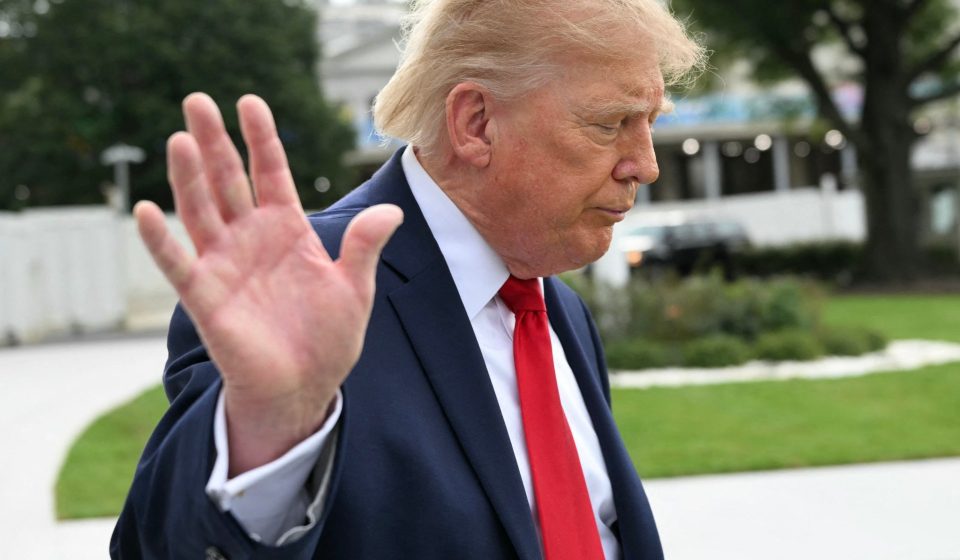
“I reject their proposal,” Trump told reporters outside the White House on Saturday, adding that Iran wanted a deal because it was “losing so much.”
Recommended Stories
list of 3 itemsend of list
“They want to make a deal and I think that’s great,” he said. “I would also like to make a deal. But this deal would not be acceptable.”
Iranian Foreign Minister Abbas Araghchi said Friday that Tehran had formally submitted a seven-day road map to the United States through mediator Qatar and was awaiting Washington’s response.
“It appears the proposal is dead in the water,” said Al Jazeera’s Mike Hanna, reporting from Washington, DC.
On Friday evening, US media reported that Trump would reject the proposal.
Trump was “privately skeptical” of Tehran’s ability to meet his demands, and reportedly told aides that he expects a new bombing campaign against Iran after the US midterm elections in November, the Wall Street Journal reported, citing unnamed US officials.
“President Trump has vacillated between extreme optimism, saying ‘the talks are going well,’ and ‘I want to destroy Iran,'” Hanna said of recent diplomacy between Washington and Tehran.
“There is no consistency in the (Trump) administration’s response,” he said.
But “the one thing that has been made clear by President Trump is that he is content to remain in limbo,” Hanna added, despite concerns among much of the American public that the Iranian conflict is turning into another “endless war.”
The Strait of Hormuz, a waterway critical to global oil supplies, is at the heart of the conflict between the United States and Iran, which is at an impasse after nearly seven months, although new mediation efforts took place this week.
Earlier in the week, Araghchi spoke with Trump envoy Steve Witkoff and previously outlined conditions for ending the war and reopening the vital shipping canal.
On Friday, Iran’s top diplomat said: “Iran has conveyed to the United States, through Qatar, a concrete seven-day plan. If the necessary conditions are met, the strait can be reopened and normal sea passage restored within seven days.”
He was speaking at the United Nations in New York, where he and other senior Iranian officials were attending the General Assembly.
Under the plan, Washington would lift its naval blockade of Iranian ports, lift sanctions on Iranian oil sales, release about $12 billion in frozen Iranian assets and observe a ceasefire covering the region, including Lebanon and Yemen.
“The choice now rests with the United States. Iran does not accept coercion, threats or intimidation, and Iran will not abandon its sovereign rights under pressure,” Araghchi said.
On Saturday, Iranian President Massoud Pezeshkian told Al Jazeera that Tehran no longer trusts negotiations with the United States, after previous rounds of negotiations were followed by attacks and sanctions.
“We have no confidence in the American side and we do not know on what basis an agreement can be reached with them,” said Pezeshkian, who was also in New York for the UNGA.
He denied that Iran was responsible for blocking the Strait of Hormuz, saying the United States “closed the routes in front of us.” He described the closure as “a natural response when routes to Iran are cut.”
The Iranian president said the crisis could be resolved through negotiation rather than force, and that the waterway would be reopened to commercial shipping if negotiations ended the war.
Gn headline