The monument would obscure the nation’s premier military cemetery in the early morning more than 280 days a year, according to a Post analysis.
Washington’s monumental core is a study in careful geometry and deliberate sightlines. From the Lincoln Memorial, past a bridge over the Potomac River, Arlington National Cemetery occupies the hillside in the distance.
President Donald Trump’s proposed 250-foot-tall arch would be an imposing new presence in the space. To understand its impact, the Washington Post built a 3D digital model to scale.
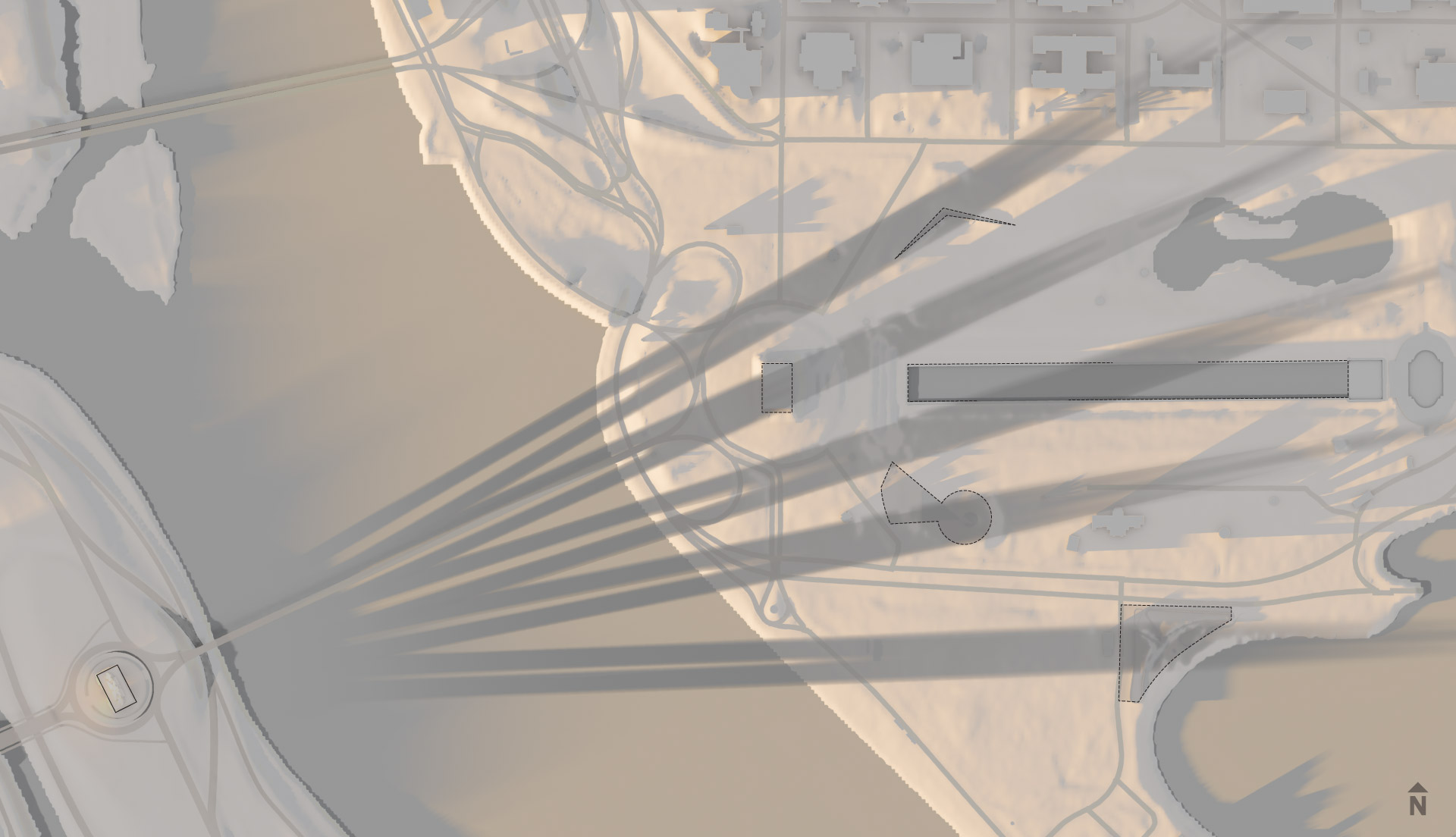
Over the course of a year, the shadow of the triumphal arch would touch burial grounds at Arlington National Cemetery for 284 days, according to the Post. It would briefly cover Kennedy’s eternal flame for 18 days and shade the former president’s memorial on the 50th day. darken the Military Women’s Memorial for 109 days.
The shadow would move over the graves of veterans and their next of kin from the Vietnam War, Korean War, World War II, World War I, the Spanish-American War and the Civil War, the model shows. This would attenuate the tombstones of yesteryear people reduced to slavery. In total, The Post found that it would ignore more than 75,000 graves.
Most days, when the cemetery opened at 8 a.m., the shadows moved away from the field. It would last 26 days beyond this period, depending on the model.
Informed of the Post’s findings, White House spokesman Davis Ingle said in an email that the arch would “enhance the visitor experience” at the cemetery. “The Arc de Triomphe at Memorial Circle will be one of the most iconic landmarks not only in Washington, D.C., but in the entire world,” he said.
The Interior Ministry said in a statement that the arch’s designers had made models and found that only a small part of the cemetery would be affected after it opened – for less than two weeks a year. “This period is less than an hour after sunrise, at which time the shadows are very elongated and distorted and blend with the long shadows of the trees,” the department said.
When asked for copies of the two analyzes Interior said it had conducted, the agency provided 23 pages of visual simulations. The documents show the shadow over a limited number of days and times – almost all after the cemetery opened – and do not explain the methodologies used. The shadow locations in these simulations largely match the shadow locations in The Post’s analysis.
The immense size of the arch and its proposed location, about 400 meters from the cemetery, have troubled historians, preservationists and architects who say it would disrupt the careful composition. that has shaped the nation’s capital for generations.
“The original designers understood that the open space between significant structures was as important as the monuments themselves,” said Neil Flanagan, an architect and historian who is writing a book on Washington’s design.
City planners, like an influential 1902 group known as the McMillan Commission, worked to make each distinct project “like a jewel” within Washington’s borders, helping to give the capital its unique character, Flanagan said.
A towering arch between the Lincoln Memorial and the military cemetery doesn’t fit that vision, he said.
Micki McElya, a history professor at the University of Connecticut, said the symbolism of the shadow cast by Trump’s arch on the military cemetery was “undeniable” and uncomfortable, even if the effects were visible only briefly after the cemetery opened.
“It’s not so much about people in the cemetery seeing shadows as it is about the shadows themselves,” said McElya, whose 2017 book about Arlington National Cemetery was a finalist for the Pulitzer Prize.
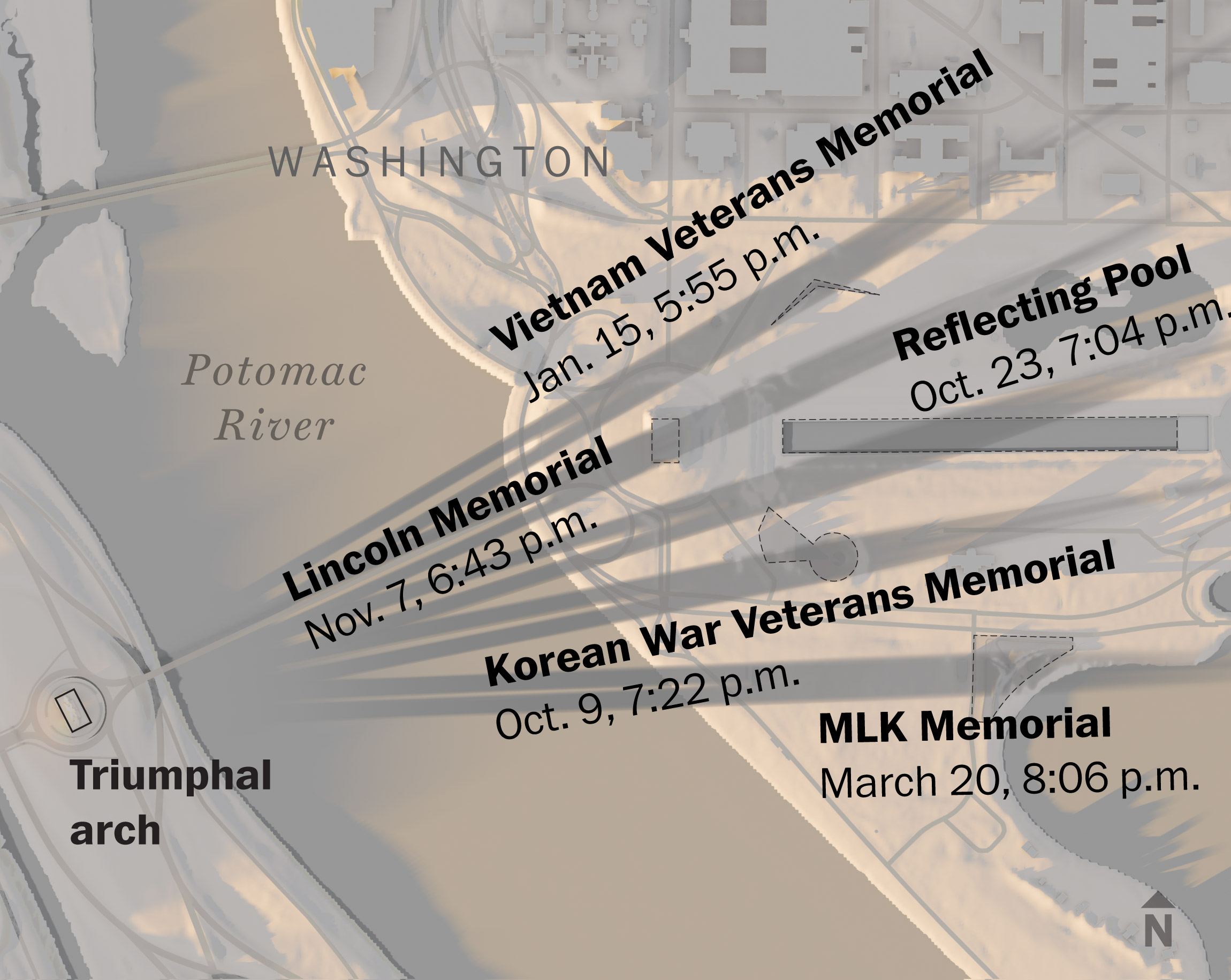
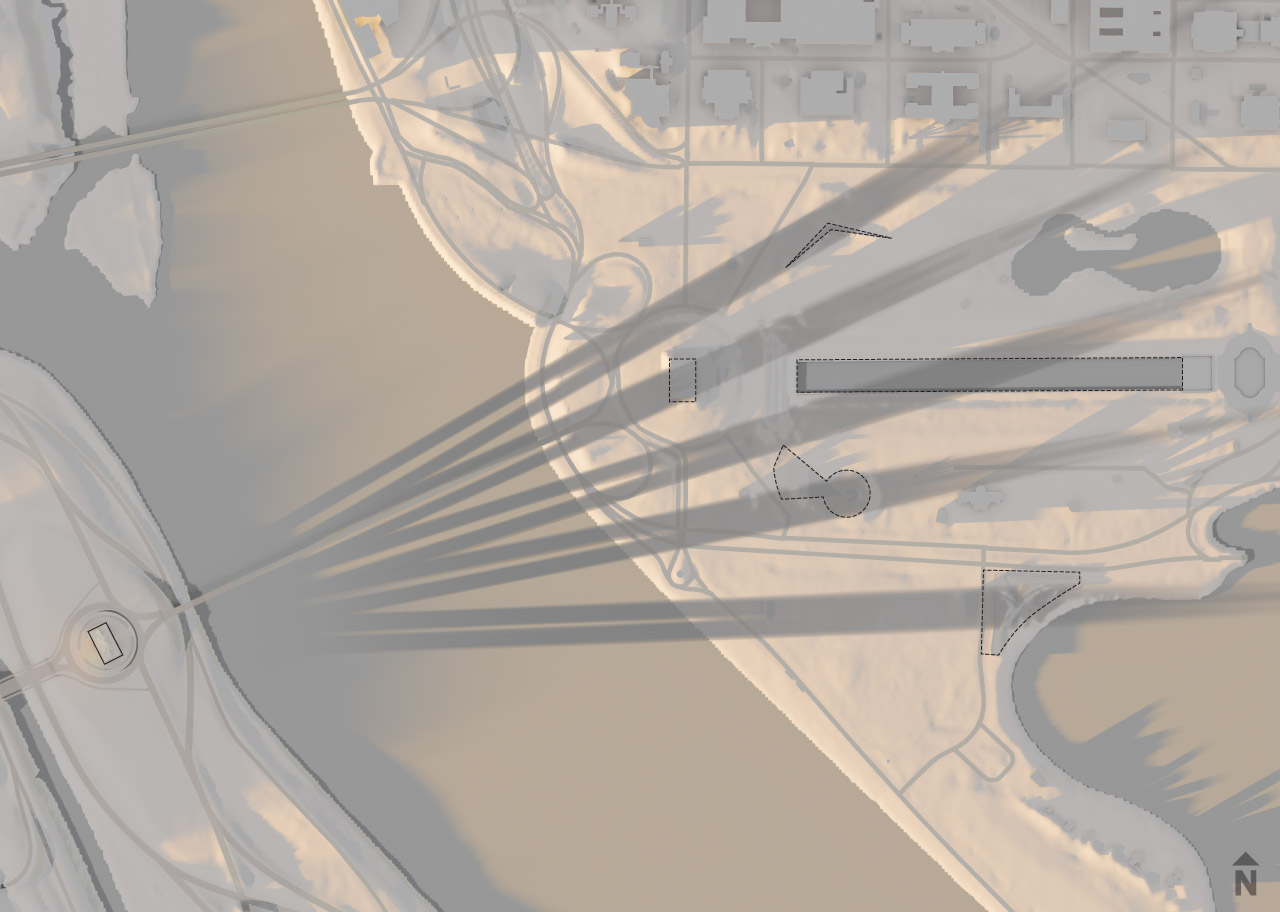
At sunset, the shadow of the ark for several days extend across the congested Arlington Memorial Bridge and reach monuments to the east, according to the Post analysis. While the arch’s morning shadow fell on Kennedy’s grave in the spring and summer, its evening shadow crossed the Abraham Lincoln Memorial in the fall and winter. 110 days a year, the shadow touched one of the monuments to assassinated presidents.
Parts of the Martin Luther King Jr. Memorial will be shaded by the arch for more than 30 days, along with the Reflecting Pool where he gave his most famous speech. The arch’s sunset shadow also sometimes fell on memorials to veterans of the Vietnam and Korean wars.
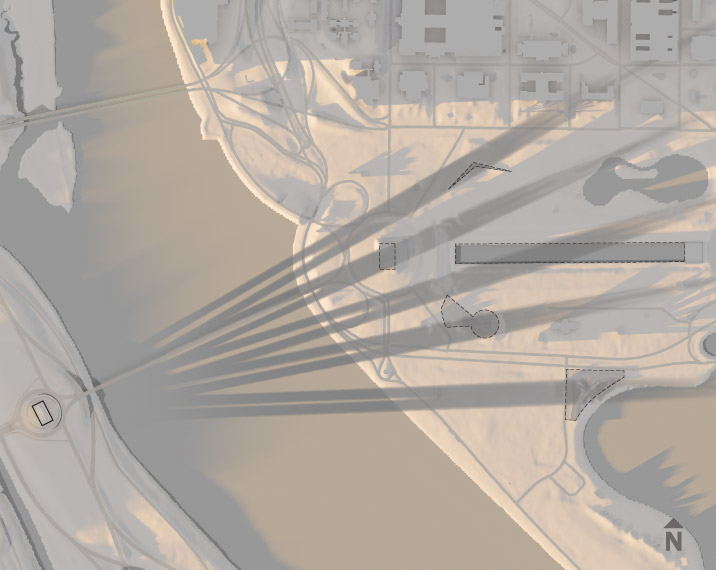
To give the clearest picture of the shadow cast by the arch, shadows from trees and other structures are not included in the scale representation below.
The idea that the monument would cast a shadow over the resting places of veterans, politicians and other prominent American figures is “sacrilege,” said Paul Eaton, a retired U.S. Army major general whose parents are buried in the cemetery.
Eaton works with VoteVets, a veterans advocacy organization that opposed Trump’s plan. The group raised concerns about the shadow to the Post after conducting an analysis using artificial intelligence. La Poste then carried out its own examination using the 3D model, which is based on extensive real data and rigorous calculations.
“There are a lot of families who go to visit their loved one and are just overwhelmed by the shadow of this Trump vanity project,” he said, alluding to Trump’s comment last year that he was building the monument to honor his presidency.
Karla Rothstein, director of the DeathLab at Columbia University’s Graduate School of Architecture, Planning and Preservation — where she teaches how urban public spaces can honor the dead — wrote in an email that shadows “are not inherently negative” but that “their source matters both experientially and politically.”
“Perhaps the concern is not so much the presence of shadow as what it means for a monument celebrating a triumph to impose its shadow on a landscape commemorating a sacrifice,” Rothstein said.

Trump was unmoved by complaints about the size, location and design of the arch. His administration is fighting a lawsuit filed by three Vietnam War veterans and a historic advocate who say the arch would harm their experience visiting the military cemetery and have called for an emergency halt to the project. A federal judge is reviewing the case.
Trump aides are also pushing to relax a federal law that limits most construction in Washington to a maximum height of 130 feet, which could ease the approval process for the arch and help strengthen the administration’s legal case for the project.
The president said the arch should be taller than the Arc de Triomphe, the 164-foot-tall monument in Paris that inspired his project.
“I didn’t want it to be smaller. I needed it to be a little bit bigger,” Trump said this month at the White House.
The National Capital Planning Commission, a federal review panel that Trump assembled from allies, is expected to approve the project as early as November 5. Administration officials plan to begin work immediately thereafter.
The shadow would affect the cemetery while it is open much more often if Trump gets his wish to switch to year-round daylight saving time, which would set the clocks forward an hour in the winter.
Eaton and others said they were particularly upset to learn how the arch could shadow Kennedy’s memorial, including the eternal flame that commemorates his burial site.
Jacqueline Kennedy, the president’s widow, had requested – and was promised – that her husband’s grave be visible around Washington, according to presidential historians. In an interview with journalist Theodore H. White a week after her husband’s assassination, she reflected on the significance of his burial site and the significance of his views to her daughter, Caroline.

“I care about this flame,” Jacqueline Kennedy said at the time. “Sometimes you walk across that bridge and see the Lee Mansion all lit up. It was one of the first things Caroline learned to recognize. I wanted that flame.”
The administration is prepared to place its own eternal flame atop Trump’s arch, according to final plans released two weeks ago. According to the Post’s analysis, that means that on some days — like July 28, Jacqueline Kennedy’s birthday — that flame would be visible even as Trump’s arch cast shadows over the flame and Kennedy’s grave.
Methodology
To create the 3D model used in this analysis, The Post relied on triumphal arch plans submitted by the Trump administration to the National Capital Planning Commission. We used lidar data from the U.S. Geological Survey to model the terrain and other features of Arlington National Cemetery and the surrounding area. We built the model in QGIS and imported it into Blender, which allowed us to use data from the National Oceanic and Atmospheric Administration to simulate the position of the sun every day of the year. To verify the accuracy of the model, we tested the resulting shadow against satellite images of real shadows from nearby monuments such as the Washington Monument. When identifying which parts of the cemetery would be affected by the shadow of the arch, we did not take into account the shadow of the trees. The absence of tree shadows allowed us to see the boundaries of the arch’s shadow more clearly and identify the areas it fell on. Additionally, although we have depicted tree shadows in the May 12 visualization, these shadows are seasonal and dappled, and any representation is therefore imperfect. To count the total number of graves obscured by the shadow, we traced its path through the cemetery and identified the sections it would cover. We used data from the Arlington National Cemetery Explorer to find out how many graves are in each of these sections.
About this story
Editing by Nadine Ajaka, Maureen Linke and Eric Rich. Video editing by Peter Stevenson. Edited by Alli Hausman. Video by Luis Velarde for the Washington Post.
Gn headline