
If Donald Trump had known what the consequences of his war against Iran would be, would he do it again?
In a matter of months, U.S. intervention in the Middle East has led Tehran to demand more control over the Strait of Hormuz, exposed Washington’s regional allies to months of missile and drone attacks and sent fuel prices soaring in the United States and around the world. In a vain attempt to rectify the latter, Trump made a dastardly deal with Russian President Vladimir Putin to return Russian diesel to international markets.
Today, the fallout extends thousands of miles to the bitter waters of the Russian Arctic.
South Korea, one of the United States’ most important allies in the Asia-Pacific region, just completed a pioneering Arctic voyage to Europe, sending a container ship across more than 3,500 miles of Russian-controlled coastline and back. President Lee Jae Myung has explicitly linked Seoul’s determination to develop the route along Russia to the disruption caused by the ongoing conflict in the Middle East.
Putin is only too happy to accommodate this enterprise.
A route without panorama
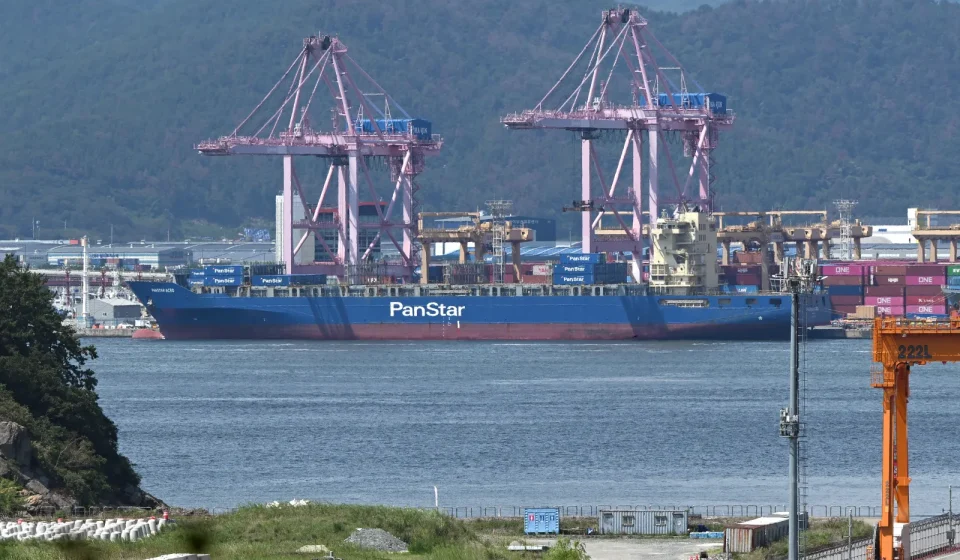
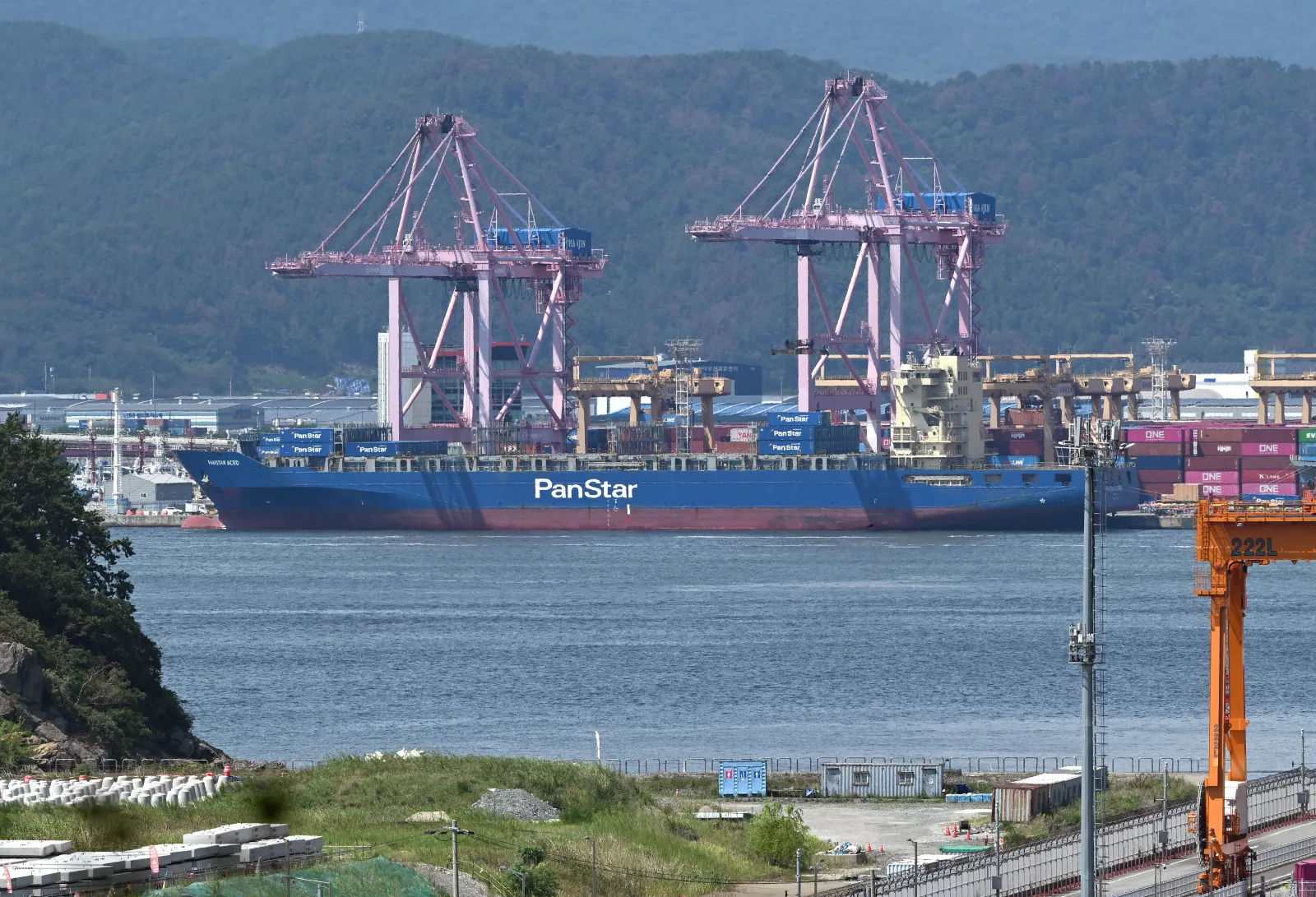
On Tuesday, Lee visited the sprawling port city of Busan to celebrate the return of PanStar Acrothe first South Korean container ship to make a round trip to Europe via the Arctic.
The ship left Busan on August 22 and reached Felixstowe, Britain, just 20 days later, before continuing to Rotterdam and Gdansk. Its journey along Russia’s Northern Sea Route cut the conventional passage through the Suez Canal by about 10 days. He returned home on October 11, completing this mammoth journey in just 50 days.
For a country whose economy relies heavily on the international transportation of cars, electronics and industrial products, these time savings could translate into substantial commercial benefits. But the biggest draw is security.
“Recent tensions in the Middle East have clearly shown how economies can be destabilized when shipping routes are blocked,” Lee said at Tuesday’s ceremony, describing the Arctic as another shipping option to rely on in times of crisis.
South Korea began planning Arctic tests before Trump’s military unleashed its fury on Tehran, but the widening conflict in the Middle East has given Seoul additional motivation to redouble its efforts.
Iran’s disruption of Hormuz transit has wreaked havoc on Gulf shipping, with consequences that extend far beyond oil prices. Dubai’s Jebel Ali Port, one of the world’s busiest container terminals, saw cargo throughput collapse by an astonishing 90.1% year-on-year in the second quarter of 2026, according to Emirati logistics giant DP World.
The Arctic cannot replace Hormuz as an outlet for Gulf oil, but it offers Asia and Europe a much-needed alternative to the Suez Canal and the Red Sea, where Houthi attacks have created their own problems.
More ships than ever are using it. The Norwegian High North Logistics Center counted 104 transits made on Russia’s Northern Sea Route as of September 30, surpassing the 103 recorded throughout 2025. Four ships made direct voyages between Asian and European ports, compared to just one last year.
This still represents only a drop in the ocean compared to the enormous traffic passing through Suez. But for Putin, every foreign ship heading north represents another potential customer for Russia’s expanding Arctic transportation network.
Putin’s polar ambitions
Moscow has spent years trying to transform the Northern Sea Route from a frigid corridor serving its own oil, gas and mining industries into an international maritime artery linking Europe and Asia.
Russian state nuclear company Rosatom administers the route, overseeing navigation permits, port infrastructure and the fleet of nuclear icebreakers that make passage possible when the seas are frozen.
The potential benefits go well beyond transit revenue. Foreign ships using the corridor must comply with Russian regulations, while scheduled services could generate more demand for Russian icebreakers, port services and maintenance centers. A reliable sea route would not only bring an economic boon, but give Moscow outsized influence on a new path of global trade.
Trump’s adventure in the Middle East constitutes excellent marketing support for the Kremlin’s ambitions.
On September 4, Igor Sechin, head of state-owned energy company Rosneft, called the Hormuz crisis a “moment of truth” for the global energy system.
“Given the current environment, the most important (logistics route) is the Northern Sea Route, which allows us to reduce the time required to deliver goods to our trading partners by 1.5-2 times and reduce costs by a third,” he said.
Then, on Monday, Putin aide and former intelligence chief Nikolai Patrushev met with Chinese Foreign Minister Wang Yi in Beijing to present a proposal positioning the Northern Sea Route as a way for the two countries to avoid the impact of Western sanctions and “reshape the geoeconomic map” away from the United States.
“Russia has a long maritime border, developed port infrastructure and unique experience in maritime transportation in the Northern Seas. China has powerful shipbuilding and logistics potential, as well as extensive experience in organizing maritime trade. Today it is important to combine these advantages,” Patrushev told Wang.
However, Moscow is courting partners well beyond China, including those for whom Trump’s intervention in Iran was a disaster.
In August, Moscow approved plans by Rosatom and Dubai-based DP World to create a joint logistics venture involving Russia’s Far Eastern Shipping Company (FESCO). Under the proposed deal, Russia would retain a 51 percent stake, with DP World contributing capital and access to its global logistics expertise. This is the same DP World whose flagship port in Dubai saw container traffic collapse by 90 percent as Hormuz descended into chaos.
However, Putin still faces some obstacles before the Northern Sea Route becomes a reliable economic and political asset.
THE PanStar Acro carried just 737 container equivalents of revenue-paying export cargo on its test voyage, just 27% of its total capacity. Meanwhile, the Northern Sea Route’s unpredictable conditions, high insurance costs and winter inaccessibility are quickly eating into savings from lower fuel consumption and shorter transit times.
Strategic objectives
Lee insists that South Korea’s advance in Arctic shipping will not allow it to avoid complying with trade restrictions imposed on Russia.
But Seoul’s economic security depends on maintaining its exports, and Trump’s war has painfully reminded it that relying on the stability of traditional trade routes — or trusting partners to make sound strategic decisions — is risky business.
“There are no permanent enemies, and there are no permanent allies,” Lee said at a Cabinet meeting on Tuesday.
As if to prove his point, the White House last week reversed years of strenuous efforts to restrict Russian energy exports when Trump announced a diesel deal with his Kremlin counterpart.
U.S. diesel prices have soared nearly 70% since the start of Trump’s war in Iran, reaching well over $6 a gallon, but energy sector analysts warn that the volumes of Russian diesel expected to re-enter the market are far too small to have a significant impact on global fuel prices. The first 300,000 tons of Russian fuel that Trump expects to receive this month represents less than a day’s worth of U.S. diesel consumption.
The political benefits for Putin, however, were immediate. Not only did the United States president personally negotiate relief for Russian energy exports, but he also criticized Ukrainian President Volodymyr Zelensky, accusing him of making American fuel prices worse by targeting Russian refineries with kyiv’s drones.
Trump then said Ukraine needed a new president who could strike a deal with Moscow, even as Putin’s forces continued to rain missiles and drones on Ukrainian cities and energy infrastructure.
A bipartisan group of 12 U.S. senators, including Republicans Susan Collins and Thom Tillis, condemned Trump’s diesel deal, calling it “a gift to our adversary and a betrayal of our allies,” a deal resulting from conditions created by an ill-advised incursion into the Middle East.
The Arctic is another area where Russia could benefit from the White House’s strategic failure.
South Korea is not choosing Russia over the United States, nor is Putin about to monopolize international container shipping. But Washington’s failure to find a lasting solution to its own war with Iran has strengthened the case for alternative trade networks, including the one that Moscow and Beijing are working to develop together.
Gn usa