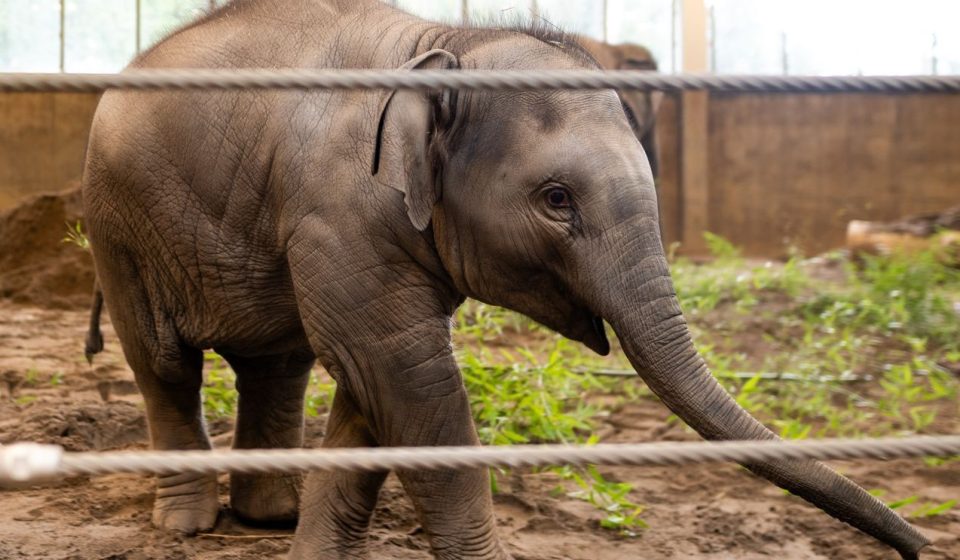
PORTLAND, Ore. (KATU) – Baby Asian elephant Tula-Tu at the Oregon Zoo has been diagnosed with elephant endotheliotropic herpesvirus, and zookeepers are working on a treatment plan because “young calves are particularly susceptible” to the disease.
Active elephant endotheliotropic herpesvirus – or EEHV – can be life-threatening within days. Lily, another little one from Rose-Tu, died of the disease in 2018, shortly after her sixth birthday.
The zoo quickly began elephant herpes treatments, including plasma transfusions, to combat the virus. So far, they say Tula has remained stable with normal platelets and improving white blood cell counts, which is encouraging.
“Early detection is key,” said Dr. Carlos Sanchez, director of animal health at the Oregon Zoo. “She’s not out of the woods yet, but these results give cause for cautious optimism.”
According to Sanchez, who also chairs the research committee of the North American EEHV Advisory Group, the latent virus can be found in almost all Asian elephants, both in the wild and under human care. Most will develop natural immunity over time, the zoo said, but calves are “highly susceptible to disease as their maternal antibodies wane, typically between 1 and 8 years of age.”
Biologists say that, just like in humans, there is no known cure for herpesvirus in animals. Diagnoses and treatments have improved over the past decade, and Dr. Sanchez says “every hour of stability brings her closer to recovery.”
Vets began noticing subtle changes in Tula’s behavior and energy levels on October 24. They took blood samples, began testing, and began preventative treatment for EEHV.
The Oregon Veterinary Diagnostic Laboratory at Oregon State University confirmed an elevated presence of EEHV the following day, at which time they began additional EEHV treatment protocols.
The zoo said Tula-Tu was the first elephant on the West Coast to receive an mRNA vaccine intended to protect elephants against the most common strain of elephant herpes, EEHV-1A.
She was infected with EEHV-1B, a less deadly infection that the zoo says can also cause serious illness in young elephants.
“We don’t know if the EEHV-1A vaccine protects against the -1B variant,” Dr. Sanchez said. “It’s possible, but we don’t know to what extent.”
The Oregon Zoo has contributed research and funding to find an effective vaccine or treatment for EEHV. The Tula-Tu samples will also help with research studies, including one on vaccine response that is a collaboration between Oregon State University and Baylor.
MORE FROM OREGON ZOO:
Dr. Sanchez notes that the virus also affects wild elephants. Although it is more difficult to identify and diagnose – and its presence in range countries is overshadowed by far more serious threats such as poaching, habitat loss and human-elephant conflict – scientists have confirmed approximately 200 deaths from EEHV in Asian elephant range countries.
“The work we are doing now could play an important role in protecting future baby elephants from disease, including those in range countries,” Sanchez said. “It is very difficult to study the virus in wild elephants, but zoos can closely monitor elephants in their care and obtain samples of blood and other fluids.”
In 2023, Oregon Zoo veterinary staff worked with Malaysian wildlife officials to establish Sabah’s first hematology laboratory to track signs of EEHV in wild and human-care elephants. The zoo’s veterinary staff provide workshops and support on diagnosis, monitoring and response to EEHV, providing clinical training and outreach to wildlife health practitioners throughout Southeast Asia.
As part of Metro, the Oregon Zoo helps make the greater Portland area a great place to live. Committed to conservation, the zoo acts globally on behalf of species ranging from pikas to polar bears. Over the past 30 years, he has prevented extinctions, increased populations, advanced conservation science, and built powerful communities to protect wildlife in the Northwest and around the world. To plan your trip, go to oregonzoo.org/visit.
Support from the Oregon Zoo Foundation enhances and expands the zoo’s efforts in species recovery, conservation education and animal welfare. Members, donors, and corporate and foundation partners help the zoo make a difference in the region and around the world. To contribute, go to oregonzoo.org/give.
Gn Health