Ukraine, Russia report emergency cyberattacks on apps as false alerts warn of nuclear danger

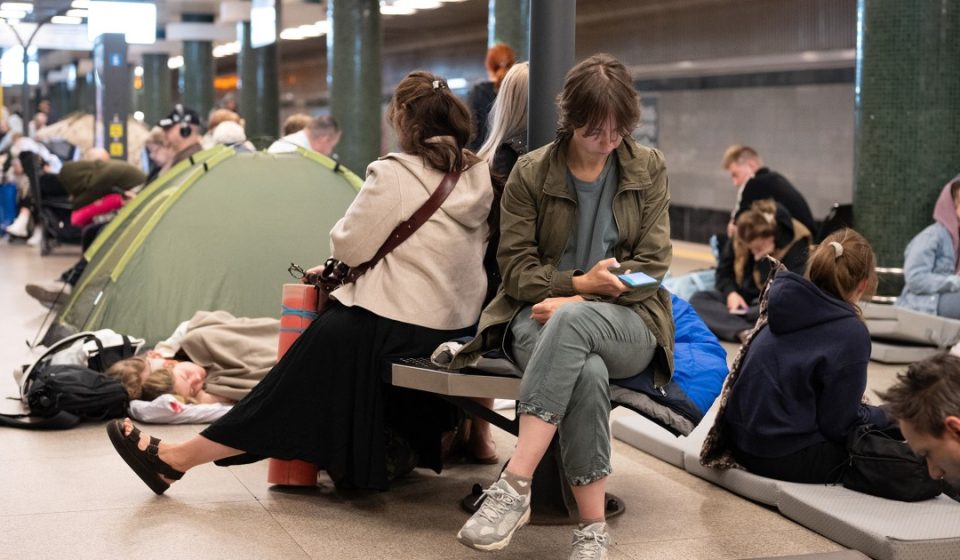
The messages, which began around 10:45 p.m. Kyiv time (3:45 p.m. ET), warned residents not to go out due to the risk of radiation, chemical threat and street fighting.
Another message stated, in Russian, that all of Ukraine was on nuclear alert. “Don’t worry,” he added. “Oreshnik is in action,” referring to Russia’s nuclear-capable hypersonic missile.
This message referred to a Telegram channel called Hitcorecorp. The major pro-Kremlin Telegram channel Mash said it had spoken with the group and took responsibility for the hack. NBC News could not verify who the group is and whether it was responsible for the alerts.
Shortly after the alerts were issued Sunday evening, Ukraine’s air force said the country’s “Air Alert” app had likely been “compromised by the enemy,” confirming there was no “radiological threat” and calling for calm.
In separate statements, the app’s creators said that “unauthorized third parties had interfered with the operation of the app,” forcing them to temporarily suspend its operations. He later called the incident a “cyber attack”, saying he was gradually restoring service. “The team is taking additional steps to protect the application to avoid similar situations in the future,” one of the statements said.
Ukrainian media reported that users across the country received the alert, and in the western region of Lviv, authorities reported that some public warning sirens and loudspeaker systems were broadcasting a “radiological risk” signal.
Still, many Ukrainians did not seem unduly alarmed or panicked by the alerts. In fact, many shared memes online, mocking what they saw as a blatant fake and the fact that the warning was issued in Russian. “No one was particularly surprised,” one user wrote on X. “They might as well have launched a dinosaur attack.”
Ukraine’s state emergency service said Monday that the national alert system was functioning normally and that an NBC News producer in Kyiv had not encountered any other problems with the “Air Alert” app.
Separately, Russia’s Emergency Situations Ministry also said Monday morning that its mobile application had suffered a “massive cyberattack,” leading to what it called the “spread of false information to the public.” The public alert system was restored and was operating normally, the ministry said shortly after. He stressed that the application was only “an additional and complementary information service”.
Screenshots shared by Russian media and some regional authorities suggest that the alert, issued in Russian, warned of “nuclear warheads” launched against Russia. As with the Ukrainian alert, the wording was casual and did not seem official.
Russian authorities have not specified who was responsible for the alleged cyberattack, saying only that “malicious actors” were behind it.
It was not immediately clear whether the two incidents were related.
This came just hours after a temporary ceasefire between kyiv and Moscow ended in the occupied Kherson region of southern Ukraine.
00:44
Russian drone strikes in Ukraine kill two teenage girls
00:0000:00
The truce, negotiated with the participation of first lady Melania Trump and Pope Leo
The truce constitutes the greatest de-escalation between kyiv and Moscow since the start of the war in early 2022.
“On behalf of America, I commend Russia and Ukraine for their leadership and cooperation around the Oleshky ceasefire,” the first lady said in a message on X on Sunday. “I hope that Oleshky will serve as a foundation for lasting peace between the two nations.”
Ukraine’s human rights ombudsman, Dmytro Lubinets, said he was exploring possibilities for “new humanitarian initiatives” with his Russian counterpart, Yana Lantratova, adding that it was “important to maintain this cooperation mechanism.”
Before the truce took effect, the United Nations estimated that there were around 2,000 civilians remaining in Oleshky, many of whom were starving and unable to leave safely because of heavily mined roads.
Neither side has disclosed the exact number of people evacuated, but the first lady said Sunday it was nearly 800. Evacuees could go to territory controlled by either Ukraine or Russia, or stay in the city, officials on both sides said.
Lantratova, Russia’s human rights commissioner, said Monday she expected more people to evacuate from Oleshky, saying “many empty buses” had left the area. Many people chose to stay because they couldn’t leave their elderly or sick loved ones behind, she said, or simply refused to leave their homes no matter what.
She said that for those who remained, humanitarian aid deliveries would take place at least once a month, with “coordination and mediation” from the first lady.
Ukraine’s armed forces accused Russia on Monday of using the truce to rotate its units and fortify its positions in the region. Kremlin spokesman Dmitry Peskov said kyiv could also have used the ceasefire to regroup, calling it “a completely common practice in such situations.”
Gn headline