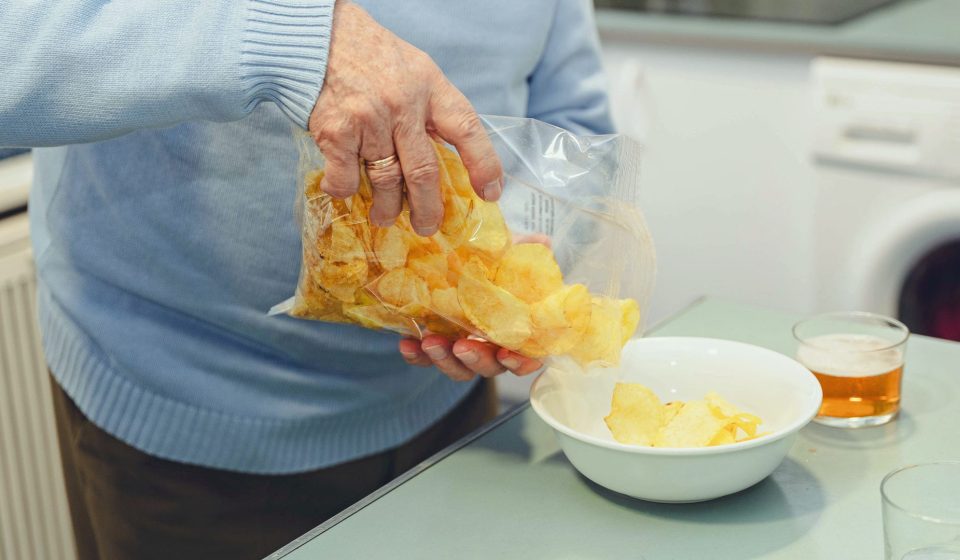

A new study links consumption of ultra-processed foods to brain changes that may increase the risk of stroke and memory problems later in life.
Ultra-processed foods have been linked in study after study to excess body fat, diabetes, and heart disease. What this does to the brain is much less clear. A new series of brain scans suggests that the brain also belongs on this list, well into old age.
Heaviest consumers of packaged snacks, sugary cereals, soft drinks and convenience foods were about 40% more likely to have small areas of damaged tissue in the brain. They were healthy adults, aged 35 to 69, without symptoms, and their memory and thinking scores matched those of others.
Russell de Souza, a research associate at the Population Health Research Institute in Hamilton, Ontario, led the study with Sonia Anand. The institute is jointly managed by McMaster University and Hamilton Health Sciences. The researchers measured everyone once, to identify a link between diet and brain damage, but could not establish whether one caused the other.
“Frankly, I didn’t expect this result. We studied middle-aged Canadians who had no heart problems and reported no other health problems,” de Souza said. “Usually this type of damage is associated with conditions that we hear about and treat at a much later age. »
Ultra-processed foods linked to brain damage
The team used analyzes and dietary records from 8,783 adults across Canada with no history of heart disease. All had joined one of the two long-standing health projects. One was the Canadian Alliance for Healthy Hearts and Minds, and the other was the Canadian part of PURE-MIND, a brain study as part of the global PURE project.
Each participant completed a questionnaire about what they had eaten over the previous year. Neurologists who knew nothing about people’s diets then read the brain scans.
They were looking for two things: small strokes that happened without anyone noticing, and damaged areas in the brain’s wiring, the white matter. Either one counted as damage.
About 9% of the entire group suffered from it. Among the quarter who ate the fewest ultra-processed foods, 8.1% did so. Among the quarter who ate the most, 11.3% did so. The gap widened after researchers took into account age, income, smoking, exercise and existing conditions like high blood pressure and diabetes.
Brain damage goes beyond belly fat
The bigger eaters also had more belly fat. Their body fat was about 1.7 percentage points higher than that of the lightest eaters. The fat accumulated deep inside the abdomen, around the organs, measured about 0.2 fluid ounces (5.7 milliliters) more on their scans, or a little more than a teaspoon. Fat in the liver did not differ.
This trend was stronger in obese people and did not appear at all in people of normal weight.
Researchers suspect that deep abdominal fat could help explain the link between diet and brain health because it contributes to inflammation and blood vessel damage. Yet when they included fat measurements in their calculations, the link barely changed, suggesting that something in the food itself may also play a role.
Brain damage occurs without memory loss
Each participant took two short tests of memory, attention and processing speed. The heaviest eaters achieved the same results as the lightest eaters.
The group as a whole scored high, which may have left little room for testing to show a difference. The researchers also said that brief tests like these might not be sensitive enough to detect early changes in middle-aged brains.
Anand, the lead author of the study, put it this way.
“Our results suggest that the link between diet and brain health may be detectable before people experience noticeable problems with memory or thinking,” Anand said. “This adds to growing evidence that what Canadians eat in their 30s, 40s, 50s and 60s shapes their brain health later in life. »
Link to brain damage appears mainly in women
When researchers compared men and women, they found that the link between diet and brain damage was strongest in women.
Women who ate the most ultra-processed foods were about 1.8 times more likely to experience silent brain damage than those who ate the least. The researchers compared the highest and lowest quarters of food consumption. For men, the two groups were similar.
The researchers did not plan these comparisons in advance and called them exploratory. Possible causes, such as hormones, could not be tested here.
Packaged foods take up more space in the diet
In the top quarter, ultra-processed products made up 45% of everything consumed, in portion sizes. In the bottom quarter, they accounted for 16.5%. Fresh, minimally processed foods, such as fruits, vegetables and grains, showed the opposite trend. They represented 68.6% of the portions among those who consumed the least ultra-processed foods, compared to 41.5% among those who ate the most.
However, the heavier eaters did not eat fewer vegetables. They ate a little more vegetables, whole grains and dairy products every day. They also consumed about 300 more calories in total. But as a share of the plate, everything else has declined.
“People who ate more ultra-processed foods weren’t just eating more on top of their usual diet. These foods seemed to crowd out healthier whole foods,” de Souza said.
Heavier eaters were also more likely to have lower incomes and less education.
“For many Canadians, ultra-processed foods are often a convenient and affordable option. But our findings suggest that a diet rich in these foods may be linked to brain changes that can lead to memory loss and stroke as Canadians age,” Anand said.
Can changing your diet protect brain health?
Everything in this study was measured during a single visit and the dietary questionnaire covered a year, whereas damage of this type likely accumulates over much longer.
The researchers also found that the brain results depended on how they counted consumption. Measured in servings for 2,000 calories, it held up. Measured as a share of total calories or total servings, it has faded, which they say is a reason for caution.
This study can’t answer the question of whether reducing ultra-processed foods would change what shows up on an analysis.
“We need longer-term studies that follow people over time with repeated MRI scans to determine whether reducing consumption of ultra-processed foods can slow or prevent these brain changes,” de Souza said. “This monitoring is ongoing. »
Repeated analyzes of the same people could show whether the damage gets worse over time and whether it corresponds to what they eat.
The full study was published in the journal Open JAMA Network.
—–
Do you like what you read? Subscribe to our newsletter for engaging articles, exclusive content and the latest updates.
Check us out on EarthSnap, a free app brought to you by Eric Ralls and Earth.com.
—–
Gn Health