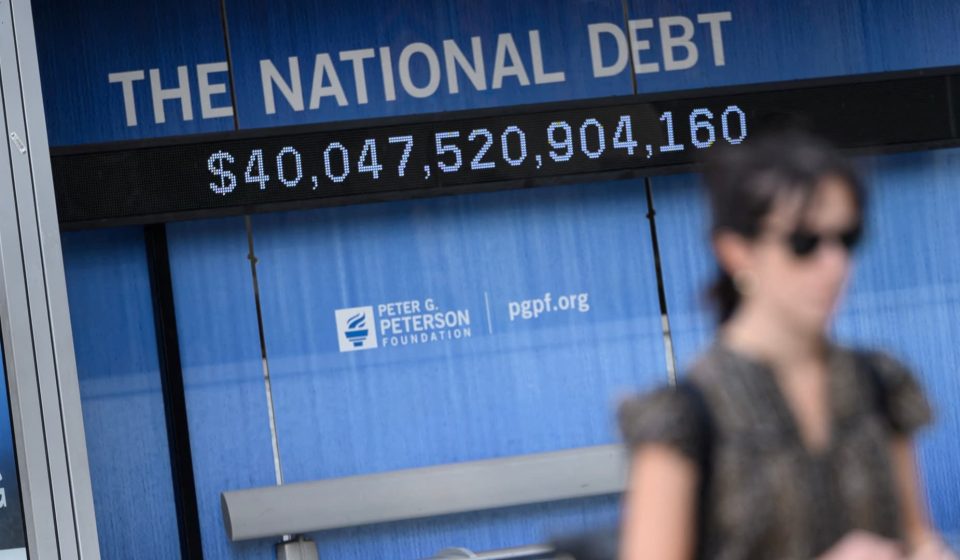

An electronic display shows the national debt in Washington, August 19, 2026.
Mandel Ngan | AFP | Getty Images
The United States finished fiscal 2026 with a budget deficit of nearly $2 trillion, the latest measure underscoring the extent of the country’s financial stress.
The $1.992 billion figure was about 12% higher than the previous fiscal year’s deficit of $1.775 billion, the Treasury Department reported Friday.
This is the third highest annual deficit in US history, behind only those of 2020 and 2021, when the federal government was doling out billions of dollars in financial stimulus amid the Covid-19 pandemic. Fiscal year 2026 saw record amounts in both revenue and spending, according to a Treasury Department official.
With Friday’s release, the United States officially recorded its 25th consecutive fiscal year in deficit. The government last ran a surplus – that is, its revenues exceeded its debts – in 2001.
Friday’s report offers new evidence of how the United States’ growing debt has weighed on the country’s overall financial health. The rising debt bill helped exacerbate the anxiety of bond traders, who sent the 10 years And 30 years U.S. Treasury yields hit a 24-year high last week.
Where does the debt come from?
Social Security accounted for the largest share of government spending, at nearly $1.7 trillion for the entire fiscal year, up slightly from the roughly $1.6 trillion spent in 2025.
Medicare was the second largest contributor, costing nearly $1.1 trillion for the fiscal year. For comparison, the government-run health program required just under $1 trillion in fiscal year 2025.
Net interest — a calculation of the Treasury’s gross interest minus the interest it receives — also topped $1 trillion for the fiscal year. In fiscal year 2025, net interest totaled $970 billion.
The personal income tax helped reduce the total deficit by bringing in more than $2.8 trillion, an increase of about 7% year-over-year. The corporate income tax generated $381 billion in revenue in fiscal year 2026. This is a decrease of about $70 billion from fiscal year 2025, resulting from tax cuts included in the One Big Beautiful Bill passed by Congress last year.
In fiscal year 2026, the United States paid out more than $1.3 trillion in interest on the national public debt. The total owed surpassed $40 trillion earlier this year and has more than doubled over the past decade.
Treasury Secretary Scott Bessent told CNBC in August that the U.S. can “get out” of its growing debt.
“Our message to our allies, our trading partners, is that global growth is the way to resolve this mountain of debt,” Bessent said in August.
President Donald Trump has touted his plans for broad, high tariffs as a way to raise revenue and reduce government debt. The White House has continued its strategy of increasing levies on trading partners despite the Supreme Court ruling earlier this year that many of those instituted by Trump were unconstitutional.
Treasury recorded a record level of gross tariffs in fiscal year 2026, according to a department official. But total customs revenue was hurt by refunds demanded following the Supreme Court ruling, which returned billions of dollars to retailers.
Treasury also reported Friday that the monthly deficit for September was $27 billion, a reversal from the previous year, when the department recorded a surplus of $198 billion during the month.
Gn headline