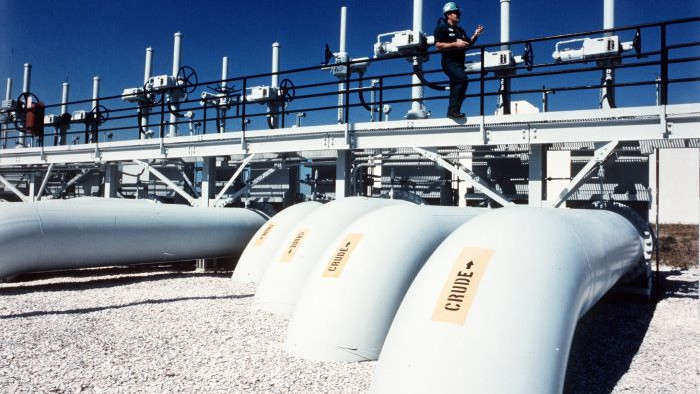

The United States is again dipping into its strategic oil reserves, this time to maintain crude supplies to a Louisiana refinery as oil prices climb above $117 a barrel. The reserve, for its part, is already at its lowest level since 1982.
The Energy Department on Friday authorized an emergency swap of up to 400,000 barrels at the Phillips 66 refinery in Lake Charles, citing a temporary interruption in crude deliveries.
The oil will come from the reserve’s West Hackberry site in Louisiana and is available for immediate delivery.
Lake Charles can process about 264,000 barrels per day, meaning the permitted volume is equivalent to about a day and a half of the refinery’s processing capacity.
The DOE did not specify the cause of the delivery interruption. Phillips 66 confirmed it would receive the crude but declined to discuss refining operations or trading activity. A company spokesperson said it did not anticipate any operational impact.
The government calls this an exchange, not a sale. Phillips 66 must return the borrowed barrels as well as additional crude as a bonus.
This is not Washington’s first visit to the SPR this month. On October 10, the DOE authorized up to 4 million barrels of emergency trades for ExxonMobil and BP following weather-related supply disruptions.
The reserve has already been significantly depleted by withdrawals under President Donald Trump during the Iran War and under former President Joe Biden after Russia’s 2022 invasion of Ukraine.
Current SPR levels stand at 282.7 million barrels, according to the DOE, a level that is what some analysts consider the operational minimum.
The latest trade comes as oil prices continue to climb. Brent crude traded at $117.04 a barrel on Friday, up 3.42%, while West Texas Intermediate rose 4.07% to $103.52.
The 400,000 barrel authorization responds to a localized disruption in refinery supplies rather than a broader global oil shortage. But with supply routes to the Middle East still limited and crude prices above $100, keeping refineries supplied has become an increasingly expensive proposition.
By Julianne Geiger for Oilprice.com
More important reading on Oilprice.com
Gn bussni