US judge rules Wisconsin mosque leader Salah Sarsour can be deported | Civil Rights News

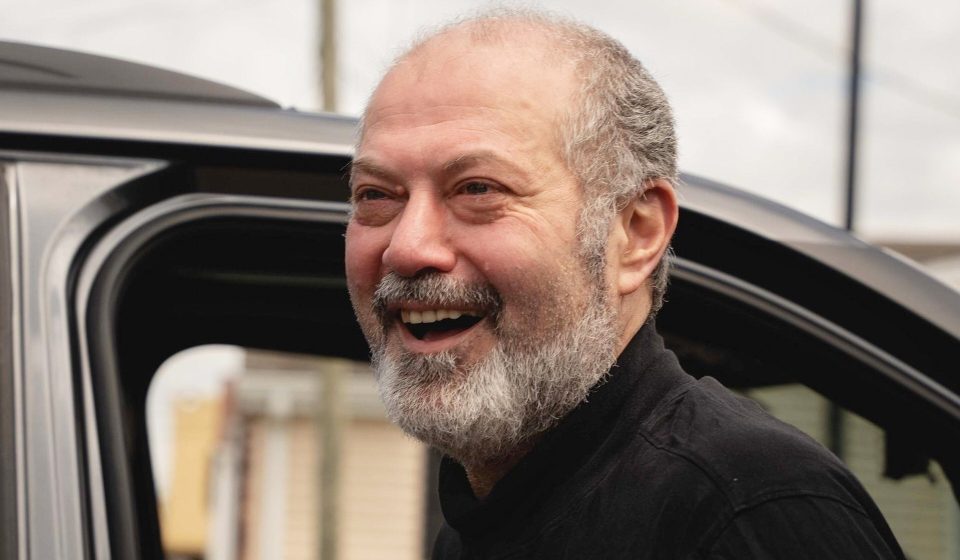
A US immigration judge has ruled that the leader of Wisconsin’s largest mosque can be deported under a controversial law that US President Donald Trump’s administration has used against non-citizens defending Palestinian rights.
Judge Jayme Salinardi ruled Wednesday that Palestinian-born Salah Sarsour, president of the Islamic Society of Milwaukee, could be deported from the United States, based in part on a memo from Secretary of State Marco Rubio that said “his actions undermine U.S. foreign policy aimed at combating anti-Semitism around the world,” according to his lawyers.
Recommended Stories
list of 4 elementsend of list
Sarsour, who has lived in the United States for more than three decades, called the decision “deeply disappointing.”
“I will continue to fight to defend the right to freedom of expression and to remain in the country I have called home for more than three decades,” he told the Associated Press news agency.
His lawyer, Patrick Taurel, firmly rejected this decision.
“I would like the world to be able to see the evidence we have presented and hear the testimonies heard by the court, because the case we have presented only forces one conclusion, which is that Salah is not deportable,” Taurel told reporters on Wednesday.
“He didn’t do anything wrong. He should get his green card back, frankly, with an apology for what we did to him.”
This decision does not mean that Sarsour will be immediately expelled.
His lawyers have 60 days to argue that sending Sarsour back would put him at risk of torture, which could protect him from deportation under the Convention Against Torture. If they lose, they plan to appeal. Taurel said he cannot be deported while his appeal is pending and that he will remain in the United States for the “foreseeable future.”
“Extreme deference”
Sarsour was arrested by Immigration and Customs Enforcement (ICE) agents in Milwaukee in March, nine months after Rubio issued a memo declaring him deportable for foreign policy reasons.
The June 2025 memo invoked a rarely used U.S. law that allows the secretary of state to seek the expulsion of noncitizens whose presence could have “potentially serious negative foreign policy consequences.” The administration used the same provision against pro-Palestinian activists Mahmoud Khalil and Mohsen Mahdawi.
Sarsour’s lawyers criticized the “extreme deference” Salinardi gave Rubio’s memo. But Taurel said the judge believed his hands were tied by an earlier ruling in the Khalil case, which held that a letter from the secretary of state could be enough to expel someone for foreign policy reasons.
That meant Salinardi couldn’t look behind Rubio’s decision to review the supporting evidence, Taurel said.
“If the secretary of state says the person is deportable, it’s game over,” he told reporters Wednesday.
The government did not win on all its arguments.
Salinardi rejected the allegation that Sarsour lied on his green card application. Taurel said the judge also rejected an allegation that Sarsour falsely claimed to be a U.S. citizen in order to vote.
Al Jazeera reached out to the State Department and the Department of Homeland Security but received no response at the time of publication.
Decades-old beliefs
Sarsour is separately fighting the Trump administration in federal court over his detention while his deportation case is pending.
A federal judge ordered his release in June after 81 days, questioning why decades-old convictions, which U.S. authorities had long known about, suddenly justified his detention. The judge found there were “substantial” arguments that the government was retaliating against him for speaking out about Palestinian rights.
The Trump administration appealed his release, arguing that Sarsour’s convictions in Israel make him a security threat. He was imprisoned in 1988 after confessing to throwing stones and a Molotov cocktail at Israeli soldiers, and was convicted again in 1995 for attempted weapons possession.
Sarsour denies the offenses and his lawyers say the confession was obtained under torture. His former lawyer, Jawad Boulos, said in August that Sarsour was forced to sign a confession and was not convicted of an offense linking him to a “terrorist” organization.
Taurel criticized Salinardi for giving what he called “extreme deference” to Israeli government documents submitted by ICE, which Sarsour’s lawyers said were incomplete and relied on confessions obtained under torture.
“A lot of evidence that we presented was ignored,” Taurel said.
The evidence calls into question Israel’s military justice system, where he said secret evidence could be used and Palestinians could be denied access to lawyers for long periods of time.
Luna Droubi, an attorney representing Sarsour, said the case raises broader questions about whether immigrants can speak freely on political issues without fear of being targeted by the government.
“Why increase these arrests now? she said. “Do I have the right to speak out on issues that matter to me? What if I draw a political cartoon? Will I be arrested and detained because of it?”
“The end of my life”
Sarsour said being deported to the occupied West Bank “means the end of my life.”
His lawyers say his past treatment in Israeli custody shows he could face torture if returned. Taurel said Sarsour’s former lawyer said his case stood out because Sarsour told him that the Shin Bet, Israel’s internal security agency, had taken him to the hospital while in detention.
The judge also named Jordan as a possible destination. Sarsour traveled to the United States with a Jordanian-issued document, but his lawyers say he is not a Jordanian citizen and has no right to live there. They believe he could ultimately be returned to the West Bank and detained by Israel if he is sent to Jordan.
Gn usa