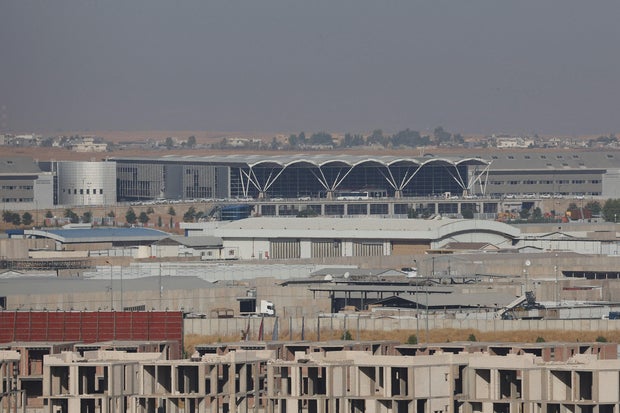

The US military declared an end to its Iraq-based anti-ISIS operations on Wednesday, saying all US-led coalition forces and equipment had been withdrawn from a key base in the north of the country in accordance with an earlier agreement with the Iraqi government.
“The orderly departure of coalition forces and equipment from Erbil Air Base marks the successful conclusion of the military mission that defeated ISIS in Iraq,” Defense Department spokesman Sean Parnell said in a statement. “This milestone reflects the success of a 12-year campaign that defeated ISIS as an organized military threat in Iraq and the region. It also marks the transition from a wartime coalition mission to an Iraqi-led security effort supported by a more normal bilateral security relationship.
The U.S. military launched Operation Inherent Resolve in 2014 to combat ISIS, the terrorist group that emerged from the remnants of al-Qaeda in Iraq and seized large parts of Iraq and neighboring Syria in the years immediately preceding the U.S.-led operation.
Khalid Al-Mousily/Reuters 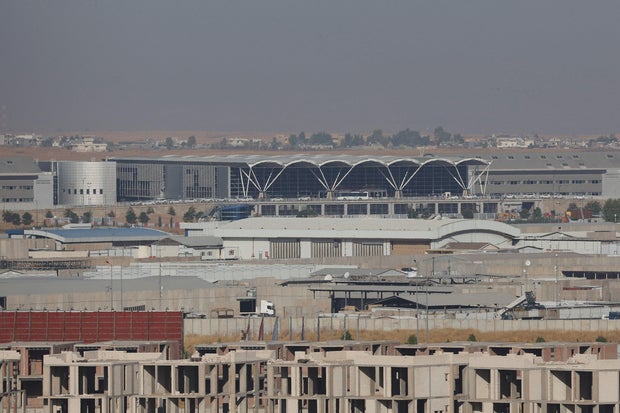
About 2,000 Americans were present in Iraq in February, officials said at the time. By comparison, more than 160,000 U.S. military personnel were in the country at the height of the late 2000s “surge” as part of Operation Iraqi Freedom — an earlier mission to topple Iraqi President Saddam Hussein and fight a years-long civil war.
As part of the anti-ISIS mission, American troops have served in Iraq and Syria. The approximately 1,500 soldiers present in Syria for several years withdrew earlier this year.
The end of the mission was agreed to several years ago between the United States and Iraq as part of a plan to transition to a more bilateral relationship between the two countries. In the 2024 joint agreement, Iraq and the United States announced the end of the multi-country coalition to defeat ISIS by 2025, and the planned end of the Inherent Resolve mission by the end of 2026.
The mission has prevented ISIS from controlling significant territory, but that does not mean ISIS ceases to exist. In December 2025, two American soldiers and a translator were killed in an ISIS attack, according to the US military’s Central Command. United States responded with airstrikes.
American troops were targeted by Iran-backed militias in Iraq in recent years, a threat that has grown since the United States and Israel jointly launched war against Iran. Iran-affiliated militias launched more than 600 attacks against U.S. citizens and facilities between February and April 2026, according to the Pentagon.
Defense Secretary Pete Hegseth addressed the attacks during a July meeting at the Pentagon with Iraqi Prime Minister Ali al-Zaidi, according to a Pentagon statement. They discussed transitioning the Global Coalition to Defeat ISIS to a bilateral relationship, and Hegseth, according to the statement, committed to ending Inherent Resolve by September 30.
Al-Zaidi promised to disarm Iran-backed militias in Iraq. He told the New York Times this week that the groups should be disbanded by June 2027, after initially setting a September 2026 deadline.
Khalid Al-Mousily/Reuters 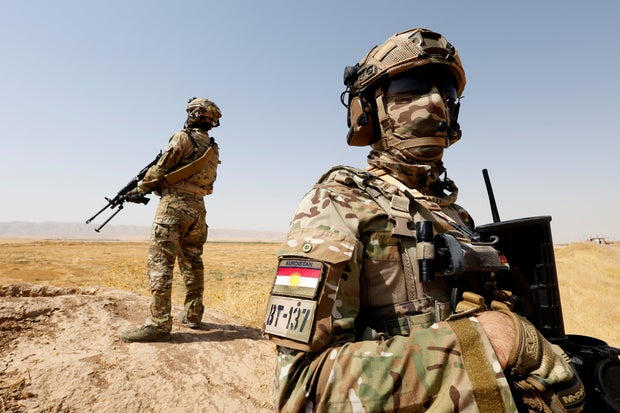
“We hope that Iraqi security forces, including the Peshmerga (Kurdish forces) and other security forces in the Iraqi Kurdistan region, will lead the continued efforts to secure Iraq and keep the last remnants of ISIS suppressed,” Parnell said in his statement Wednesday morning, adding that the U.S. military would “continue to provide targeted training and intelligence support to our Iraqi partners.”
“Primary responsibility for addressing remaining security challenges in Iraq, including ISIS remnants and Iran-aligned militias undermining Iraqi sovereignty and regional stability, now rests with the Iraqi government,” he said. “The United States remains committed to fighting terrorism and will continue to work with Iraq and our partners to ensure that ISIS can never reconstitute from Iraqi territory.”
Can Iraq control Iran’s proxies?
The official end of the US military deployment in Iraq, which began with the 2003 invasion, was celebrated by the Baghdad government, which declared September 30 “Sovereignty Day”. This year, a three-day national holiday will begin and the government has called for nationwide celebrations.
Videos widely shared on social media on Wednesday showed military convoys transporting American equipment out of the Erbil base.
Speaking to the Iraqi National News Agency, Sabah al-Numan, the prime minister’s spokesperson, insisted that the country’s security forces were fully capable of maintaining peace and stability across the country.
But the long-planned American withdrawal comes at a very unstable time for Iraq and the region. With the The US-Iran War at a Critical Moment As President Trump warns of possible new strikes despite stealth diplomacy, many Iraqis remain deeply concerned about a potential resurgence of extremist groups in the country, as well as the growing influence of Iran-backed militias that have long held significant power in parts of Iraq.
Despite the government’s optimism, several religious and ethnic minority groups harbor serious doubts about the central government’s ability to control these forces alone.
“The majority of Iraqis doubt the ability of the security and military apparatus to maintain security in the country, whether it is the prevention of external aggression and attacks or the internal movements of armed groups operating outside of state control,” journalist and regional political analyst Saman Noah told CBS News on Wednesday.
This is “especially true given that experience has proven the government’s inability to subject these (Iran-backed) groups to state decision-making, control their behavior, or hold their members accountable,” he said.
Noah said part of the concern stems from the Iraqi government’s lack of adequate air defense “to protect the country’s airspace, as well as reliance on U.S. weaponry – the maintenance of which, and therefore operation, could cease in the event of a dispute.”
These concerns have only been heightened by the government’s failure to meet its own initial deadline to disarm Iranian-backed factions, and fears that such groups could draw Iraq into a wider regional conflict in support of Tehran.
CBS News/Omar Abdulkader 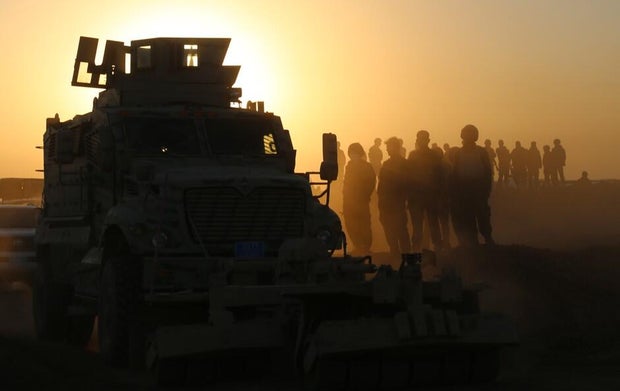
Iraq’s Kurds and their Peshmerga forces have been close allies of the United States since the first Gulf War in 1991, joining forces numerous times over the past 35 years. They joined the U.S.-led international coalition to overthrow Saddam Hussein’s regime in 2003, and more than a decade later fought alongside coalition forces to deprive ISIS of its massive foothold in the region.
They are increasingly concerned about the future of Iraq and the prospect of Iran-allied militias seeking to expand their influence.
“We fought alongside our American allies to bring peace and stability to the region,” said Noreldin Waisy, senior advisor to the prime minister of the Kurdistan Regional Government. “To eliminate any doubt among the Kurdish people, we believe that the Kurdistan Region must remain an essential part of the bilateral Memorandum of Understanding between the two countries.”
Gn usa