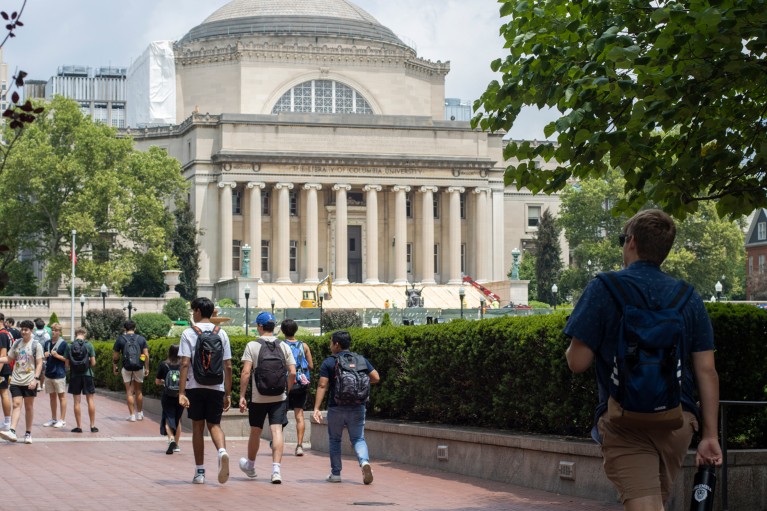


Under a new federal proposal, American universities would have to pay up to $100,000 for one of their graduates to take a job in the United States after their studies. Credit: Getty
International students in the United States would have to pay $100,000 to pursue a science job in the country after graduation, according to a proposal made public yesterday by US President Donald Trump’s administration.
The proposed rule would require academic institutions to foot the bill for a work program called Optional Practical Training (OPT), which allows foreign students to work in the United States for up to 3 years after earning an undergraduate or graduate degree.
Some 420,000, or about a third, international students participated in OPT during the 2025-2026 academic year, making it the largest pipeline of global talent into the U.S. workforce.
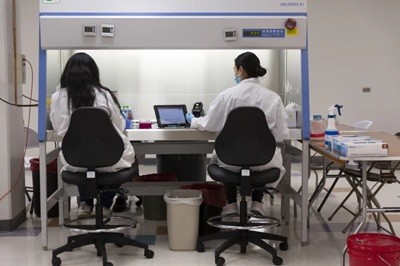
International doctoral students will face strict time limits in the United States
The US Department of Homeland Security (DHS), which issued the proposed rule, said it was intended to “fight fraud, strengthen the integrity of the immigration system, and protect American workers.” DHS projects that if the rule were finalized, OPT enrollment would decline by up to 44 percent and universities would pay between $8.4 billion and $16.5 billion annually.
An unpublished analysis of the rule’s effects on OPT enrollment by Michael Clemens, an economist at the Johns Hopkins School of Government & Policy in Washington, D.C., projects that the number of students enrolling after a bachelor’s degree would be cut in half and that enrollments of master’s degree holders would be virtually eliminated. Clemens also noted that OPT is particularly important for international doctorate holders in science, technology, engineering and mathematics (STEM) fields, attracting approximately 70% of them in 2022.
The proposed rule is the latest in a series of attempts by the Trump administration to restrict immigration, which has already limited the country’s ability to recruit scientific talent. In 2025, for example, Trump announced a $100,000 tax on a visa reserved for researchers and other highly skilled foreign workers. As a result, new visa applications fell by 90%, according to U.S. Citizenship and Immigration Services.
If the new proposal and associated restrictions are implemented, the combined measures will “obliterate the pipeline” of talent, Clemens says. In a separate analysis commissioned by the U.S. National Academies of Science, he and his colleagues found that the size of the overall U.S. workforce in STEM fields would decline by 6 to 11 percent over a decade if all of the administration’s proposals were implemented.
A DHS spokesperson said the $100,000 fee would “strengthen oversight of the program while addressing concerns of fraud and abuse” but did not respond to questions about the impact on the international STEM talent pipeline.
High cost
The OPT program has grown significantly over the past decade as international students have taken the opportunity to work at leading technology companies such as Google and Amazon. Last year, the number of new graduates enrolled increased 14 percent, even as the number of new international students declined, notes Violet Buxton-Walsh, an immigration policy researcher at the Institute for Progress, a nonprofit think tank in Washington, DC. Despite restrictions on immigrants, “few have better options than staying in the United States,” she says.
Canada recruits dozens of American academics, including several scientific stars
The administration’s proposal, first reported by the Wall Street Journalwould require graduates to pay a $70,000 fee for their first year of OPT; STEM graduates would pay an additional $30,000 for a two-year extension.
Without the allure of OPT, the number of international students in the United States is likely to fall sharply, several researchers said. Nature. As a result, Clemens projects that U.S. colleges and universities could lose between $2.5 billion and $4.2 billion in tuition and other revenue each year.
Ina Ganguli, a science and innovation economist at the University of Massachusetts Amherst, says the impact goes beyond numbers and finances. “This is going to change the type of students who are going to come to the United States,” she says, because the best candidates have the freedom to look elsewhere.
Gn usa