Mexico’s president blasted the U.S. Drug Enforcement Administration after it set up anonymous tip lines in the country, accusing U.S. officials of “meddling” and not doing enough to combat fentanyl and corruption within their own borders. President Claudia Sheinbaum said Friday that the country’s Foreign Ministry had filed a formal complaint with U.S. Ambassador Ron Johnson.
Sheinbaum, in harsh comments Thursday, read excerpts from a new Associated Press investigation revealing how the DEA allowed at least 1.4 million counterfeit fentanyl pills to go unseized as it spent eight months tracking a drug trafficking ring flooding the Southwest with deadly drugs.
“The DEA has a lot of work to do in its own country. A lot,” Sheinbaum said, referring to the AP report. “The first thing she should do is investigate corruption in the United States linked to organized crime, or what they call terrorist groups.”
“This is clearly an act of interference,” Sheinbaum added.
Imagine, she mused, if Mexico “opened a WhatsApp service to report corruption in the United States.” How would the US government view this?
Sheinbaum’s furious response comes less than 24 hours after DEA Administrator Terry Cole announced the tip lines on his X account, encouraging Mexicans to report members of Sinaloa state’s criminal networks, the corrupt officials who support them, and people who launder money to finance narcoterrorism.
“Your information matters. Your identity and safety matter,” Cole said, clarifying that information submitted via Signal, WhatsApp and email would be treated confidentially.
The United States increases its pressure on Mexico
The United States has increased pressure on Mexico to fight the cartels and has even proposed deploying troops on Mexican soil, which Sheinbaum ruled out while saying there would be security cooperation with Washington, “but without subordination.”
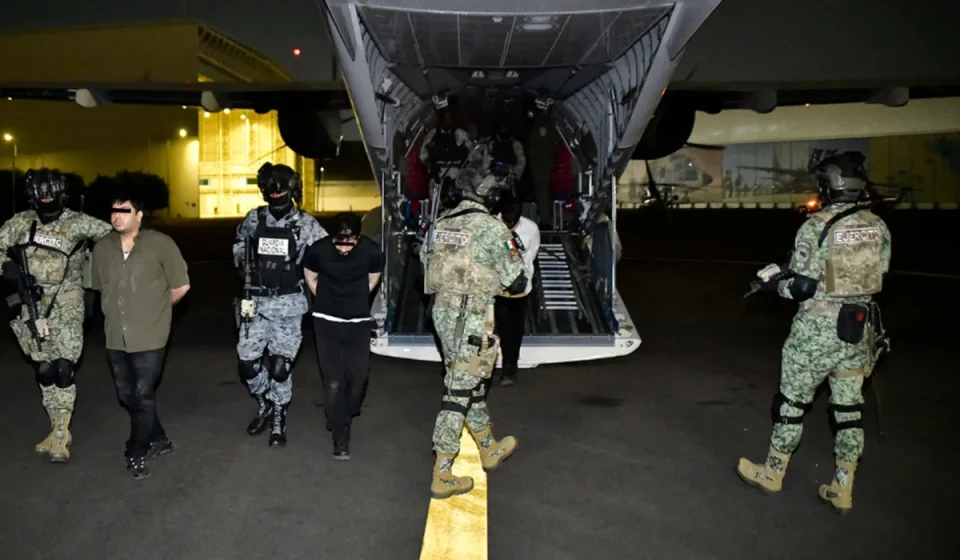
On November 20, Mexican military forces captured drug lord Fausto Isidro Meza Flores, aka “El Chapo Isidro,” a key ally of a faction of the Sinaloa Cartel. The FBI had placed him on its 10 most wanted fugitives list, while the US State Department was offering a reward of up to $5 million for information leading to his arrest.
The military operation to capture him sparked panic in the region, forcing civilians to flee in the face of the raging gunfire. Elsewhere in the state, suspected gang members reportedly set up makeshift roadblocks. In clashes with security forces, 16 cartel suspects were killed, officials said, and four soldiers were also killed.

Isidro Meza, aka
Mexico requested Washington’s support for the operation, and the United States sent a drone to help gather information on the drug lord’s whereabouts.
The United States requested Meza Flores’ extradition, but Mexican Attorney General Ernestina Godoy said he would be tried in Mexico.
Chapo Isidro’s capture came just days after Sheinbaum met with President Trump on the sidelines of a summit in Asia.
Mr. Trump, who has pushed Mexico to do more to combat drug gangs, said Friday the two men discussed trade and security.
The Mexican government has eliminated several cartel leaders. Chief among them was the leader of Mexico’s most powerful cartel, known as “El Mencho,” who was killed in February. Similar to the capture of Meza Flores, this dramatic operation resulted in an explosion of violence and cars being set on fire.
Although cooperation between the two countries went well in this operation, tensions arose between Mexico and Washington in late April after federal prosecutors in New York unsealed a drug trafficking indictment against Sinaloa Governor Rubén Rocha Moya, a member of Mexico’s ruling party. He and nine other officials have been accused of collaborating with a faction of the Sinaloa Cartel, which the Trump administration has designated a foreign terrorist organization.
Amid the controversy, Rocha Moya took an indefinite leave of absence and his bank accounts in Mexico were frozen. But Mexican authorities refused to grant the American request for an arrest. Sinaloa’s former security secretary, Gerardo Mérida Sánchez, surrendered to U.S. authorities in May.
DEA accused of “ambulating” fentanyl
In June, DEA whistleblowers revealed to the AP how agents in New Mexico had authorized the seizure of hundreds of thousands of fentanyl pills in recent years. At the time, the DEA denied knowingly allowing the trafficking of a synthetic opioid that the White House had called a “weapon of mass destruction.”
That denial, however, was further contradicted by new AP findings that the DEA authorized the trafficking of at least 1.4 million additional pills between August 2024 and April 2025 as it closed in on the largest fentanyl seizure in U.S. history.
The AP based its tally on thousands of pages of court documents, investigative files, detailed wiretap reports and 12 hours of DEA surveillance footage showing dealers moving large packets of pills in plastic bins and duffel bags as they passed through hotels, apartment complexes, Airbnb rentals and busy self-storage facilities in six states.

This photo shows fentanyl seized by the U.S. Drug Enforcement Administration at an Extra Space self-storage facility in Albuquerque, New Mexico, April 28, 2025. / Credit: U.S. Department of Justice via AP
The Mexican president, in her comments Thursday, called the DEA’s decision to allow fentanyl on the streets the “Fast and Furious of Fentanyl,” a reference to the 2011 gun scandal in which straw buyers smuggled some 2,000 assault weapons into Mexico in an effort to trace the firearms to cartel leaders.
“What is the United States doing in the United States?” » asked Sheinbaum. “We have a prosecutor’s office here and the Ministry of Security works here. So they should pay special attention to the other side of the border.”
The DEA did not immediately respond to a request for comment.
Cole said a channel for submitting tips on the state of Jalisco would be made public Thursday. The state is a stronghold of the powerful Jalisco New Generation cartel, known by its Spanish initials CJNG, which Washington has also designated a terrorist organization.
Meanwhile, a veteran DEA agent also told CBS News last month that the agency contributed to the problem by allowing fentanyl pills to reach the streets.
“For three years, I’ve been telling my DEA managers that we’re allowing dangerous amounts of fentanyl onto the streets, and we’re doing nothing to stop it, and they haven’t listened to me,” DEA Special Agent David Howell told CBS News in his first television interview.
Gn usa