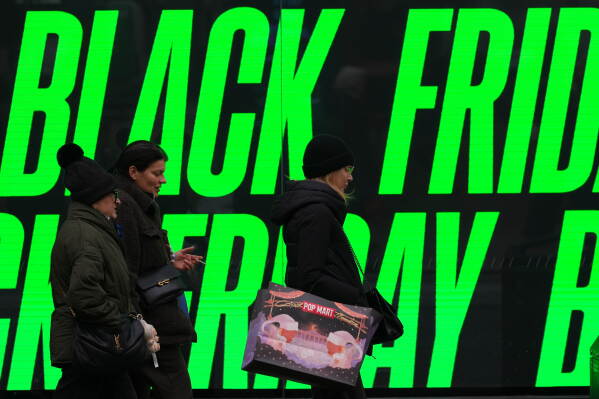
US consumers spent a record amount online black fridayand fewer people shopped in person on the busiest day for physical stores, according to preliminary figures released Saturday.
Excluding gas and auto purchases, in-store and online retail sales were up 5.8% from last year’s Black Friday, according to Mastercard SendingPulse, which tracks all forms of payment, including cash.
Adobe Analytics, which tracks e-commerce, said total online sales of $13.1 billion beat its forecasts and were up 11% from last year.
Higher pricesabout which Americans expressed their frustration how the war in Iran affects gasoline and some consumer goods were not responsible for all of the sales growth. According to Salesforce, Black Friday order volume increased 5% year-over-year.
Buyers eager to do digital deals weren’t limited to the United States. Global online sales hit a record $82.7 billion on Friday, also 5% higher than last year’s peak in announced holiday discounts, Salesforce said. The company said the global figure included $19.1 billion in U.S. sales.
Adobe and Salesforce use different data, which could explain the disparity in their online sales figures. Salesforce’s total was based on global shopping data from more than 1.5 billion consumers, and Adobe draws on data covering more than 1 trillion visits to U.S. retail sites.
Physical stores still account for the majority of all Black Friday sales, but they saw fewer visitors this year. RetailNext, which measures store footfall in real time, said initial data showed the number of customers had fallen by 2.9% compared to 2025.
Black Friday foot traffic has declined in recent years as U.S. consumers become accustomed to shopping online. Bad weather across the country may also have contributed this year.

Another factor could have been households feel the pressure on essentials like gas, groceries and rent, which is “changing the way they plan every shopping trip,” said Joe Shasteen, global head of advanced analytics at RetailNext.
Sensormatic Solutions, which also tracks store traffic, said its data reveals foot traffic is down 4.2% from the previous Black Friday, but up 250% from the Friday a week earlier.
Mastercard SendingPulse found that in-store spending increased 3.8%, which it says is the highest since 2022.
Michelle Meyer, chief economist at the Mastercard Economics Institute, said she expects half of the expected sales growth for this year’s holiday season to be because of inflation.
As retailers promote Thanksgiving week through the following Monday for holiday shoppingConvenient shopping also boosted Black Friday spending, Adobe said.
Gaming and electronics purchases, including consoles, video games, smartphones, headphones and smart glasses, were among the best sellers, but online shoppers also took advantage of discounts to stock up on essentials such as clothing, baby products, pet supplies and household cleaning items, according to Adobe’s analysis.
But technology was the hottest category overall, according to Mastercard SendingPulse, with spending on electronics and software up nearly 8% from 2025.
Gn bussni