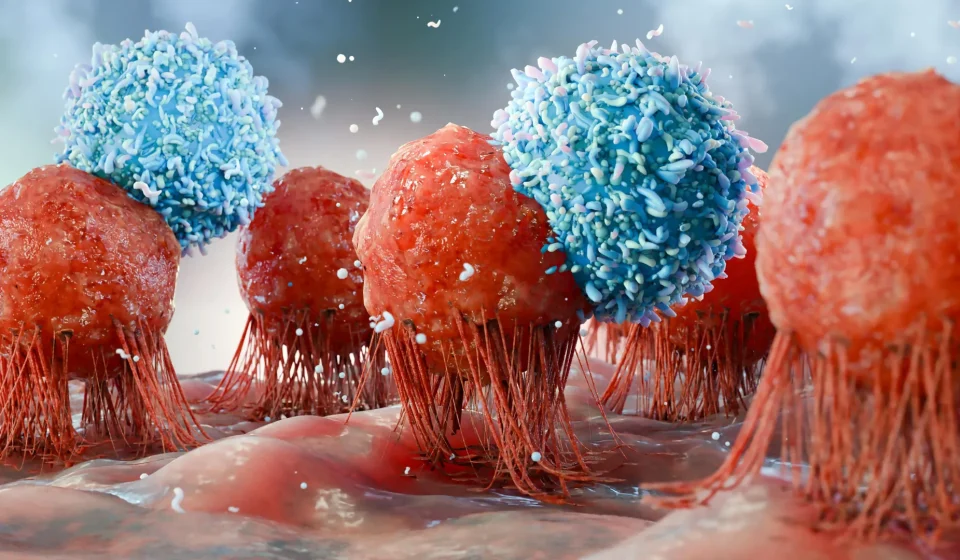

Scientists at the University of Southern California (USC) have discovered a way to produce a potentially renewable supply of cancer-fighting immune cells, opening a promising new direction for cancer treatment. By working with immature cells capable of becoming powerful immune defenders, researchers have created a system capable of generating large numbers of genetically modified cells that recognize tumors and help activate the body’s natural defenses.
The breakthrough, described in a study published in Cellcould help overcome some of the biggest hurdles facing cancer immunotherapy, including the difficulty of making enough immune cells and keeping them active in the body. In experiments involving mice, the modified cells established themselves in the bone marrow, produced new immune cells and slowed the progression of blood cancers and solid tumors.
The USC Stem Cell-led team focused on a type of immature immune cell called granulocyte-monocyte progenitors (GMPs). These cells normally develop into macrophages and other immune cells that protect the body from infections and participate in immune responses. Researchers discovered that GMPs could be grown on a large scale in the laboratory while retaining their ability to grow into functional immune cells. They could also be genetically modified to recognize specific cancer markers and enhance broader immune responses.
“The study establishes a scalable and conceivable GMP platform for cellular immunotherapy and introduces concepts that we believe could have broad implications for both cancer immunotherapy and stem cell biology,” said the paper’s corresponding author, Qi-Long Ying, MD, PhD, professor of stem cell biology and regenerative medicine at the Keck School of Medicine of USC.
Scientists discover surprising ability in immune cell precursors
Beyond its potential applications in cancer treatment, this discovery challenges a long-standing understanding of blood and immune cell development.
Stem cells are known for their ability to self-renew, meaning they can divide repeatedly while retaining their original properties. In the hematopoietic system, this ability is traditionally associated primarily with hematopoietic stem cells, which can produce all major blood and immune cell types.
Progenitor cells, on the other hand, are more advanced in their development and are already engaged in producing a more limited range of cells. They are generally thought to have less capacity for self-renewal in the long term.
USC researchers have demonstrated that GMPs can maintain this ability under carefully controlled laboratory conditions. Rather than rapidly transforming into other cell types, the progenitors continued to multiply while preserving their identity and ability to generate functional immune cells.
“The prevailing view is that long-term self-renewal of the blood system is mainly a property of hematopoietic stem cells that can generate any type of blood or immune cell,” Ying said. “We found that, under the right conditions, GMPs can also self-renew, dividing significantly while retaining their identity and ability to produce functional immune cells. This gives us an scalable starting point for designing cellular therapies for cancer, infectious diseases, and potentially many other conditions.”
This discovery could be particularly important for the development of treatments requiring a large and reliable supply of genetically modified immune cells.
Why macrophages could be powerful weapons against cancer
Macrophages are among the most versatile defenders of the immune system. Their name comes from Greek words meaning “big eaters,” reflecting their ability to surround and engulf bacteria, damaged cells, and other unwanted matter.
They also help coordinate immune responses by sending signals that influence the behavior of other immune cells. Some macrophages can enter tumors and attack cancer cells, making them attractive candidates for cancer immunotherapy.
One particularly promising application is in solid tumors, which include cancers that form masses in organs and tissues. Existing therapies based on engineered T cells have had their greatest successes against certain blood cancers, but treating solid tumors has proven more difficult.
Macrophages offer a potentially different approach because they naturally migrate into tissues and can enter tumors. However, turning them into practical treatments presents several challenges.
Once mature, macrophages have difficulty multiplying in large quantities outside the body. They are also difficult to genetically modify and can be damaged during freezing and storage, complicating the production and distribution of cell therapies.
Another problem arises after administration. Mature macrophages often congregate in organs such as the lungs and liver instead of spreading widely throughout the body. Their relatively rapid disappearance can also limit the length of time a treatment remains effective.
To get around these limitations, the scientists decided to start at an earlier stage of immune cell development.
Creating a renewable supply of anti-cancer immune cells
Rather than trying to make large numbers of mature macrophages, first author Shi Yue, MD, of Ying’s lab and colleagues focused on GMPs, the progenitor cells capable of producing macrophages.
Researchers developed a precisely defined mixture of chemicals that allowed GMP to survive and multiply for long periods of time in the laboratory. The mixture prevented the cells from prematurely developing into mature immune cells, thereby preserving a renewable population of progenitors.
Even after extensive expansion in the laboratory, GMPs retained the molecular characteristics that defined them. Importantly, they also retained the ability to develop into functional macrophages and other associated immune cells when necessary.
This approach could make it possible to make large numbers of engineered immune cells from a starting population that can be continually expanded, instead of repeatedly collecting and preparing mature cells.
To confirm that the method could be replicated, collaborators in the laboratory of Ravi Majeti, MD, PhD, at Stanford University, independently demonstrated that GMPs could be maintained for long periods of time and genetically engineered. Their results provided further support for the reliability of the technique and its potential use in future cell therapies.
Majeti, director of the Institute for Stem Cell Biology and Regenerative Medicine at Stanford University, noted: “This method of expanding and engineering GMPs opens the door to many translational applications, much like the expansion and engineering of T cells. We have already demonstrated the engineering of these cells to drive multiple powerful functions, and there is much more to explore.”
Engineering immune cells to recognize and attack tumors
The team then studied whether these expandable progenitor cells could be programmed to fight cancer.
They genetically engineered GMPs to carry a chimeric antigen receptor, or CAR. This modified receptor allows immune cells to identify a particular molecular marker on the surface of cancer cells, helping to direct their activity toward tumors.
CAR technology already plays an important role in cancer immunotherapy, particularly in treatments that modify a patient’s T cells to recognize and attack cancer. The USC researchers explored whether a similar strategy could be applied to GMPs, allowing them to generate engineered macrophages and other immune cells.
Scientists also equipped certain progenitor cells with an additional immune activation signal. This modification was designed to recruit and stimulate nearby immune cells, including T cells, which can help launch a more powerful attack against the cancer.
The additional signal offered another potentially important advantage. It remains effective even when the immune characteristics of the donor cells do not match those of the recipient.
This discovery opens the possibility of developing ready-to-use treatments using cells made in advance from donors. Unlike personalized cell therapies, which must be prepared separately using each patient’s cells, these products could potentially be produced in larger batches and made available to multiple patients.
Modified cells slow cancer progression in mice
After successfully developing and expanding GMPs from mice and humans, researchers investigated their therapeutic potential in mouse experiments.
When given to mice, the progenitor cells became established in the bone marrow and other locations responsible for the production of blood cells. These environments provided places where GMPs could generate additional artificial macrophages and associated immune cells.
This was an important difference from treatments using mature macrophages. Instead of relying solely on immune cells that can disappear relatively quickly, progenitors could provide a continuous source of replacement cells from inside the body.
The strategy could therefore help overcome the rapid clearance that has limited macrophage therapies, including approaches evaluated in recent clinical trials.
The researchers tested the modified cells in mice with blood cancers and solid tumors. GMPs carrying CAR receptors slowed disease progression in both types of cancer.
The effects were even stronger when the progenitors carried both CAR receptors and the additional signal designed to activate other immune cells. This combination improved the treatment’s ability to stimulate a broader anti-tumor response.
Although these results are encouraging, cancer treatment outcomes remain preclinical. Further research will be needed to determine whether engineered GMPs can be used safely and effectively in humans, particularly if they are intended to persist and produce immune cells over extended periods of time.
Potential applications…
Gn Health