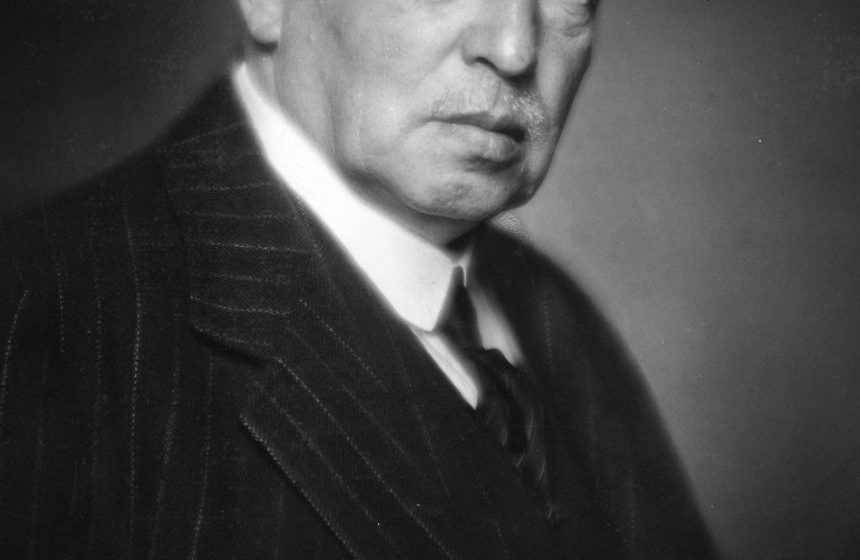
Van Gogh sale will go ahead, despite last-minute claim the $180 million painting was sold ‘under duress’ during the Nazi era

The sale of a Vincent van Gogh painting, estimated to fetch $180 million at auction, will continue despite new allegations that it was sold by a Jewish family “under duress” amid Nazi persecution in the 1930s.
In a statement, auction house Sotheby’s said it was “aware of the concerns” raised about “Chestnut Trees in Bloom” by the descendants of the work’s former owner, but confirmed that the blockbuster sale would go ahead as planned on Wednesday evening.
The anonymous heirs of Samuel Fischer, a Jewish publisher living in Berlin before World War II, opposed the upcoming sale in New York, arguing that their ancestors only sold the painting due to financial difficulties directly caused by the Nazi regime.
Last Thursday, less than a week before the planned auction, their lawyer Gunnar Schnabel wrote to Sotheby’s asking it to prove beyond a doubt that the painting had been sold at market value — and that the family would have done so “even without the Nazi regime,” according to correspondence seen by The New York Times. Schnabel, a Berlin-based lawyer specializing in Nazi-looted art, did not respond to CNN’s repeated requests for comment.
“Sotheby’s takes issues of provenance and restitution extremely seriously and has undertaken extensive research into the ownership history of ‘Chestnut Trees in Bloom,'” read the Sotheby’s statement sent to CNN on Monday, adding that the auction house was “in dialogue” with Fischer’s heirs.
“While our research to date has not established that the painting was sold under duress, we recognize the importance of thoughtful and constructive dialogue with the family and are committed to working toward a mutually satisfactory resolution,” the statement continued.
The dispute is the latest in a series of art market controversies surrounding paintings that, although not confiscated by the Nazis, may have been sold under pressure or below market price during the era of the Third Reich. Schnabel – who did not reveal the identity of the US-based heirs – told Sotheby’s that his clients were seeking a settlement “in the spirit” of the 1998 Washington Principles on Nazi Confiscated Art, a set of international guidelines on resolving disputes over Holocaust-era property, according to the New York Times.
Van Gogh painted “Chestnut Trees in Bloom” in the French village of Auvers-sur-Oise in 1890, shortly after his release from a psychiatric institution. In its catalog, Sotheby’s said the vibrant street scene demonstrated “magnificent brushwork and an exuberant and expressive range of colors.”
Hungarian-born Fischer, founder of the publishing house S. Fischer Verlag, acquired it in Berlin in 1909. According to the Sotheby’s catalog, he deposited the painting with Paul Cassirer & Co., an Amsterdam gallery, in 1932 or 1933, the year the Nazi Party came to power in Germany. Fischer died the following year, leaving his daughter and son-in-law, Brigitte and Gottfried Bermann-Fischer, in charge of the family publishing house and its art collection.

In June 1936, Paul Cassirer & Co. sold the painting – which was still in the Netherlands at the time – to French collectors Marcel and Henriette Kapferer on behalf of the Bermann-Fischers. By this time, the two men had already fled Berlin for Vienna, where they established an Austrian branch of the family publishing house.
Schnabel reportedly believed the sale was necessitated by the financial difficulties the family business faced due to Nazi persecution. Some of the publisher’s most prominent authors, including Hermann Hesse and Nobel Prize winner Thomas Mann, had been blacklisted by the Nazi regime and their works ceremonially destroyed in book burnings.

While the Bermann-Fischers managed to smuggle part of the family’s art collection to Austria (before settling in Sweden and eventually the United States), Schnabel discovered that they were obligated to pay the “Reich flight tax,” a substantial levy imposed on the assets of people fleeing Nazi Germany, the Times reported.
Sotheby’s, for its part, believes that there is no proof that the sale was made under duress. The 1936 transaction was reportedly made for 68,000 Swiss francs, or approximately $22,000. For comparison, Van Gogh’s painting “Orchard with Cypresses,” which made history when it sold for $117 million in 2022, sold for $15,000 in 1935.
“Chestnut Trees in Bloom” remains on track to beat the auction record for Van Gogh’s work, set by “Orchard with Cypresses.” The painting had been guaranteed by Sotheby’s, meaning the seller was promised a minimum price for the item, regardless of the events of the sale. The auction house did not disclose that floor price, although a spokesperson told CNN that if the painting “sells overnight, it will likely be a record for the artist.”
“Chestnut Trees in Bloom” is one of 12 paintings – alongside works by Monet, Renoir and Cézanne – that Sotheby’s is offering from the collection of the late Argentine businessman Carlos Pedro Blaquier and his patron wife, Nelly Arrieta de Blaquier. It was bought by the Blaquier-Arrieta family in 1975, after changing hands several times since the Second World War.
In a statement released via Sotheby’s, the Blaquier-Arrietas said they also welcomed a “constructive dialogue” with the Fischer heirs. “The family recognizes the importance of addressing concerns arising from the difficult circumstances of the Nazi era and respects the historical sensitivities involved,” the statement added.
Since the “Blooming Chestnut Trees” were sold in the Netherlands, which was not then under Nazi occupation, Fischer’s immediate heirs had little legal basis to seek compensation after World War II. But more recent – although non-binding – political agreements, including the 1998 Washington Principles and the 2009 Terezin Declaration (which explicitly refer to “forced sales and sales under duress”), have provided a new legal framework for descendants seeking redress.
In 2022, the French government returned a Gustav Klimt painting to the heirs of a Jewish family forced to sell it at a discount after the Nazi annexation of Austria in 1938. The following year, the heirs of Jewish collectors Karl Adler and Rosi Jacobi filed a lawsuit against the Guggenheim Museum in New York over a Pablo Picasso painting that they said had been sold out of desperation then that their ancestors were fleeing persecution, but the case was dismissed. 2024.

Auction houses generally avoid offering items that might be subject to restitution claims, which can scare away potential buyers and draw criticism from Jewish advocacy groups. In 2023, under growing public pressure, Sotheby’s rival Christie’s canceled a sale of around 300 pieces of jewelry from the collection of the late art collector Heidi Horten, whose husband was accused of making his fortune buying Jewish businesses sold under duress in Nazi Germany.
Gn entert