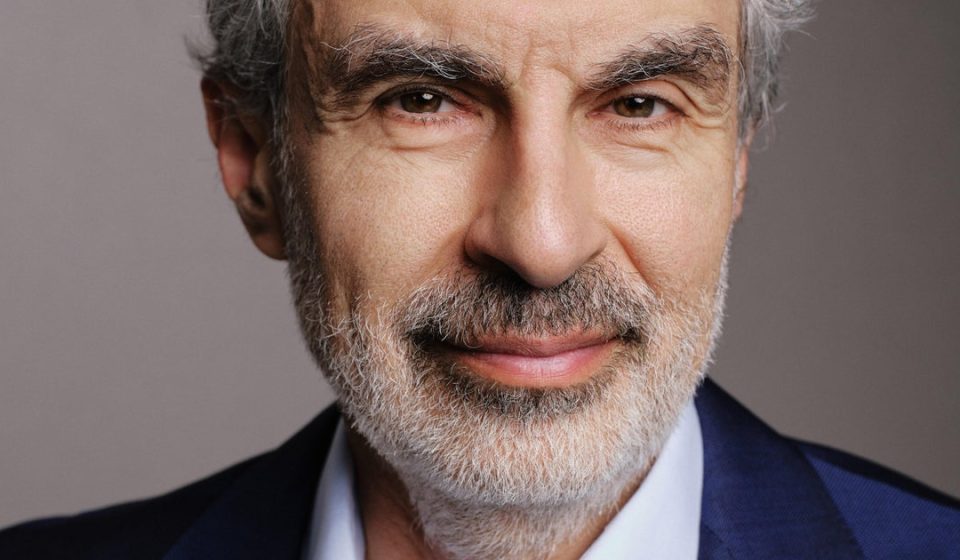
Yoshua Bengio is the most professionally cited living scientist and most cited computer scientist of all time. He is informally known as one of the three “godfathers” of artificial intelligence, along with Geoffrey Hinton and Yann LeCun, for his seminal work on the deep neural networks that power today’s AI models.
In short, Bengio helped bring AI to the world – technology now embedded in our schools, our search bars, our smartphones, and our wars.
Yet despite being one of the main minds behind AI, the University of Montreal professor is now urgently calling for a slowdown in its development and a renewed focus on the safe use of AI.
LawZero, the nonprofit of which Bengio is co-president and chief scientific officer, is working to develop AI “designed to be trustworthy and safe” – in fact a disagreement with models published by Anthropic and OpenAI. Bengio wants companies, governments and AI lab workers to stop developing ever better AI systems.
What led to such a dramatic turnaround for one of the world’s leading AI researchers? Bengio spoke with CBS News about the risks, regrets and responsibility of AI. The interview has been edited for length and clarity.
CBS News: You are considered one of the people most responsible for the early advances in deep learning and are the most cited scientist in the world due to your work in the field of AI. How do you feel about your past work today?
Yoshoua Bengio: I feel like I learned a lot. It was exciting. But I should have seen some of the more serious risks sooner. And I think, like most humans, I was focused on the good side of my job. And not enough about the potential consequences.
What was the initial goal of your early work on deep learning or AI?
I was trying to understand intelligence and do it in a way that was abstract enough to help us understand human intelligence, animal intelligence, and build intelligent machines. This was a very exciting research goal, with the hypothesis that there might be a few simple principles – think of the laws of physics for the physical world – that could explain intelligence.
Do you think this goal has been achieved since then?
Beyond our expectations. There are still people in denial, but it is very clear that we have made very rapid progress towards intelligent machines.
Has your personal opinion on what intelligence really is changed over time?
It has been refined, but I have not reversed course on the nature of the intelligence. In recent years, I have focused on how things can go wrong, in the sense that intelligence can serve purposes that are not ethical.
You’ve now turned your attention to advocating for AI safety – that’s a distinctly different focus than your previous research. Can you explain this change?
I spent a lot of my brain cycles doing two things. One was how we can make AI smarter, and the other was how to apply AI to areas like medicine or climate crisis management, education, etc. I made a big pivot to focus my research on how we can make AI safe, because capabilities, intelligence, can be in the service of really, really bad goals – whether they’re in the hands of humans with those bad goals or the AI itself.
And as the intelligence of these systems increases, so do the risks of very dangerous uses of that intelligence.
Anthropic recently became the first AI lab to go public, turning many of its employees into millionaires and even billionaires. At the same time, these researchers acknowledge that they may be building the equivalent of a doomsday device. What should AI researchers think about when developing new models?
They should try to honestly examine their work, its consequences, and the best use of their time to align with their values. If they care about humanity and democracy, I think they should reconsider what they are doing now.
What we’ve seen over the last few years, and especially since the summer, is that companies don’t really know how to solve the misalignment problem – in other words, build AIs that do things that are bad for us.
Risk increases with capacity. I don’t even think society is ready. Even if we were to solve this problem – to deal with the existence of machines vastly superior to humans – we are heading in a dangerous direction. And even the people working in AI security at these companies, in some way, are contributing to this.
Many experts believe that more powerful AI models, far surpassing human intelligence, including in areas like creativity where people excel, will arrive sooner rather than later. Do you agree with this general timetable and, if so, how should we respond to such developments?
My perception of when things might go wrong has certainly shifted earlier than, let’s say, what I expected before the project started. Face hugging incidentand even earlier with the Cyberabilities of myth. We are evolving more quickly towards increasingly efficient systems, and we are evolving more quickly towards systems that we do not know how to control.
For this reason, in my own work at LawZero, we have reoriented our research agenda to aim for short-term goals that could have an impact sooner – to show that there is a different way to train AIs that won’t almost always lead to rewarded hacking. In other words, systems that would rather cheat and try to hide it than do what we ask of them.
What would a more honest AI look like?
I’ll use an analogy. Right now, the way we train AIs is similar to how you try to teach drivers on the highway not to exceed the speed limit. They get rewards when they get to their destination faster. And we try to control their bad behavior by installing detectors on the highways.
So what’s going on? Well, first, drivers will try to figure out where the detectors are. They will only slow down where the detectors are. And we’re already seeing this in AI. In other words, when the AI knows it is being tested, it behaves well. And if they’re really smart, these drivers could even hack the detectors themselves.
Now let’s imagine a different way of building the drivers. Imagine a human driver who is in the same situation with the sensors and wants to get to his destination. But they believe that God is watching them and that they can do nothing to hide what they are doing from God. Well, they will behave well.
How can society prepare for what seems like an inevitable future in which AI will be a part of ordinary life?
The short-term emergency is to stop this crazy advance towards increasingly efficient systems that we don’t really know how to control. This is not limited to businesses. Models may be disclosed. Methods can be copied. There are many risks, and they all come from having machines that are very, very smart and can do things that we didn’t know how to do before.
It is therefore urgent to stop this. And it is in the computing resources used to train the next generations that the problem arises the most. Currently, the majority of computing resources are devoted to training future machines, rather than actually using what we have for the benefit of society. And these new models carry more and more dangers, because intelligence gives power, and this power can be misused.
What is the right way to walk the border, to slow down? And what kind of regulation and oversight is needed? I think it’s an interesting discussion, and we should have it. But that won’t happen until people understand that we are heading into enormous danger.
What do you think ordinary people who don’t work in government or AI companies should be doing to have a positive impact on AI?
People need to understand that this is much more serious than they usually think. That’s the first thing. The second thing is this: do not fall into despair and helplessness, because we can change the future. We still have an agency. We can change society. We’re in a democracy where governments can actually do something about all of this.
But it will take enough people to ask and demand it. And for that, they must understand that their lives are at stake, that the lives of their children are at stake, that democracy is at stake, that peace and stability are at stake. People must understand that the stakes are comparable to those of a war. We don’t have it in front of us yet, but it’s coming and we have to prepare for it.
I have a child and I know you have children and grandchildren. Are you optimistic about the future despite the dangers posed by AI?
Without fail. I am optimistic by nature. Here’s the flip side of all the scary stuff. Humans, when they see danger, can pivot quickly. Think about how quickly we responded to the pandemic. We did not wait for an international agreement that would take a decade: we simply acted and coordinated.
Because of the risks, I think we could end up in a much better world, where there are no more wars. Because we can’t afford that kind of risk when there are AIs that can be used to kill everyone, or large numbers of people.
I also think democracy will need to be much stronger, because the temptation to abuse the power that AI will provide will be so great that the only way around it will be to have incredibly strong institutions.
So we could end up in a much better world, and that’s of course on top of all the scientific advances that AI can bring. But this will not happen if we are collectively blind to the risks of current trajectories.
If we were to solve the alignment problem, which is what I’m trying to do as a scientist, we still need to make sure that humans don’t use very powerful AIs – perhaps even superintelligent AIs – against each other in the pursuit of wealth, power and for the sake of hatred. All the bad things humans are capable of. And I don’t think our society is ready for that.
Gn headline