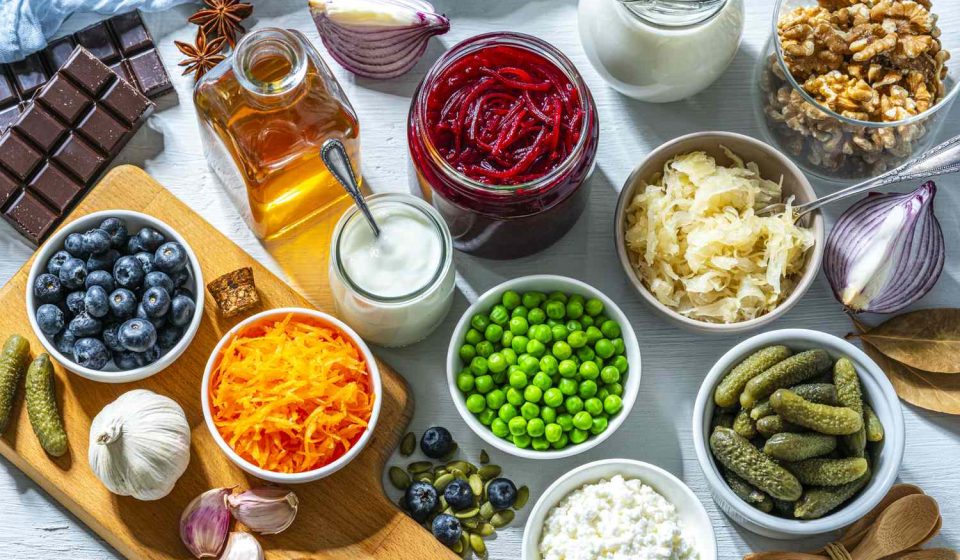

- Dietitians say yogurt and especially kefir are the best choices for gut health because they add helpful live cultures and are easy to incorporate into daily meals like smoothies, breakfasts and savory dishes.
- Oats are a good second choice because they provide a gentle, affordable source of fiber that helps feed good gut bacteria and is easily incorporated into breakfasts, snacks, and baked goods.
- For best results, aim for a varied diet with plenty of plant foods, fermented foods, and fiber, and if these foods are new to you, add them in gradually and drink more water to help your body adapt.
Gut health is a major trend right now – and has been for several years – as evidence continues to show its positive influence on various aspects of overall health. When we talk about gut health, we are most often referring to the health of the gut microbiome, a colony of over a trillion microorganisms living in the large intestine. Researchers have discovered that this microbial community also has a much bigger impact than just digestive health. From brain and metabolic health to immune and heart health, there are few body systems that the microbiome does not impact.
Intentional food choices are one of the best ways to support your gut microbiome, and there are several. Some of the most beneficial options include foods rich in fiber, polyphenols, and beneficial bacteria. But among these choices, which is best food for a healthier gut? We surveyed three registered dietitians (RDs), and they all agreed on the same answer.
- Kendra Haire, RDNregistered dietitian and owner of Radiant Nutrition and Wellness
- Leah Murnane, MS, RD, CSSD, LDNperformance dietitian and owner of Lettuce Eat Dessert
- Jennifer Rawlings, MS, RD, CDCESwomen’s health dietitian based in Charlotte, North Carolina
The best food for a healthier gut
According to the dietitians interviewed, fermented milk products, in particular yogurt and kefir– are among the best foods for gut health.
“Fermented dairy products, like yogurt and kefir, contain probiotics that have been shown to increase healthy bacteria in the gut. Plain yogurt is a great option because it’s easier to eat regularly than other probiotic-rich foods,” says Jennifer Rawlings, MS, RD, CDCES, women’s health dietitian.
Kendra Haire, RDN, registered dietitian and owner of Radiant Nutrition and Wellness, agrees, emphasizing how the natural bacteria found in yogurt are beneficial for gut health. Meanwhile, performance dietitian and owner of Lettuce Eat Dessert Leah Murnane, MS, RD, CSSD, LDN, often recommends kefir to her clients. “It’s a fermented dairy product containing a wide diversity of probiotics needed to maintain a healthy gut microbiome. There are generally more strains of probiotics than most yogurts, so I recommend it as a better dairy option,” she says.
Kefir and yogurt can be enjoyed in the same way at home. “I love adding them to my post-workout smoothies, and I recently added kefir to my French toast,” Murnane shares. “Berry yogurt can be part of a gut-healthy breakfast,” adds Haire. Rawlings, on the other hand, loves using plain yogurt “in place of sour cream on tacos, enchiladas and potatoes.”
As runners-up, these dietitians also recommend oats to help maintain tip-top gut health. “Oats are rich in beta-glucan, a soluble fiber that forms a gel in the gut and feeds beneficial bacteria. Compared to other high-fiber options, oats are relatively gentle on the gut, so they’re a good starting point for people who don’t eat a lot of fiber to begin with,” says Murnane.
Rawlings agrees, adding: “Oats have been shown to increase beneficial bacteria in the gut, and I love them because they’re inexpensive, easy to eat consistently, and extremely versatile.
This whole grain is just as easy to incorporate into meals and snacks as fermented dairy products. “My favorite recipes include overnight oats, baked oats, and banana oatmeal muffins,” shares Rawlings. Murnane also had some delicious ideas, sharing, “I like to eat (oats) cooked with milk or kefir and add berries and nut butter on top, or mix them together to use as a base for energy bites.” »
As with any healthy diet, selecting foods for gut health should always be about balance. “While it’s just (a few) foods, a good rule to consider when it comes to gut health is variety! If you’re filling your plate throughout the day with a variety of colors from various plant foods, you’re well on your way to supporting your gut health,” Haire points out. Rawlings agrees, adding, “The secret to maintaining a healthy gut microbiome is consuming a diverse diet, rich in probiotics, prebiotics, and fiber found in fermented foods, whole grains, fruits, vegetables, nuts, and seeds.” »
That said, if you’re not in the habit of regularly eating fermented or fiber-rich foods, it’s important to start slowly by adding just one food from each category to your daily routine. Adding too much too quickly can increase your risk of experiencing unpleasant side effects, such as nausea, gas, bloating, or constipation. “Also, when adding foods with more fiber, always be sure to increase your water intake to avoid unpleasant side effects,” advises Murnane.
Gn Health