The stock market’s No. 1 catalyst and its $1.5 trillion tinderbox of risk measurement appears ready to burst.
By Sean Williams –
Key Points
The Dow Jones Industrial Average, S&P 500 and Nasdaq Composite have soared since the bottom of the 2022 bear market, thanks to artificial intelligence (AI) fueling these gains.
Risk-taking on Wall Street reached an all-time high in June, and the historic ramifications are worrying, to say the least.
Additionally, every game-changing technology since (and including) the advent and proliferation of the Internet in the mid-1990s has gone through an early-inning blowout event.
Since October 2022, all systems have been in place for what is undoubtedly the greatest creator of wealth on the planet. The timeless Dow Jones Industrial Average (^DJI +1.18%) has rebounded as much as 90% from its 2022 bear market low, while the benchmark index S&P500 (^GSPC +1.60%) and dominated by growth stocks Nasdaq Composite (^IXIC +2.31%) its value has more than doubled.
Several factors have lit a fire during Wall Street’s four-year (and counting) bull market rally, including record S&P 500 stock buybacks, better-than-expected corporate earnings, enthusiasm for branded stock splits and IPO euphoria. But nothing has been more important than the evolution of artificial intelligence (AI) and the continued construction of AI data centers.
AI is the biggest technological advancement on Wall Street since the advent and proliferation of the Internet in the mid-1990s. Unfortunately, parabolic upward moves in the stock market often have consequences.
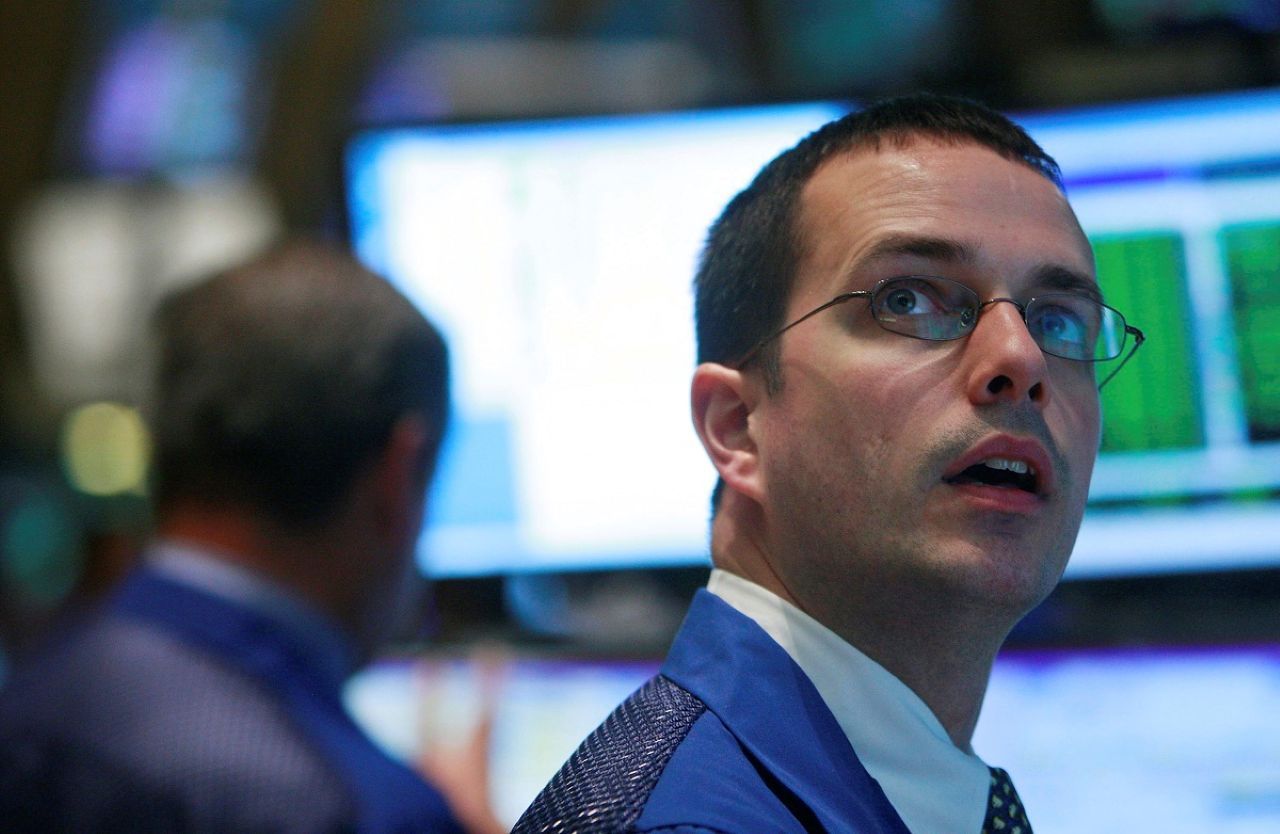
Image source: Getty Images.
Although history has conclusively shown the Dow, S&P 500, and Nasdaq Composite rising over multiple decades, historical precedent is not as favorable to investors over shorter periods. Eventually, something always pushes stocks over the edge, and we could currently be witnessing the simultaneous bursting of Wall Street’s two biggest bubbles.
The Wall Street risk bubble appears to be bursting
Although past events can never guarantee directional moves for the Dow Jones Industrial Average, S&P 500 and Nasdaq Composite, history most often rhymes on Wall Street. Outstanding margin debt is an indicator that perfectly foreshadows what is to come.
Margin is the money an investor borrows from their broker, with interest, to sell short (bet against) or buy securities. When margin is used to purchase stocks or exchange-traded funds, it represents a form of leverage.
Using margin for purchases can be particularly risky. Margin can magnify an investor’s gains if a stock moves in the desired direction, but can quickly magnify losses if it moves in the opposite direction. This dynamic makes investors’ use of margin a crude but particularly useful measure of their willingness to take risk.
Total margin debt hits $1.5 trillion, new all-time high 🤯 👀 pic.twitter.com/1IXqZGgrqs
— Bar Chart (@Barchart) July 20, 2026
While outstanding margin debt with brokers, as reported monthly by FINRA, is expected to grow in step with the stock market over time, problems arise when it goes parabolic over a relatively short period of time (12 to 19 months). There have been four instances since 1998 where margin debt skyrocketed by at least 65% in a short period of time, and the previous three events were all precursors to disaster on Wall Street:
- From March 1999 to March 2000: Margin debt jumped 80% to nearly $300 billion in the 12 months before the dot-com bubble burst in March 2000. By October 2002, the S&P 500 and Nasdaq Composite had fallen 49% and 78%, respectively.
- June 2006 to July 2007: Immediately before the start of the financial crisis, outstanding margin debt soared 66% in 13 months to approximately $416 billion. The Great Recession caused the S&P 500 to fall 57% in March 2009.
- March 2020 to October 2021: Fiscal stimulus checks during the COVID-19 pandemic spurred risk-taking, increasing margin debt by 95% in 19 months to $936 billion. The 2022 bear market lasted nine months and cut a fifth, a quarter and a third of the Dow, S&P 500 and Nasdaq, respectively.
- April 2025 to June 2026: Outstanding margin debt reached an all-time high of $1.502 billion in June 2026, up 77% year-over-year.
Since June, margin debt has declined to $1.448 trillion in October. While this decline does not guarantee that Wall Street’s $1.5 trillion risk-taking bubble has officially burst, historical precedent certainly suggests that it has.

Image source: Getty Images.
There are also signs that the AI bubble is bursting
In addition to the potential Wall Street powder keg “boom” with a margin of $1.5 trillion, the AI bubble also appears to be bursting.
Let me start this discussion by stating that AI remains a real driver of long-term growth. This technology offers real productivity and efficiency improvements in most sectors and industries around the world. The question is not whether AI is viable, but rather how long it will take for companies to optimize this technology.
Since the advent and proliferation of the Internet in the mid-1990s, every revolutionary technology has gone through a bubble-bursting event early on. This includes the Internet, genome decoding, nanotechnology, 3D printing, blockchain technology and the metaverse, to name just some of the most important technological innovations.
The reason these bubbles form and then burst repeatedly is because investors consistently overestimate the pace of adoption and/or optimization of new technologies.
3D printing and the Metaverse presented obvious adoption issues, with initial hype never translating into widespread adoption. But this is not the case for AI, which has seen neoclouds and hyperscalers spend small fortunes to expand their AI data centers.
Stock market bubbles throughout history…
AI now commands around 40% of the market. pic.twitter.com/RxSAh09k6F
– Geiger Capital (@Geiger_Capital) May 8, 2026
The problem with the AI revolution is that companies are not particularly close to optimizing AI solutions. It took several years after the dot-com bubble burst for internet-based businesses to optimize these solutions to increase sales and profits. AI companies are likely on the same trajectory.
The bond market is also signaling a possible bursting of the AI bubble.
When public companies issue debt, it is valued at face value. Bond prices should stay around their face value if traders have confidence in the underlying company’s ability to service and repay its debt.
But for much of 2026, bond prices of AI founding companies have plunged, while corresponding yields have soared. This disconnect suggests that the bond market is becoming increasingly skeptical about the sustainability of AI infrastructure development and/or the ability of AI companies to service their debts.
For all intents and purposes, we could see Wall Street’s two biggest bubbles bursting simultaneously.
Where to invest $1,000 now
When our team of analysts has a stock tip, it can pay to listen. After all, Stock Advisor’s average total return is 792 %* — overwhelming market outperformance relative to 202 % for the S&P 500.
They just revealed what they think are the 10 best stocks for investors to buy right now, available when you join Stock Advisor.
See the actions ›
*Stock Advisor returns as of November 28, 2026 .
Gn bussni