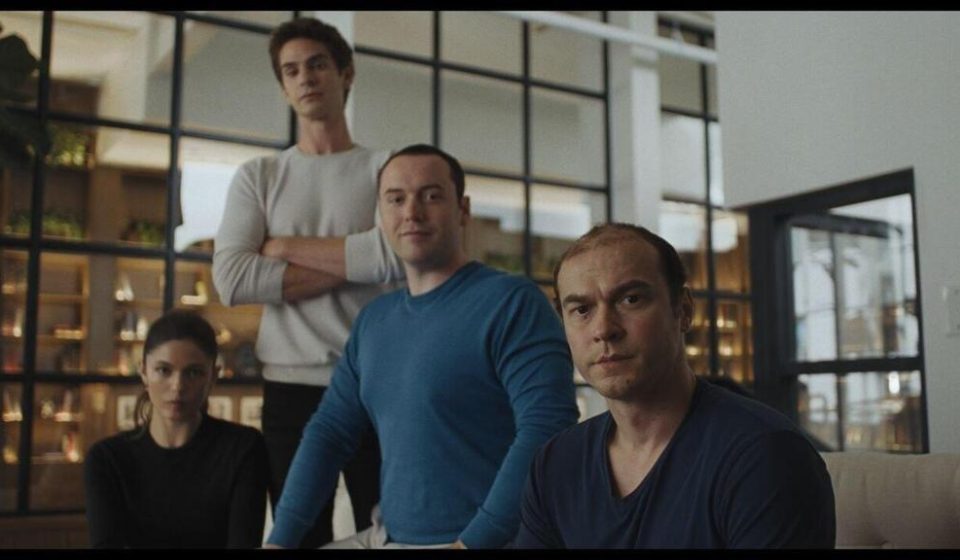
We saw “Artificial” before anyone else, and now we know why Hollywood tried to bury it.

Executives at Amazon MGM Studios, which backed the $40 million production, decided to shelve the film because of the company’s extensive business ties to OpenAI and its CEO, Sam Altman. Netflix, A24, Focus Features and other major studios have kept their distance from this explosive project. The company that came to its rescue was the American distributor Neon, which acquired the distribution rights to the film and accepted the invitation of the prestigious New York Film Festival (NYFF) to organize its world premiere. It has become the most talked about and sought after screening in town this week.
But the man initially portrayed as an ambitious young genius who dreams of a better world eventually emerges as a hero, fighting almost single-handedly to stop a dangerous tide that threatens to turn his dreams into nightmares for us all. So Israelis can relax. The country is not slandered. Now let’s move on to the fate of humanity.
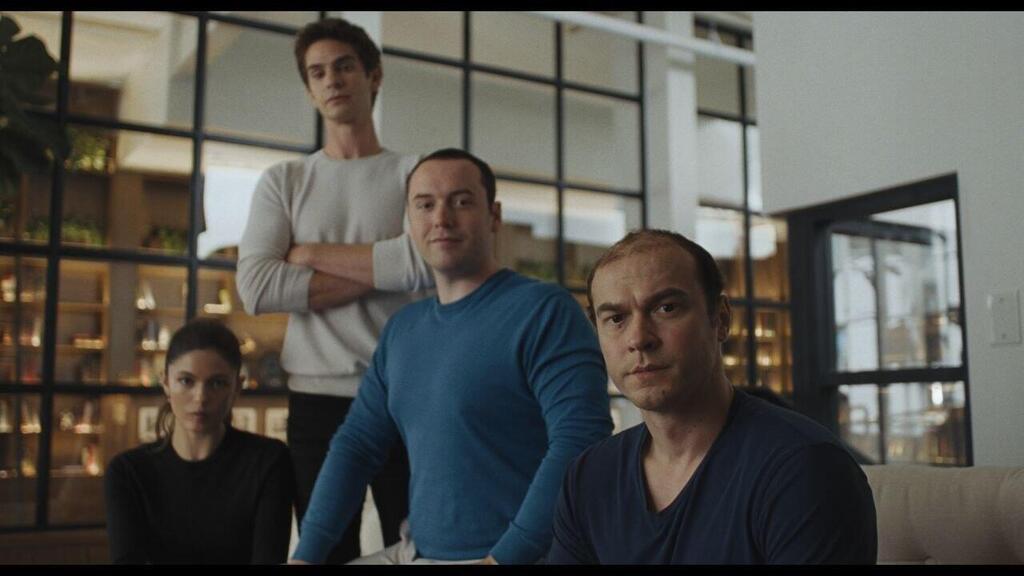
At least the Israeli character is portrayed in a good light; From “Artificial”
(Photo: Courtesy of Neon)
From the Stone Age to the Industrial Revolution to the present day, technology has been seen as an extension of human capabilities, whether physical or intellectual. The invention of the wheel, the locomotive, and the jet engine expanded humanity’s ability to move. Telegraphs, landlines, and smartphones revolutionized communication, while calculators, personal computers, and supercomputers made it possible to perform complex calculations in seconds.
The sickle, scythe and plow advanced agriculture. Spears, bows, arrows, and guns helped humans hunt animals for food and, eventually, kill other humans on the battlefield. Conversely, drugs, implants, and medical imaging technologies have been developed to prolong life.
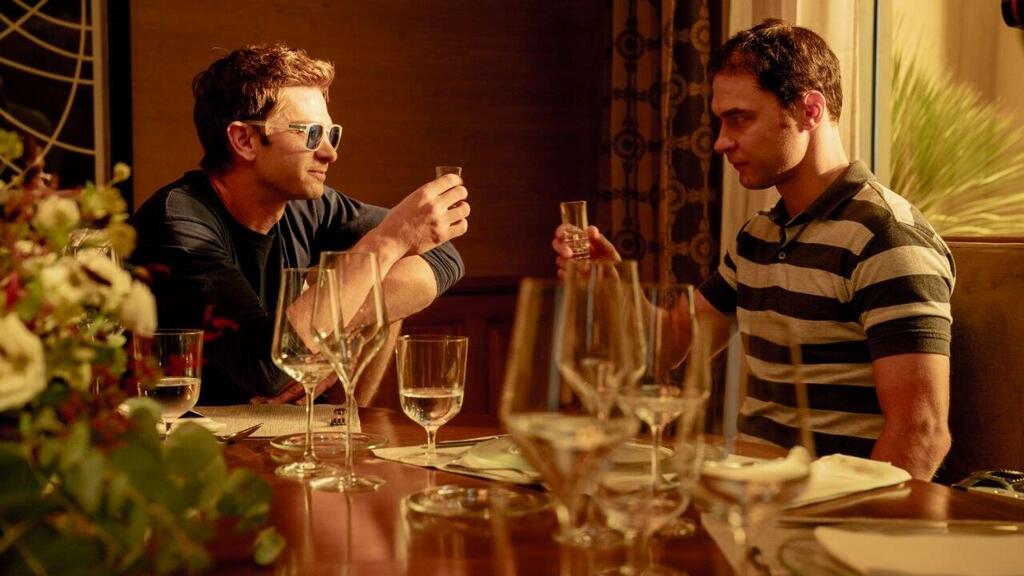
Emotions? Who needs it? From “Artificial”
(Photo: Courtesy of Neon)
Sam Altman (Andrew Garfield) is the main villain of the film, a hypocritical schemer, while Musk (Ike Barinholtz) is portrayed as a clown driven by jealousy and the desire to display his power for all to see.
But the hero of the film is Sutskever, played with great skill by Yura Borisov (“Anora”), who traces the character’s gradual disillusionment. What unites these three characters is that they all fall somewhere on a spectrum of poor social skills, emotional detachment, and callous narcissism.
Yet Sutskever has a wider emotional range. He begins the story as a bright, innocent student with big ideas in his head and a full head of hair, before becoming a bald senior executive at OpenAI, desperately trying to undo the potentially catastrophic unintended consequences of those ideas.
The comparison also suits Sutskever himself, since he is incapable of lying. Following this allegory, Hinton becomes Geppetto, the creator of Pinocchio. Today, Hinton is known as the “godfather of AI,” but by extension, we could call him the grandfather of Cat-Geppetto.
Another possible historical comparison is Alfred Nobel. Hinton recognizes that large-scale applications of the technology he and his team have developed could bring them financial rewards, global fame and perhaps even a Nobel Prize. But he also understands that its destructive potential could even exceed that of Nobel’s invention, dynamite.
Hinton decided to continue developing the technology in Google’s controlled environment. Meanwhile, Altman and Musk join forces to launch OpenAI, a small, irreverent startup populated by tech brothers. They’re walking clichés of computer geniuses: socially awkward nerds, perhaps somewhere on the autism spectrum.
They aspire to be as successful as Musk, but Altman’s ambitions go even further. Unlike the frail, gentle, cautious Hinton, Altman is a resolute torpedo, running toward his target without looking left or right.
Sutskever is tempted to join the new company, hoping to realize his vision without the restrictions imposed by his aging and hesitant mentor. Altman is courting him, promising to remove regulatory hurdles that stand in the way of that vision. He also removes emotional barriers and makes his way into Sutskever’s heart as a new best friend.
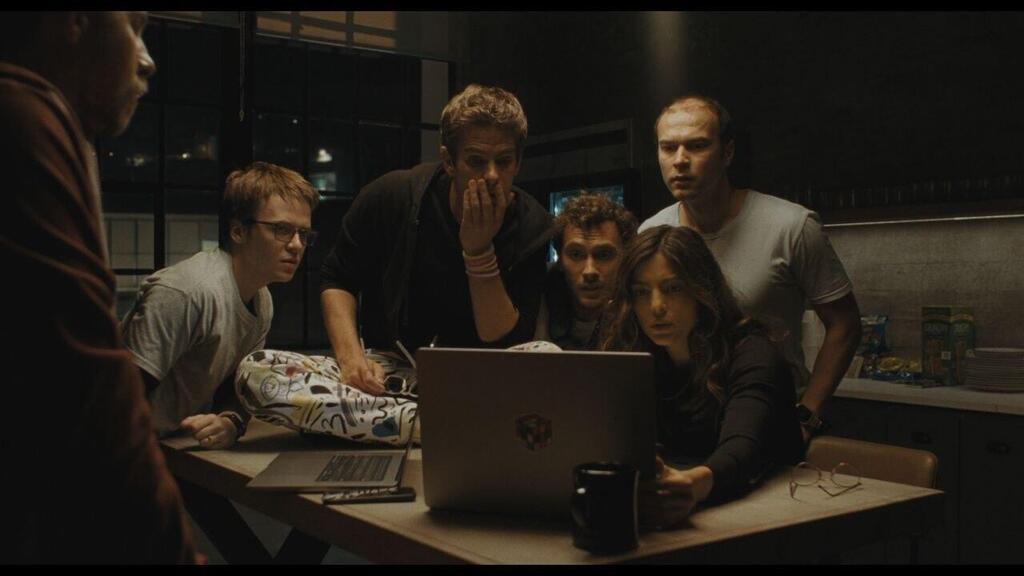
From “Artificial”
(Photo: Courtesy of Neon)
Of course, this is not a true friendship. Unlike Sutskever, Altman lies. Permanently. His nose may not grow like Pinocchio’s, but he knows how to produce a fake tear whenever necessary, at the push of an emotional button. The tireless entrepreneur bluffs, improvises and manipulates. It is as artificial as the computer intelligence it promotes.
Their relationship is tested repeatedly throughout the film, and the innocent Ilya fails these tests time and time again. He keeps repeating his mantra, “Feel the AGI,” only to discover that those around him have become so devoted to machines and their commercial potential that they have stopped feeling anything for other human beings. They stopped feeling, period.
After introducing Hollywood to Timothée Chalamet, and himself, with the homoerotic drama “Call Me by Your Name” (2017), Guadagnino continued to work in the United States, best known as a cunning and mischievous queer provocateur with a taste for on-screen controversy.
Some remember the much-discussed kiss between Josh O’Connor and Mike Faist in his “Challengers” (2024), Daniel Craig’s wig in “Queer” (2024), or even his challenge to campus political correctness in “After the Hunt” (2025), with Julia Roberts and Garfield.
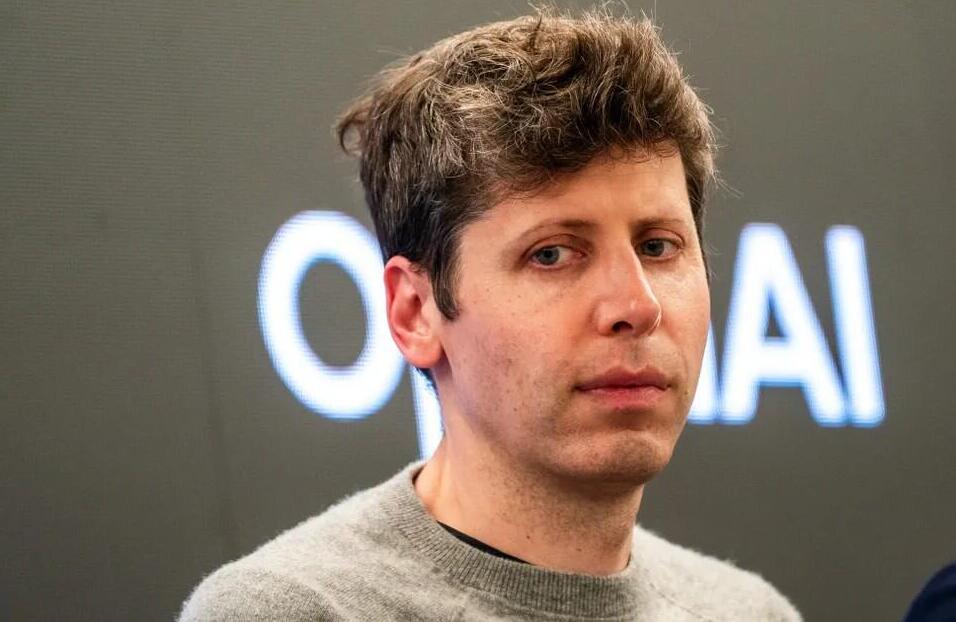
Sam Altman, CEO of OpenAI, really
(Photo: Getty Images)
Those who are not his admirers, including this writer, tend to view his stylistic tricks as vain pretensions or exercises in emotional manipulation that undermine the authenticity of his work.
This time, however, the unsettling coldness that characterizes his films works remarkably well, especially in a real-life story that feels like a cross between “The Social Network,” “American Psycho” and “Revenge of the Nerds.”
Once again, the characters are infantile men incapable of managing their emotions: narcissistic and superficial types, apparently on the verge of autism. Just like the software they create.
This is especially true for Altman, whose relationship with his partner is described as passionless, cold and plastic.
The only character with real psychological depth, combining rational intelligence and compassion, is technology director Mira Murati, played by Monica Barbaro, Garfield’s real-life partner.
Guadagnino, as cynical and emotionally detached as ever, issues a clear and urgent warning. The pursuit of short-term profits threatens to destroy the world in the long term, whether through artificial intelligence or through environmental destruction and global warming, all amid an escalating arms race with Google and other competitors.
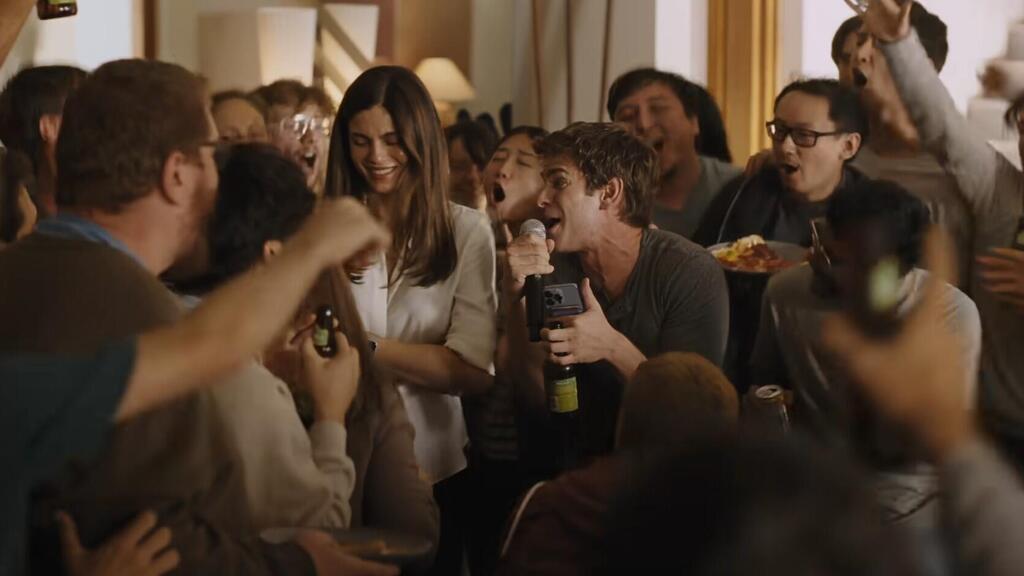
From “Artificial”
(Photo: Courtesy of Neon)
Altman thinks like AGI. Experiments have shown that advanced AI systems will do anything to win games, including cheating. And the boss of OpenAI too, who adopts machine methods. If he can’t win under the existing rules governing capital and infrastructure, he can simply change the rules, lie, and deceive both the board and the market.
Through his cunning and a series of elaborate maneuvers, he gains control of the company, manipulating Sutskever and others for selfish reasons that do not necessarily align with the purpose for which the technology was developed: to benefit humanity.
The only character in the film who dares to express real opposition to artificial intelligence is an eccentric character played by Jason Schwartzman. Like a prophet of doom, he launches a fiery warning concerning two possible futures. In one, dictators and business leaders use AI to manipulate humanity for their own benefit. In the other, it is artificial intelligence itself which manipulates, thus becoming the supreme of humanity…
Gn entert