Archaeologist claims Roman fort discovered where no one expected
Archaeologist Mark Merrony of Wolfson College, Oxford, told Fox News Digital that excavations of a recently identified Roman fort in Wales have uncovered numerous artifacts, including ceramic tiles. Researchers have also identified a possible connection to Welsh folklore and an aqueduct which merits further investigation.
NEWYou can now listen to Fox News articles!
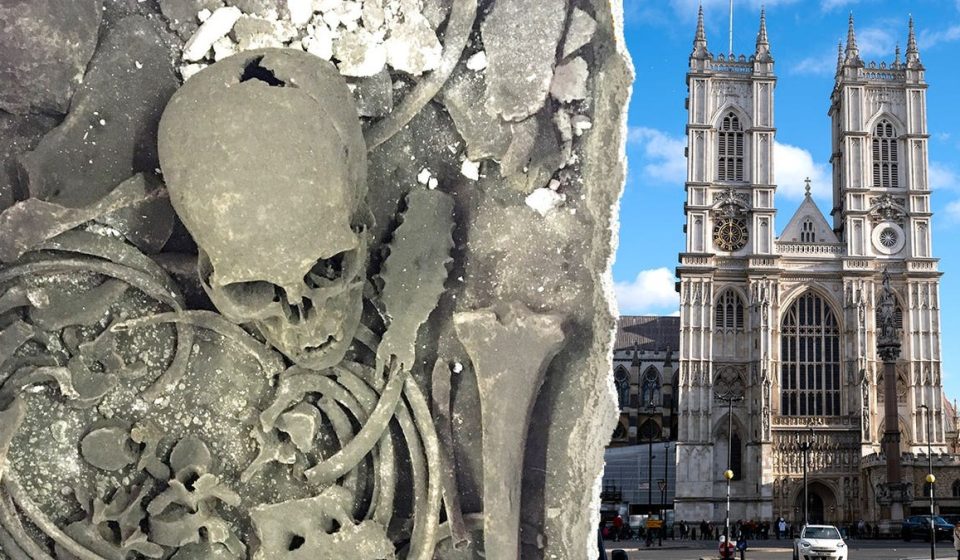
An archaeologist may have finally solved the mystery of the unknown skeleton buried in the grounds of Westminster Abbey, one of London’s most popular tourist sites – and the answer points to a 1,000-year-old recycling job.
The research focuses on an unidentified skeleton discovered at Westminster Abbey in 1869, according to the SWNS news agency.
The skeleton was found inside a limestone Roman sarcophagus bearing an inscription for Valerius Amandinus, a wealthy 4th-century Briton – but the remains inside do not belong to him.
SURPRISING MYSTERY REVEALED IN CENTURIES-OLD ROYAL TOMBS AT THE MIGHTY QUEEN’S MONASTERY
When the skeleton was excavated at Westminster Abbey in 1869, archaeologists noticed that a distinctive early medieval Latin cross was carved on the lid.
The symbol has puzzled experts for more than 150 years because it did not match the Roman-era coffin.

Historians may have solved a 150-year-old mystery surrounding an unidentified skeleton discovered at Westminster Abbey in 1869. (SWNS; Mike Kemp/In images via Getty Images)
The recent study, published in the Journal of the British Archaeological Association, was led by Warwick Rodwell, consultant archaeologist at Westminster Abbey, SWNS said.
Rodwell’s work followed a 2025 excavation of the abbey’s vestry, which was necessary ahead of the construction of the new King Charles III vestry which is due to open in 2027.
THE “EXCAVAGES OF THE CENTURY” UNDER NOTRE-DAME REVEAL MYSTERIOUS MARKS AND ANCIENT SECRETS
In the study, Rodwell claims the skeleton could belong to one of two high-ranking medieval monks who died in the 11th century.

Researchers carried out excavations in 2025 in the vestry of Westminster Abbey ahead of the construction of the new King Charles III vestry. (Richard Baker/In images via Getty Images)
The two candidates are monks named Aelfwig, who died around 1020, and his successor Wulnoth, who died in 1049.
Carbon dating placed the bones between AD 987 and 1052, matching the lives of both individuals.
CLICK HERE TO SUBSCRIBE TO OUR LIFESTYLE NEWSLETTER
“We don’t know the date of birth of either of them,” Rodwell said, as noted by SWNS.
“But either would fit just as well if we assume the abbot was in his early 20s when the appointment was made and nearly 50 when he died.”

Archaeologists investigating the skeleton at Westminster Abbey noticed an early medieval Latin cross carved into the lid of the Roman sarcophagus. (SWNS)
Another clue, Rodwell said, was that the occupant had been given a “beautiful” sarcophagus, even if it had been recycled.
CLICK HERE FOR MORE LIFESTYLE NEWS
The man was probably between 35 and 49 years old when he died and was 5 feet 9 inches tall.
Researchers also found white lime residue inside the stone coffin, indicating where a wooden coffin once stood before decomposing over the centuries.
The sarcophagus is currently on display at Westminster Abbey in the Queen’s Diamond Jubilee Galleries.
TEST YOURSELF WITH OUR LATEST LIFESTYLE QUIZ
The discovery is one of several recent skeletal discoveries in England that have shed light on the country’s medieval past.

Westminster Abbey, one of London’s most popular tourist sites, is the subject of a new study solving a 150-year-old mystery. (Léon Neal/AFP via Getty Images)
In 2025, archaeologists excavating the site of a former University of Gloucestershire department store discovered 317 skeletons and the ruins of a medieval church.
CLICK HERE TO DOWNLOAD THE FOX NEWS APP
At the Tower of London, archaeologists discovered the remains of 20 people in the spring of 2025 – including a 14th-century mass grave possibly linked to the Black Death – during major excavations.
Gn world