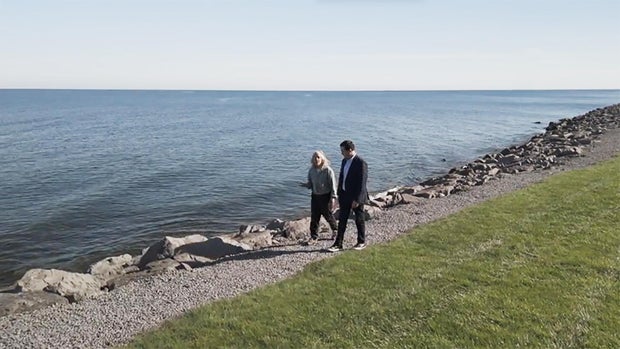
Biologist, mariner and educator Susan Peterson Gateley spent her life on Lake Ontario, a 7,300-square-mile body of water between Canada and the United States. It is the lifeblood of this part of New York State. “It has historical significance for the area, cultural significance, huge economic influences, which most people overlook,” she said.
So imagine his surprise when President Trump announced last August that he would rename the lake by executive order to “Lake America” – a salvo in his trade war with Canada.
“My first reaction was that it’s a bit silly,” Gateley said. “And my second reaction was: I wonder what Canada thinks of this?”
Asked how Mr. Trump’s announcement had affected Americans’ relationships with Canadians living around the lake, Gateley said: “Well, I think we’re pretty united in our reaction. So yeah, I think you could say we bonded over that.”
CBS News 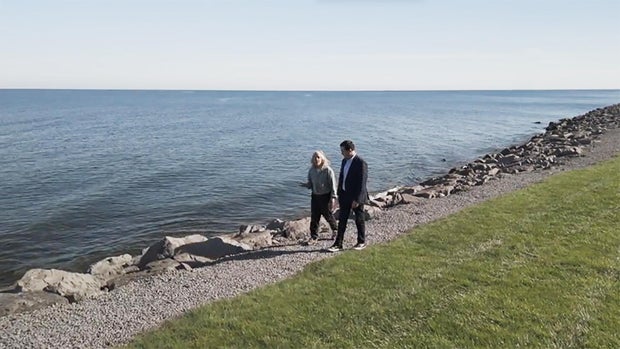
Reactions on both sides of the border have generally ranged from ambivalence to anger. On the right, there was a certain enthusiasm. Cable News commentator Sean Hannity said he identified with the idea of Lake America: “If that’s what I identify with, that’s what it should be,” he said.
All of this is just the latest in a series of changes Mr. Trump promised on day one, when he announced he was changing the name of the Gulf of Mexico to the “Gulf of America.”
But who decides the name? The answer is complicated.
There is an actual Board of Geographic Names within the Department of the Interior, which provides federal guidance, although the president can tell it what to do.
Former presidents oversaw the name changes themselves. In 2015, under President Obama, the federal government changed its designation from Mount McKinley in Alaska to Denali. (Last year, President Trump I changed it.) In 1991, President George H. W. Bush signed a bill (sponsored by Senator Ben Nighthorse Campbell) that renamed the Custer Battlefield in Montana the Little Bighorn Battlefield.
But a president cannot force anyone to use another name.
Al Drago, The Washington Post/Bloomberg via Getty Images 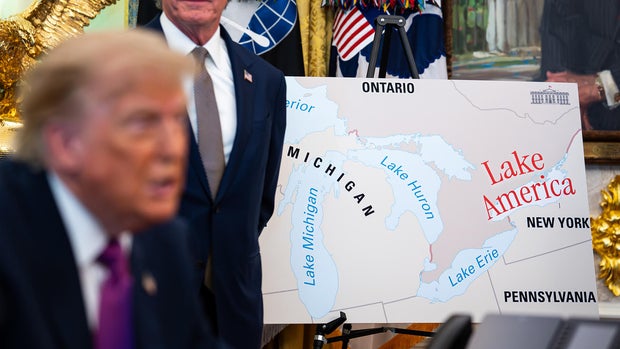
Former President JC Seneca of the Seneca Nation said, “I really felt offended and I was very disappointed. I just couldn’t let this go. »
Seneca told “Sunday Morning” that Mr. Trump’s name change could not go unanswered: “These types of actions that this president has taken, to try to rename Lake Ontario under another name, reopen old wounds that still haven’t healed.”
The name Lake Ontario dates back to the 1600s. “Ontario” is a word from several indigenous languages; it means “shining water”.
When asked why the name we call the lake is important, Seneca replied, “The indigenous people of this region were here long before the United States and before Canada. That’s what they called him.
Seneca also argues that the change is legally dubious, citing the Treaty of Canandaigua. It was signed in 1794 between the United States and indigenous people (including the Seneca Nation) and dealt with the lake, territorial boundaries and rights.
“The provisions of this treaty also served to resolve disputes of any nature between the United States and the Seneca and other Haudenosaunee nations,” Seneca said.
When asked if he had ever been consulted about the name change, Seneca replied: “No, no, never.”
The Trump administration has defended the president’s authority to rename sites. An Interior Department spokesperson told “Sunday Morning”: “Naming one of our Great Lakes after our great nation is a proud reflection of who we are as Americans.”
Laura Barraclough, a professor of American studies at Yale University, said: “These things are structured. It’s not new. It’s been going on for 400 years or more.”
She showed us a map made by William Clark shortly after his return from the Lewis and Clark expedition. “They spoke to the indigenous people who lived on this land and asked them to describe it to them: ‘What is this place we are passing through? What do you know about it?'”
Although there were some indigenous names on Clark’s map, there were also names of people who were important to him, including a river named in honor of Thomas Jefferson. “Jefferson had never been there,” Barraclough said. “Jefferson was not part of the expedition, although he financed and sponsored it.”
CBS News 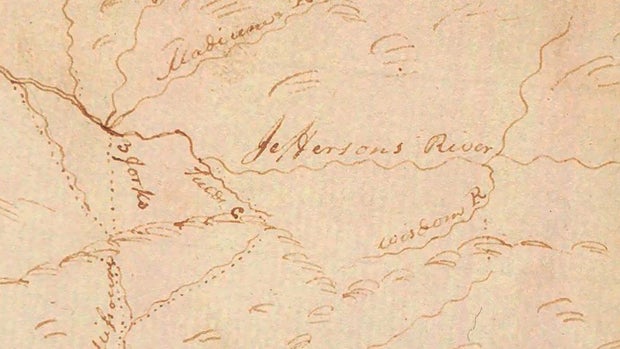
And it wasn’t just explorers like Lewis and Clark who chose the first American names. In the 1800s, as railroads were built in the West, names were also found. “The railroads, as some may know, received enormous land grants from Congress to develop not only the infrastructure of the railroads themselves, but also the towns and farms along the railroad,” Barraclough said. “To promote them, railroad companies very often just imposed or invented names on what seemed to them to be vacant land. If you look at historical maps, you will sometimes see fictional towns or fictional places that were named and invented, but never developed into anything. They are sort of ghost towns.”
Some names have changed, not under pressure from above, but to distance themselves from the past, like Battle Creek, Utah, named for a massacre of Native people. “The name Battle Creek stood in the way of a more positive and uplifting association for the community,” Barraclough said. “And so, they changed the name to Pleasant Grove, which is the name it still has today.”
Then and now, Barraclough sees reckoning, not just with names, but with power: “In many cases there is an official name that has been imposed by the most powerful actor in a certain struggle.
Back on the lake, Susan Peterson Gateley continues to frequent these waters almost every day. For her, it’s Lake Ontario…and her home. “I think it has its own identity,” she said. “I think we need to respect it as an entity. Take inspiration from indigenous thinking and respect its spirituality. Water is life. And it’s a lake like no other.”
Story produced by Amol Mhatre. Editor: Carol Ross.
Gn usa