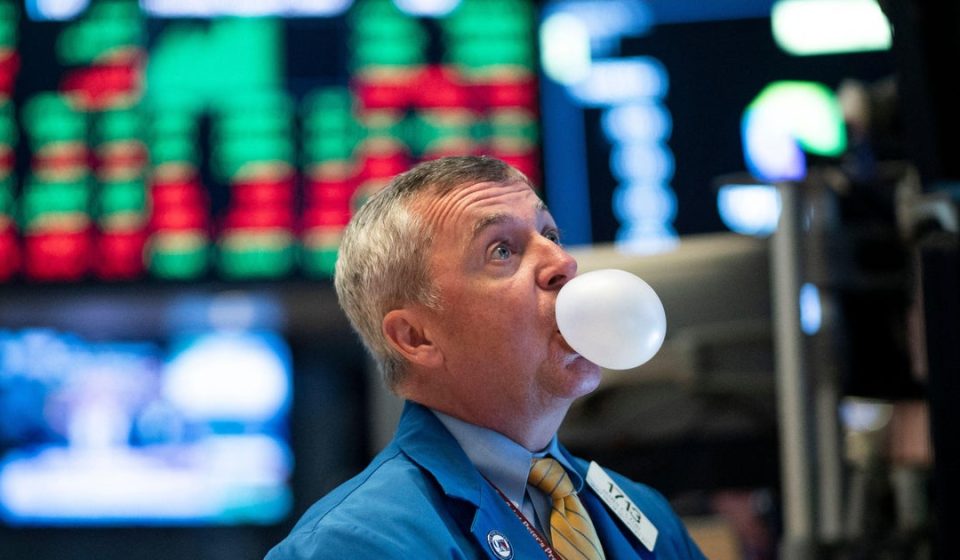
The US economy is booming, with new data showing the country’s gross domestic product grew at a blistering 4.3% in the third quarter. So why do investors hit the panic button, causing stocks to swing wildly and wrecking your 401(k) plan?
The answer comes down to the relationship between inflation, interest rates and the Federal Reserve, as well as growing concerns on Wall Street that the artificial intelligence boom could turn into a bust.
Wednesday’s actions show how fragile investor sentiment is right now. The major indexes plunged more than 1,000 points in morning activity, only to recoup much of those losses in afternoon trading. Where the stocks go next, no one knows.
The S&P 500 is now about 8% below its most recent peak on October 6, putting it closer to a correction, down more than 10% from its recent peak.
Also Wednesday, the Bureau of Economic Analysis sharply raised its growth estimate for the third quarter from its previous forecast of 3.4%. That growth is fueled by steady consumer spending and increased business investment as big tech companies splurge on building data centers and other infrastructure needed to make AI work.
Americans benefit from a growing economy, which fuels consumer spending and hiring. But dizzying growth can also have downsides, especially when, as is currently the case, inflation is already high.
“In the simplest terms, the economy is overheating, with demand outstripping supply. The consequence is an exploding trade deficit and inflation,” Carl B. Weinberg, HFE’s chief economist, said in a research note.
The link between AI and inflation
Although inflation earlier this year was largely driven by rising energy costs, more recent signals suggest that strong economic growth, fueled by significant AI spending, is now the main driver of rising prices. President of the Federal Reserve Bank of Chicago, Austan Goolsbee said last week, trillions of dollars in data center spending is contributing to “borderline worrying” inflation in the country.
Newly released inflation data shows that consumer prices rose 3.8% in October year-on-year, up from 3.6% in September.
Meanwhile, the mix of high inflation and breakneck economic growth all but cements an interest rate hike from the Federal Reserve at its December meeting, and possibly additional hikes in early 2027, economists say.
Rate hikes and the stock market
The specter of rising rates is weighing on the stock market as higher borrowing costs could create hurdles for AI and other technology companies looking to expand their computing capacity. And households, already strained by rising inflation, could face higher costs for everything from credit cards to mortgages – a drag on consumer spending.
“Households face new inflationary pressures, reduced saving capacity and higher borrowing costs, while high interest rates increase the cost of investing and financing across the economy,” Gregory Daco, chief economist at EY-Parthenon, said in an email.
Investors are also wondering whether the huge investments made by AI companies will pay off, given the massive losses recorded by many major AI labs. Anthropic, which last week recorded the largest initial stock offering in historylost a surprising $104 billion in the first nine months of 2026. It plans to spend nearly $1 trillion on AI chips and infrastructure through 2045.
“But the crucial thing that AI may never do is generate profits high enough to justify its decline, but its valuations remain stratospheric,” Laurence Kotlikoff, an economist at Boston University, said in a blog post published Wednesday.
What is the outlook for stocks?
Some investors and economists say investors should prepare for further declines, at least in the short term.
“As investors saw last week, pessimism can mount quickly and suddenly take over the steering wheel of market dynamics,” Anthony Saglimbene, Ameriprise chief market strategist, said in a research note. “And fear tends to feed on itself in the wake of these numbers, as falling stock prices become the evidence that justifies more selling in the market.”
Experts advise against making hasty decisions during market downturns, such as selling stocks, because it can lead to losses that are difficult to recover from. For example, investors who sold during previous recessions may have missed the large market gains that often followed.
Despite investor fears, the economy remains strong, helping to support business growth, noted Doug Beath, global equity strategist at the Wells Fargo Investment Institute.
“We expect strong economic growth and earnings in 2027 to support our year-end target of 8,700 for the S&P 500,” he said.
Gn bussni