

Want to bookmark your favorite articles and stories to read or view later? Start your independent membership today.
Join us today
Already a member? Log in
OhBut of the people you know who are actively dating, how many pursue a relationship? Unambiguous situations with people with whom they happen to get drunk and sleep – there are plenty of them – I’m talking about serious, committed and takeaway partnerships.
I’m guessing you don’t know many, because fewer of us are forming relationships than ever, according to a new study. According to the American Family Study, fewer than one in five single young adults (17 percent) are actively seeking a committed partnership, while twice that proportion (33 percent) say they are not at all interested in a romantic relationship.
The survey, carried out by YouGov and including responses from more than 3,000 people, also found that women in their 30s reported particularly negative dating experiences. Among single adults ages 30 to 40 who have dated in the past two years, 52 percent of women describe their experience as negative, compared to 30 percent of men.

None of this is good, especially when you combine it with the latest findings from the National Survey of Sexual Attitudes and Lifestyles, which revealed that Brits are having far less sex. According to the study published in The Lancetadults under 45 reported having sex on average twice a month, up from four times a month in 1990, while one in three young people aged 16 to 24 say they have never had sex, up from around one in five between 1990 and 2010. We’ve heard about this generation’s NEETs, who aren’t in school, working or training – are we also now seeing a generation of NIRP – a cohort who are not in a relationship, have a partner or are not having sex. neither.
“The conditions for intimacy to flourish have become more complicated,” says relationship therapist Georgina Vass, who cites many reasons for this, including the proliferation of screens, the rise of chronic exhaustion and the culture of comparison. “In general, people also spend less time face-to-face, so expectations for what that should look like can feel more intense.”
This isn’t to say that people don’t necessarily want to be in a relationship. Human beings are built for connection. That’s our defining characteristic, isn’t it? Unfortunately, relationships are complicated. They require compromise, negotiation and emotional sacrifice. Are these skills that young people simply no longer have? Or are they just too busy with social media and other screen-based activities, which have normalized the art of spending time alone and getting everything you need on demand without ever having to leave your room?
It is worth noting that the same survey shows that there has been a significant increase in the proportion of people who regularly watch pornography. Nine in ten men aged 16 to 24, and half of women that age, have watched pornography in the past year – more than the number of people who have had sex. So, amid a societal shift away from physical intimacy as a couple, people are moving toward more solo and online sexual behaviors.
33%
Young people are not interested in dating
“Technology has made things very convenient for us,” Vass adds before citing the rise of movements such as “friction-maxxing,” a term coined in an article in The cut of January referred to the practice of finding tasks that require a certain degree of difficulty or patience to subvert the culture of instant gratification technology created. “Friction disappears from our daily lives, and I think relationships can seem like more effort for some people,” Vass says.
Meetings are simply unpredictable. It can’t be controlled by an app or algorithm, no matter what the tech titans will tell you. Perhaps, in a culture where everything can seemingly be ordered, filtered, and perfected, forming a relationship is just too tricky. Too risky. Also human.
Friction disappears from our daily lives and I think relationships can seem like more effort for some people.
Georgina Vass, relationship therapist
It would be remiss not to also mention the pandemic, when being alone in a room equipped with screens for company has become the norm. The younger generation goes to parties less and drinks less, all reasons which have also been cited to explain these trends. Clearly, less in-person interaction hampers people’s social skills and – spoiler alert – we need them to build relationships. Instead, our ideas about romance are shaped by apps and the promise of being able to navigate our way to a soul mate, except we have hundreds of choices.
“The endless opportunities available online lead to this paradox of choice, which lowers the threshold for compromise necessary to create a committed relationship,” says Vass, who regularly sees clients struggling with this exact problem. With so many singles to choose from on their screens, it can seem difficult to choose just one, especially when those choices are based on arbitrary facts and filtered photos shared on a dating app’s profile.
There are also obvious financial barriers to dating, given that young people are often struggling economically and, in many cases, living with their parents – the proportion of young people in the UK who were not in education, employment or training (NEET) between April and June 2026 was 13 per cent, sparking a national panic about the state of today’s youth. How can you form a relationship when you can’t even afford to go on a date in the first place? So, if you can scrape together a few pennies, is there really any point in bringing someone home when you risk running into your parents on your way to the bedroom?
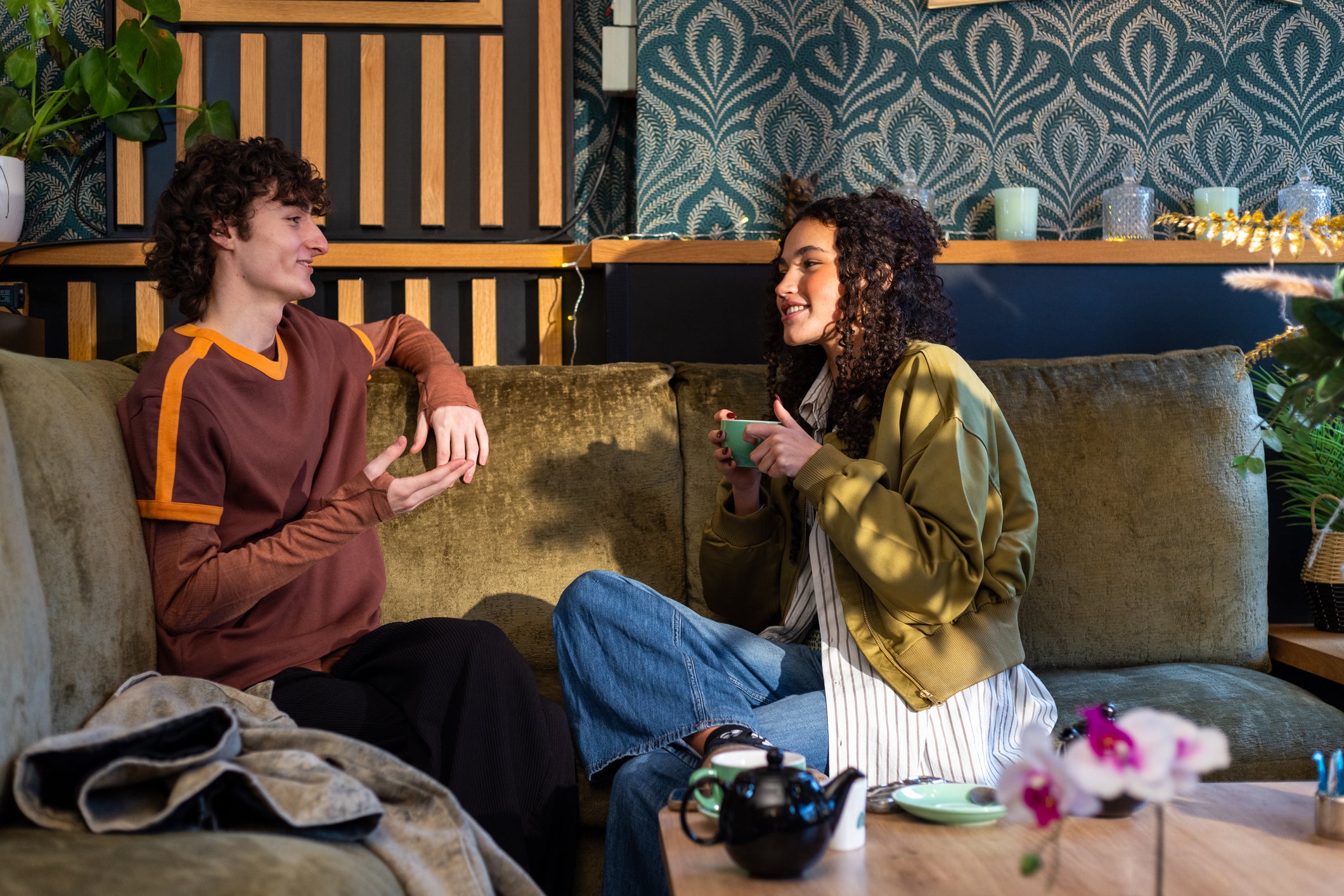
If young people no longer form relationships, what are they missing? We know that loneliness can be as damaging psychologically as it is physiologically, with various studies linking it to lack of sleep and poor mental health. Although the growing unique positivity movement might encourage young people to move forward in life on their own, this approach could tire them as they approach their 30s and see their social circles depleted as others marry and have children.
“I think fundamentally we all need relationships,” says Michelle Begy, founder of Ignite Dating, a matchmaking agency whose clients as young as 26 are looking for advice. “I think the lack of people getting into relationships is due to a delay: people are traveling, studying and doing more before they consider settling down.”
The fewer relationships we build, the less equipped we will be to take them on if and when the opportunity arises.
While the delay may be for valid reasons, it arguably puts people out of practice, which could have a net negative effect: the fewer relationships we build, the less equipped we will be to confront them if and when the opportunity arises. “We learn to interact with each other through experience, and I think these digital social experiences can’t replicate human experiences, but they can create anxiety around them,” Vass says.
One way to alleviate this anxiety? By avoiding human contact altogether, a feat unfortunately made much easier in a culture where laptops, cell phones, video games, and hours of entertainment wait to be beamed to everyone, perhaps simultaneously.
Unfortunately, in a job market that is contracting at breakneck speed, a housing market that is a distant dream for many, and where individuals are mired in a technology-co-opted culture so deeply insulated and fine-tuned to distance them from the real world, considering proactive measures can sometimes seem impossible.
The aspects that NIRPs can consider is their approach to the dating market, and there are significant ways to achieve this. Begy advises her clients to use online dating apps to pay for premium features. “This way you can be much more selective about what you look for,” she says. But this also implies a need for openness. “Be intentional,” she adds. “And look at people’s behavior. If you’re talking to someone on an app and they don’t respond to your messages in a timely manner, or if they leave weeks between interactions, get rid of them quickly. The way someone behaves at first is exactly the way they will continue to behave.”
Additionally, Begy suggests being selective about who you want to spend time with. “Only invest in meeting people who you believe are at the same stage in life as you,” she says. “We’re not here for pen pals; we’re here to meet and facilitate lasting, meaningful relationships.” At least, some of us are.
Gn Health