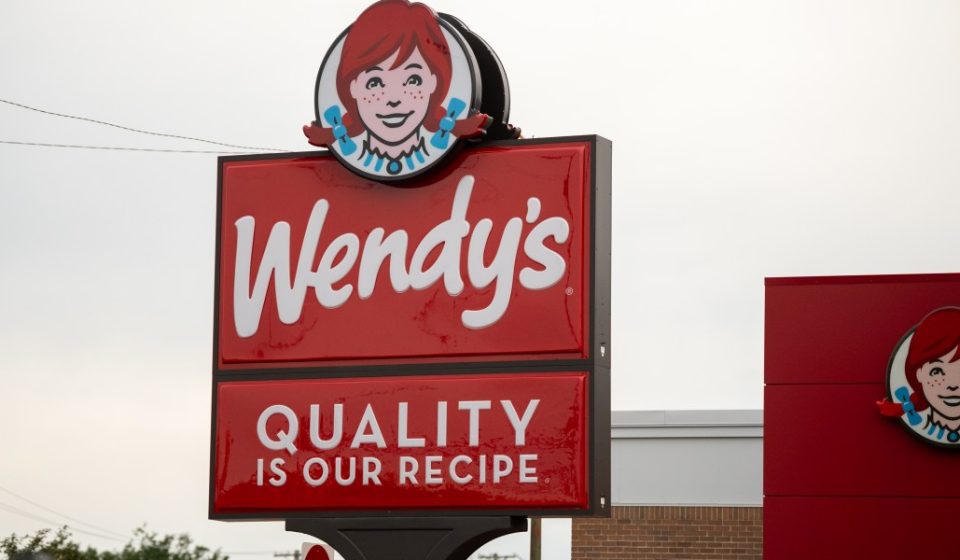
In the hamburger wars currently raging in the United States, there is a big loser among the big chains: Wendy’s. His fortunes have declined so much that he is now the target of Nelson Peltz’s Trian Fund Management, which is offering to take the restaurant private for $1.4 billion, a sum that doesn’t even represent 1 percent of McDonald’s market value.
The restaurant chain, once beloved for its “fresh, never frozen” beef and reputation as a higher-quality fast food establishment, has been struggling for 18 months. His promotions fell flat, intense competition stole clients, and a revolving door in the corner office robbed him of the focus needed to break out of his rut. Long the second-largest hamburger chain in the United States behind McDonald’s, Wendy’s has slipped to third place behind a resurgent Burger King.
In May, Wendy’s reshuffled its leadership, hiring Potbelly turnaround veteran Bob Wright as its fourth CEO in three years, as well as Potbelly Chief Financial Officer Steve Cirulis as CFO, in an effort to reassure Wall Street that Wendy’s was in good hands. For a while, it worked: “Wendy’s turnaround prospects have improved under (Wright and Cirulis) whose successful Potbelly overhaul supports a strategy focused on menu, marketing, operations and digital capabilities,” Bloomberg Intelligence analyst Michael Halen wrote in a research note.
Despite the confidence in Wendy’s new leadership, shares remain under pressure and are 65% lower than they were three years ago, when sales began to stagnate. (Stocks briefly hit a 20-year low in June.) So it’s no surprise that Wendy’s is now the target of Peltz’s Trian, who prefers to turn around the restaurant chain away from the public markets’ gaze.
What went wrong
Wendy’s was founded in 1969 when Dave Thomas, a former Kentucky Fried Chicken franchisee, opened a restaurant and named it after his daughter. It quickly found a niche with its distinctive square hamburger patties, chili and frozen desserts that differentiated the chain from McDonald’s. There were even a few pop culture moments, notably in 1984 with his famous “Where’s the Beef?” campaign.
The chain has had many ups and downs over the years, but it began to seriously show cracks last year, when quarterly sales declined.
In the most recent quarter, sales at its U.S.-based restaurants fell 7%, the sixth consecutive decline. Even more worrying, visits to U.S. stores fell 12.5%, suggesting that many Wendy’s customers are losing the habit of eating there. Wendy’s will report its third-quarter results on Thursday, and those will be closely scrutinized for any signs of reprieve. Analysts expect Wendy’s to report a same-store sales decline of about 6% in the United States.
In his first conference call with analysts in August, Wright, a Wendy’s veteran who once worked with the chain’s legendary founder Thomas, showed he was clear-eyed about Wendy’s many problems. The list includes a lack of compelling value menu items for budget-conscious diners and inconsistent execution at its restaurants. Wright told franchisees and investors that Wendy’s reduced the quality of its ingredients in an effort to cut costs and allowed service to become spotty due to insufficient staffing. New promotions, like its Minions and monsters kids’ meals and new menu items, like a new chicken sandwich, fell flat. Wendy’s also tried, unsuccessfully, to find a winning formula for breakfast, long a weak point for the chain, but angered franchisees by adding operational complexity and unprofitable costs.
High beef costs are weighing on profits: net income fell 40% in the first half of 2026.
And Wendy’s carries a whopping $2.4 billion in debt, which is roughly equal to its annual revenue. (Wendy’s U.S. sales were $12 billion last year, but because the company operates primarily under a franchise model, its revenue is simply its share of those sales, plus rent and fees from its franchisees.)
“Our quality differentiation has eroded, our value proposition has weakened, and we haven’t always delivered the experience customers expect from Wendy’s,” said Wright, who served as Wendy’s chief operating officer from 2013 to 2019 before joining Potbelly.
Wendy’s loss is everyone’s gain
Competitors jumped at the chance to capture Wendy’s market share.
Burger King’s same-restaurant sales rose 8.5% last quarter thanks to the execution of its “Reclaim the Flame” turnaround plan that renovated half of its restaurant fleet and revamped its flagship Whopper burger, leading to a 20% increase in sales of the sandwich.
McDonald’s has its own problems, but they aren’t as deep-rooted as Wendy’s, and the market leader is still seeing sales growth, however modest.
Shake Shack’s same-store sales increased 3.5% in its most recent quarter.
Given the scale of Wendy’s problems, the company in August withdrew its full-year 2026 financial outlook and slashed its dividend, saying store traffic would remain weak for the rest of the year.
Peltz makes his move
Peltz, whose Trian Fund Management owns 16% of Wendy’s, had long expressed interest in taking the restaurant private. He did so the first time in 2022, then again in February before submitting his $1.4 billion offer this week. Trian has owned stock in Wendy’s since 2005, and Peltz’s son Brad and former Trian partner Peter May serve on its board of directors.
“Wendy’s is at a critical juncture,” Peltz wrote in a letter to the Wendy’s board of directors Thursday. “The business requires significant capital investment to deleverage (or reduce debt) and execute the strategic initiatives necessary to improve system performance. »
The prospect of Wendy’s repairing itself without pressure from Wall Street appeals to some. “A privatization makes sense because Wendy’s turnaround is likely to be protracted given the plight of the low-income consumer and the weak state of the quick-service burger category,” TD Cowen wrote in a note.
Wendy’s board said it had formed a committee to review Trian’s proposal, and the company itself said it was “taking action” on its turnaround with urgency.
But signs that this process could become complicated were quick to surface. One investor, Blackwells Capital, accused Peltz of being opportunistic by waiting for Wendy’s shares to fall before rekindling his interest in buying the company. The company also said that given Peltz’s long-standing ties and influence with Wendy’s, the restaurant chain’s problems — and by extension its declining inventory — are “consequences of his own disastrous tenure.” A Trian spokesperson declined to comment.
A potential privatization process, or any drama surrounding it, is usually a distraction for CEOs trying to effect a turnaround. Wright transformed Potbelly during his five years at the helm, improving its menu and offering more offerings to attract diners on a budget, while also being a frequent target of activist investors. Potbelly’s improvements eventually led to its privatization by RaceTrac, a major chain of gas stations and convenience stores. Wright has been patient and methodical in fixing Potbelly and shows signs of approaching Wendy’s problems in the same way.
“It’s going to take time,” Wright said in August. “But these issues are within our control.”
Gn bussni