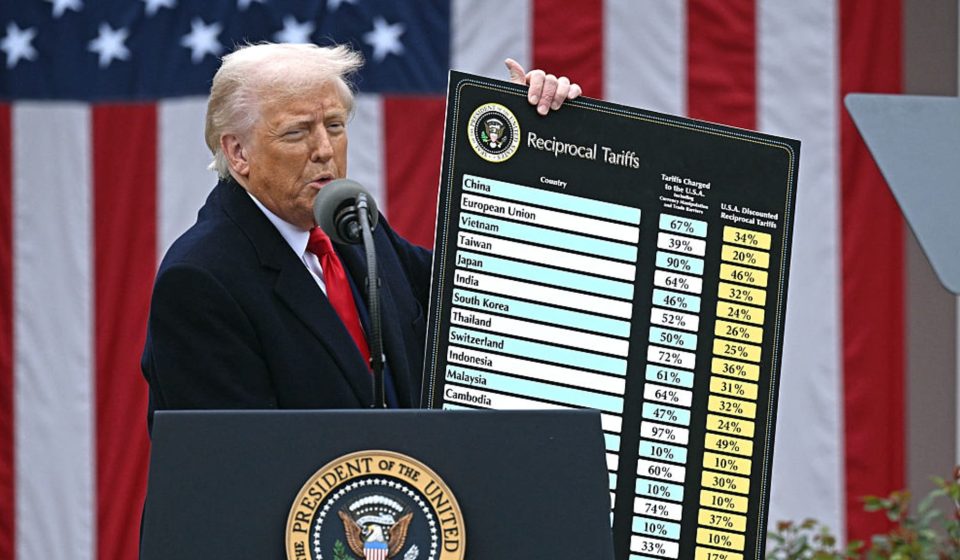

President Donald Trump speaks about his new tariff plan at the White House in Washington on April 2, 2025.
Brendan Smialowski | Afp | Getty Images
The cost of many everyday items would have fallen last year and early this year without tariffs imposed by President Donald Trump, according to the Federal Reserve Bank of New York.
The cost of 67 categories of goods was 2.9 percentage points higher in February thanks to tariffs, according to a paper by a team of researchers from the central bank’s New York branch.
Without the levies, the team found that the prices of the products studied would have fallen by almost 1%.
The New York Fed report offers the clearest evidence yet of the impact of Trump’s tariffs — a central policy of his last campaign and second term in the White House — on consumers’ wallets. Economists generally expected his levies to raise prices, although the precise effects have been difficult to estimate due to the changing nature of the policy and the lack of transparency about how companies set prices.
The researchers did not specify which 67 types of products they evaluated.
For every percentage point increase in the average tariff, the team said prices of consumer goods were higher by about a quarter of a percent a year later.
Annual price growth for the dozens of goods tracked peaked in early 2026, according to the report. But consumers are still expected to pay high prices until 2027 because of the policy, the report said.
According to the New York Fed report, about two-thirds of the impact of tariffs on prices comes directly from the levies themselves. The remaining increase is due to ripple effects, such as U.S.-based companies using imported parts and materials in their products.
“Tariffs have a larger and more lasting impact on consumer prices than their direct effect alone would suggest,” write the three authors of the study, Mary Amiti, Sebastian Heise and David Weinstein.
Trump argued that businesses could absorb increased costs from tariffs rather than passing them on to buyers in the form of price increases. The New York Fed team said that about 26% of last year’s rate increases ended up translating into higher prices.
In February, the Supreme Court struck down numerous tariffs imposed by Trump, resulting in billions of dollars in refunds to retailers. The White House has pledged to advance levies through alternative measures, and products imported from many countries now often face tariffs of around 10%. In many cases, this is significantly lower than it was under the previous round of tariffs.
Gn bussni