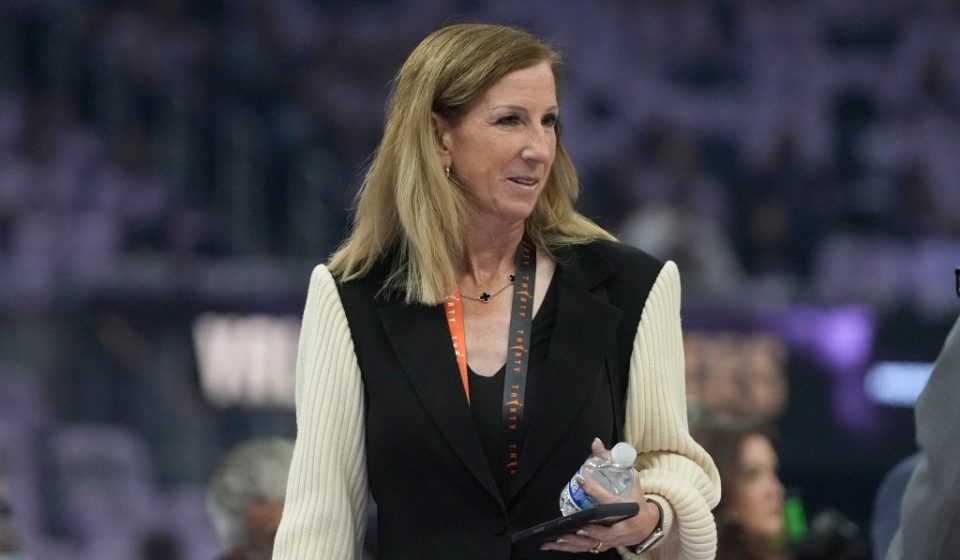

Cathy Engelbert responded to Republican lawmakers’ request about the need to define the WNBA’s eligibility rules and said Enes Kanter Freedom and Royce White are both ineligible to play because they are “both men.”
“Regarding your questions regarding eligibility, only women are eligible to play in the WNBA and the individuals you cite in your letter are both men,” Engelbert wrote in a letter dated Oct. 16, per OutKick, which was provided by the America First Policy Institute, which represents Freedom.
The response was sparked after Indiana House Rep. Marlin Stutzman, among other Republicans, asked the league for a definition of its eligibility rules and to define “female” after the WNBA said Freedom and White were ineligible to declare for the 2027 draft, despite their efforts to do so.

During an interview with the outlet, Stutzman said he considered Engelbert’s response “the first step in defining what a woman is for the sports community.”
“By clearly labeling Enes Kanter Freedom and Royce White as men, they recognized that identifying as female does not change fundamental human biology,” he added.
Freedom has since also responded to Engelbert’s letter, saying the WNBA “still cannot define what a WOMAN is.”
“But they are absolutely sure they know what a MAN is! How convenient!” he posted on X on Tuesday.
“WNBA Commissioner Cathy Engelbert said I am a man. Who gave her the power to decide who I am? Who can define my identity?” he wrote. “And how can the WNBA determine who is a man without explaining what qualifies someone as a woman? Is the WNBA denying people the right to define their own gender identity? You can’t have it both ways! America, read this letter for yourselves. THE WNBA HAS SOME EXPLANATION TO DO!”
Freedom also told OutKick that he “100 percent” felt misunderstood by Engelbert.
The two former NBA players began speaking out, declaring themselves candidates for the 2027 draft while identifying as women, when debates around transgender athletes began flooding the league following ESPN’s article about lightning rod Sophie Cunningham, in which the Fever star said she wanted to “protect young girls.”

“I think I’m here to extend love. But I also think that love is truth, to be honest. And I want to protect young girls in the locker room, or young girls in sports who shouldn’t have to deal with biological males,” Cunningham said. “I’m really in the middle. I agree with things on both sides, I disagree with things on both sides. And that’s all I’ve ever said about my political beliefs. But people like to assume.”
The 30-year-old’s comments, which she has since doubled and tripled, sparked a debate within the WNBA among players, coaches and fans.
Fan-organized protests also broke out at games and prompted the league to issue a statement in early August.
“We embrace justice, equity, diversity and inclusion,” the statement said. “These are the values that unite this Union and enable it to protect women’s sport while creating transformational change. Hate, abuse and demonization of any person or group of people, including transgender people, only fuels fear, division and harm. We will continue to have difficult conversations. But we will not be used as political pawns.”
Gn sports