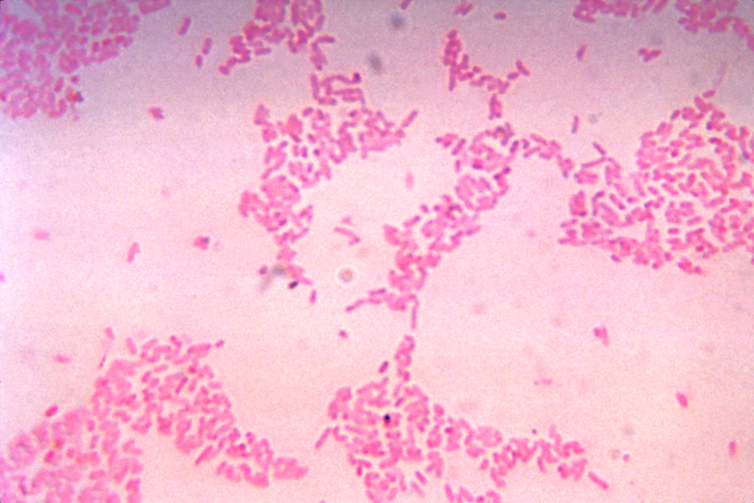
Your gut bacteria helps your body track time, and when you eat influences how much nutrition you get from food.

The way your body processes food is significantly influenced by daily rhythms related to 24-hour light-dark cycles. In new research published in the scientific journal Cell Host & Microbe, my colleagues and I discovered that the microbes living in your gut are the hidden timekeepers behind this system.
Gut microbes convert food signals into molecules that intestinal cells use to synchronize nutrient absorption with feeding times. In mice, this microbe-controlled timing mechanism maximizes nutrients absorbed by the mouse body and supports growth, especially when food is scarce.
However, when mice consumed excess calories, this same system fueled obesity.
Circadian rhythms
Due to the Earth’s rotation, all animals – including humans – experience rhythmic changes of day and night. Your eyes and brain use light signals to coordinate your body’s activities with environmental changes and nutrient availability. Disruption of this temporal alignment, particularly due to jet lag and night work, is associated with a whole series of health problems.
But light is not the only indicator of time. Your intestines are home to billions of microbes, called the gut microbiome. They play a key role in shaping your physiology, such as metabolism, immunity and even brain activity.
Interestingly, the microbiome also influences the daily biological rhythms of hosts. My colleagues and I had previously shown that reducing gut bacteria in mice weakened circadian rhythms in the small intestine and altered them in the colon. These disruptions can affect the way your gut absorbs and processes fats and other lipids, which can contribute to metabolic disorders such as obesity.
Microbial timekeepers
But if gut microbes are never exposed to light, how do they track time? New research from my team suggests the answer is mealtime.
We discovered that the gut microbiota can metabolize phytate – a dietary component commonly found in grains, beans, nuts and seeds – and convert it into molecules that activate a specific protein in intestinal cells, thereby activating genes involved in nutrient transport. Conversely, during fasting, decreased phytate levels lead to decreased microbial activity and decreased nutrient absorption.
Through this pathway, microbes align intestinal absorption with when you usually eat, maximizing the efficiency of nutrient absorption.
Our findings suggest that, like light, food provides time-of-day signals that gut microbes read to determine how your body functions.
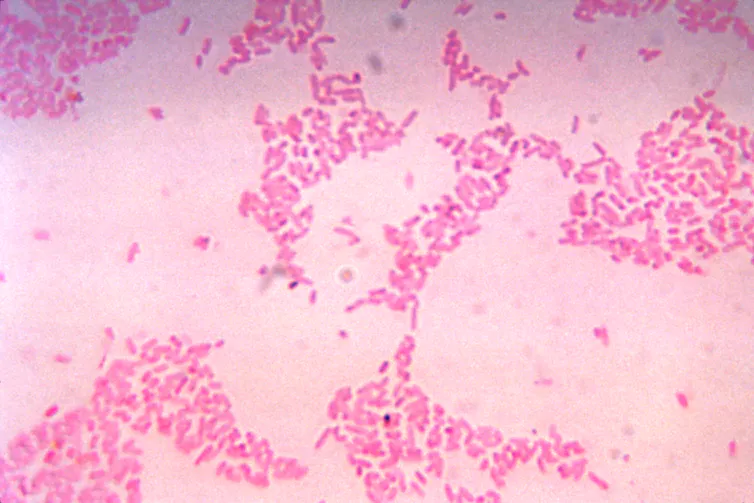
VR Dowell, Jr./CDC
A mismatched evolution
Humans have been co-evolving with their gut microbiota for millennia, implying that this microbe-controlled temporal system has advantages.
For most of human history, food was scarce. We hypothesized that this microbial pathway might help people survive and grow in starvation conditions. To test this idea, we fed mice a nutrient-poor diet and gave some of them either a common gut microbe or a molecule it produces that is linked to circadian regulation. We found that undernourished young mice given this bacteria or microbial molecule grew larger and healthier than mice that did not, suggesting that this microbial pathway promotes growth and metabolic health when nutrients are limited.
However, many people today have constant access to abundant calories. Rather than nutrient shortages, obesity has become the main dietary challenge. We found that in mice subjected to high-calorie conditions, this microbial pathway promotes excess fat absorption into the body and worsens diet-induced obesity.
Therefore, the same gut microbiome mechanism that helped people thrive can become a liability when it encounters an environment it was never designed for. This is an example of evolutionary mismatch.
Gn Health