Alaska judge rules Peltola campaign request for voting data in Senate race ‘not reasonable’

JUNEAU, Alaska (AP) — An Alaska judge ruled Wednesday that a campaign request from Democratic U.S. Senate candidate Mary Peltola to compile a list of absentee voters whose ballots were rejected was “not reasonable,” especially given the time crunch election officials face as they continue to count ballots from last week’s election.
LEARN MORE: Judge reviews Peltola campaign’s lawsuit over absentee ballots in Alaska Senate race
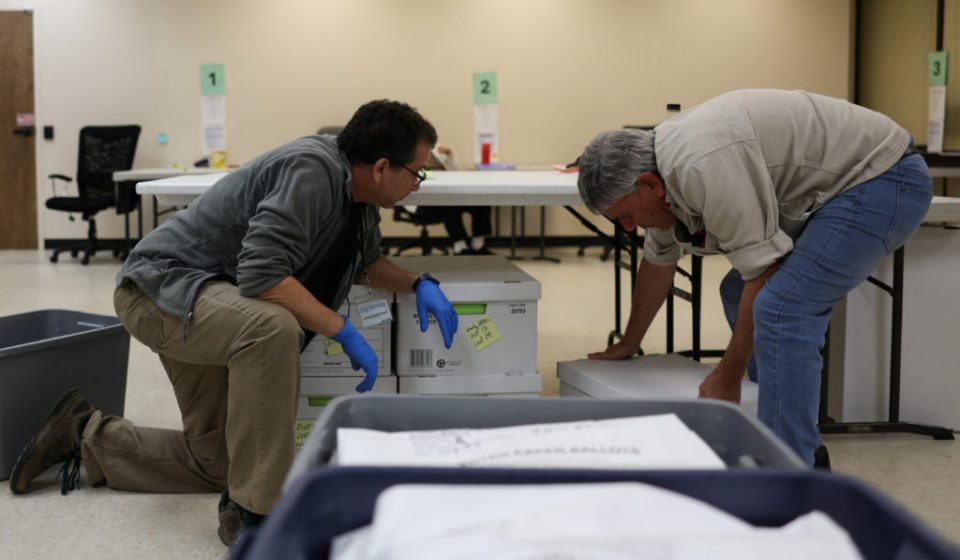
Ballots are still being counted in the ranked-choice vote, in which Peltola and two-term Republican Sen. Dan Sullivan are the leading contenders. Alaska’s Senate race is the only one in the country that remained too early to call.
The state accepts ballots from out-of-state voters up to 15 days after the general election, making Nov. 18 the last day to receive them. This date is also the Division of Elections’ goal to conduct ranked vote tabulations if no candidate wins more than 50% of the first-choice votes.
Lawyers for Peltola’s campaign sued state election officials last Friday, seeking a list of voters whose mail-in ballots were rejected and the reasons for those rejections. They said their intention was to ensure that all qualified voters had their ballots counted.
But lawyers for the state said the requested information would infringe on voters’ privacy. They also said producing such a list from a voter database would constitute an “electronic service or product” that under state law cannot take priority over an agency’s primary responsibilities.
Superior Court Judge Thomas Matthews, in a written ruling, said that “in theory” voter database records could be redacted and produced in a way that would allow their release. But he added that the division was not required to release the documents requested by the campaign because they “cannot reasonably be produced at this time, nor can they be redacted of confidential information.”
The division has deadlines to meet and says its staff works long hours to fulfill its “fundamental responsibility” of administering elections, he wrote.
“The timing of the Campaign’s request simply could not be worse,” Matthews wrote.
An email seeking comment from one of the law firms representing Peltola’s campaign was not immediately returned Wednesday, which was a national holiday. The State Department of Law, which represented the Division of Elections, said it was pleased with Matthews’ decision in a statement.
Abha Khanna, a lawyer for Peltola’s campaign, said Tuesday during proceedings before Matthews that the campaign was not seeking to disrupt the ballot-counting process. She said the absentee ballot review process was going “incredibly well.”
But Khanna argued that the information sought is in the public domain and consistent with what campaign observers have access to at venues where mail review committees meet. The campaign wanted to access this information in a more centralized way, she said.
Attorneys for the state argued that the reports generated by the division with the ballot lists to be reviewed during the absentee ballot review process are not public records because they contain confidential information and are “transient working documents that are not intended to be retained.”
Michaela Thompson, who oversees the absentee ballot review boards for the division, said in an affidavit that the version of the report received by observers of the review process — including those affiliated with campaigns — does not include as much confidential information but does include home addresses that many voters seek to keep private.
Observers sign confidentiality agreements and cannot retain, copy or record information in the report, she said.
The division’s “old and inflexible” database cannot produce a report that excludes confidential addresses, meaning the agency would have to work with a vendor to create a more personalized report, Thompson said.
A free press is the cornerstone of a healthy democracy.
Support trusted journalism and civil dialogue.
Gn headline