
As Alzheimer’s researchers scramble to find ways to stop the dreaded disease from destroying people’s memories, a prominent neuroscientist at Mass General Brigham is leading an effort that will receive tens of millions of dollars to advance the field.
Rudolph Tanzi, who helped discover key genes linked to some forms of Alzheimer’s, and a research team are set to receive up to $41 million in federal health grants, MGB announced Wednesday. That money, along with another $25 million from philanthropists, will fund a four-year study testing five to 10 drug combinations developed by Tanzi as potential treatments for the most common form of dementia.
Meanwhile, last Thursday, Acta Pharmaceuticals, a Boston biotech co-founded by Tanzi, announced that it had raised $24 million in seed funding to launch a clinical trial of an experimental drug from a class of drugs he helped discover. Tanzi said that if the trial was successful — a big if, given that most trials end in failure — people at risk of developing Alzheimer’s disease could take the drug just as people with high cholesterol take statins to prevent cardiovascular disease.
At an age when many people are retired, the 68-year-old neuroscientist is still working hard.
“I can’t retire,” said Tanzi, who has worked at Massachusetts General Hospital since 1980, where he directs the Henry and Allison McCance Center for Brain Health. “Everything I’ve done here at Mass. General – from student to professor, to running a lab, running a unit, and now running a clinical research center here – has led to this moment. It’s all coming to fruition.”
Tanzi, a native of Cranston, RI, has spent more than 40 years studying neurodegenerative diseases and, in particular, Alzheimer’s disease. This disorder affects more than 7 million Americans and is one of the most feared diagnoses among older adults.
Scientists have made progress in recent years in developing drugs that slightly slow the progression of Alzheimer’s disease. Cambridge-based Biogen and its Japanese commercial partner Eisai have secured approval for a drug, Leqembi, in 2023 for people with mild symptoms. But the drug costs tens of thousands of dollars a year and carries a risk of small brain hemorrhages.
Author of more than 800 published scientific articles, Tanzi contributed to the discovery of three genes responsible for rare, early forms of the disease in the 1980s and 1990s. He also identified genes responsible for more common late forms of Alzheimer’s disease and a gene responsible for neuroinflammation linked to the disease.
Dr. Sam Gandy, an Alzheimer’s disease expert and professor of neurology and psychiatry at Mount Sinai Health System in New York, called Tanzi “among the first and most important geneticists and molecular biologists” working in the field.

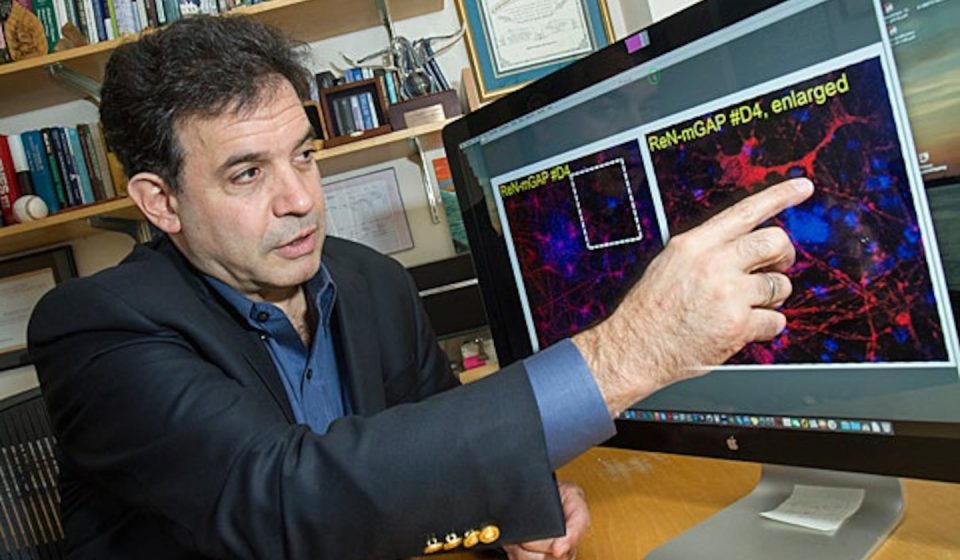
In 2014, Tanzi led a research team that created what he called “Alzheimer’s in a Dish” — a petri dish containing gel and human brain cells that develop the disease’s telltale structures, including sticky patches and spaghetti-like spirals called tangles.
As a result, the team addressed a long-standing challenge regarding how to study Alzheimer’s disease. Previously, the best research models scientists had were mice that developed an imperfect form of the disease. The new approach is much faster, allowing scientists to screen potential treatments in weeks rather than a year.
Tanzi said he and his research team used Alzheimer’s in a Dish to test about 2,000 drugs approved for other diseases and 4,000 natural compounds isolated from plants — all to determine whether any of the 6,000 substances had the potential to treat Alzheimer’s disease. Scientists then created five to 10 combination drugs that will be tested in clinical trials announced Wednesday. Government funding came from the Advanced Research Projects Agency for Health, or ARPA-H, a division of U.S. Department of Health and Human Services.
The first five drug combinations will be tested on 300 patients who provided blood samples positive for Alzheimer’s biomarkers, including amyloid plaques and twisted tangles of a protein called tau that form in the brains of people with the disease.
Scientists will test a different drug combination on each group of 60; Another 60 patients will receive a placebo. If biomarkers improve in blood samples taken from patients after taking the experimental drugs, Tanzi said, scientists will be able to tell whether the disease’s pathology is slowing down.
Acta, the biotech launched by Tanzi, takes a different approach.
He has just begun a preliminary clinical trial of a “gamma-secretase modulator,” a class of drugs that Tanzi and another neuroscientist, the late Steven Wagner, discovered about 25 years ago. These drugs aim to prevent the production of harmful amyloid proteins in the brain while generating protective forms of the protein.
The first phase of the trial began this month and is recruiting 72 participants.
Ultimately, Tanzi hopes a daily pill could block the buildup of harmful amyloid plaques in the brain before patients experience cognitive decline.
The possibility of stopping Alzheimer’s disease gives hope to Tanzi and her supporters.
“It’s just like cholesterol and heart disease,” said Tanzi, who also directs the Genetics and Aging Research Unit at MGH. “We start taking statins when we are young to prevent heart disease later. »
Jonathan Saltzman can be contacted at jonathan.saltzman@globe.com.
Gn Health